 Time
Time China's Economic Strategy Against Taiwan: Lessons from Hormuz
Article Content

- •China may use economic pressure tactics similar to Iran's actions in the Strait of Hormuz.
- •Disruption of Taiwan's semiconductor supply could lead to significant global market instability.
- •U.S. intelligence suggests China is shifting focus from military invasion to economic coercion.
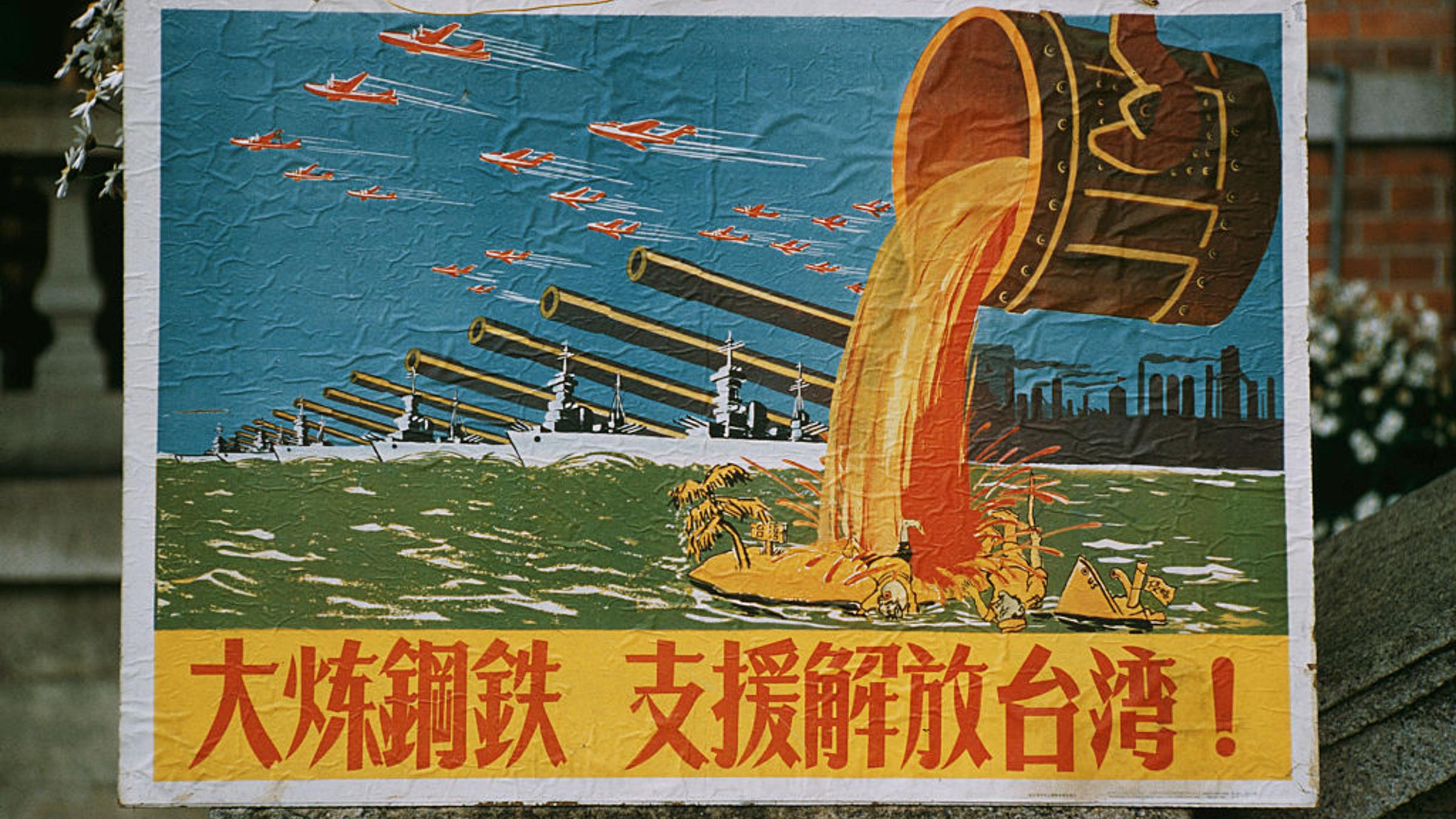
Recent analyses suggest that China could leverage economic pressure to isolate Taiwan without a military invasion, drawing parallels from Iran's actions in the Strait of Hormuz. In early 2026, Iran's missile and drone strikes created uncertainty, leading to a self-imposed shutdown of commercial shipping in the region. Analysts warn that China could adopt similar tactics, such as declaring jurisdiction over Taiwan's waters and harassing vessels, which would disrupt the vital semiconductor supply chain. This strategy could trigger significant market instability, affecting U.S. investors and technology stocks. The U.S. intelligence community recently indicated that China does not plan a fixed timeline for invasion, suggesting a shift towards more subtle coercive measures. The implications of this strategy could lead to severe economic consequences for Taiwan and the global economy, especially in semiconductor manufacturing. As tensions rise, Washington faces a critical decision on how to respond to these evolving threats.
Ask AI about this cluster
Answers cite the sources they use
Timeline
More articles in this cluster (2)
Continue Reading
 CVE-2015-3306 Exploited in ProFTPD FTP Servers CVE-2015-3306, a vulnerability in ProFTPD 1.3.5, allows remote attackers to read and write arbitrary files using the SITE CPFR and SITE CPTO commands. This exploit can lead to unauthorized access and potential remote code execution, as the commands are executed with the privileges of the ProFTPD service. Active…
  CISA Mandates Urgent Patching of Five Critical Flaws Exploited by Flax Typhoon The U.S. Cybersecurity and Infrastructure Security Agency (CISA) has ordered federal agencies to patch five critical vulnerabilities by October 11, 2026, following exploitation by the China-linked hacking group Flax Typhoon. The vulnerabilities, added to CISA's Known Exploited Vulnerabilities (KEV) catalog, include…