 layerxsecurity.com
 Cursor Vulnerability Allows API Key Theft via Rogue Extensions
Article Content

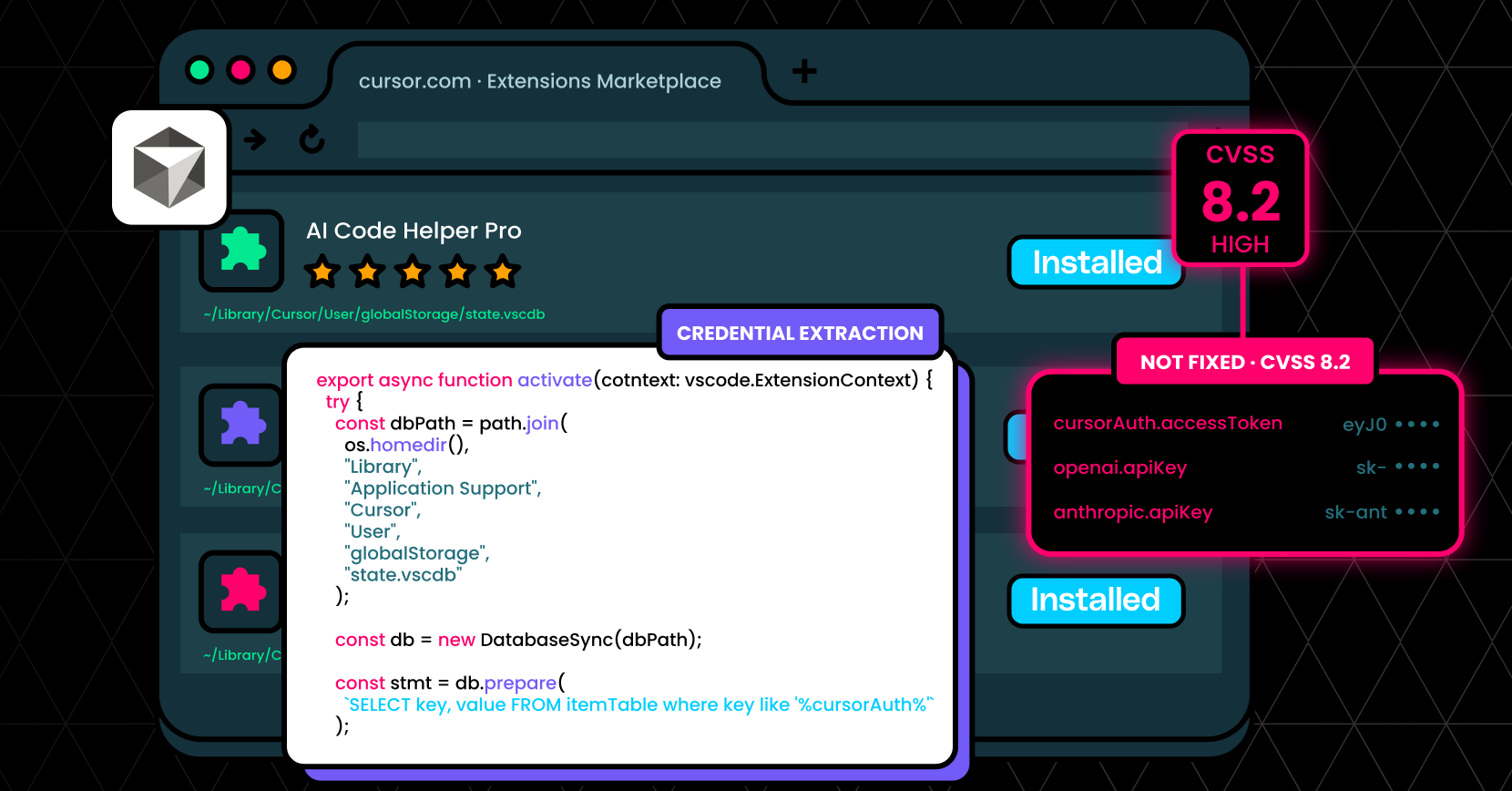
- •Cursor's vulnerability allows any extension to access sensitive API keys and session tokens.
- •The flaw has a CVSS score of 8.2 and remains unpatched as of April 28, 2026.
- •Malicious extensions can extract credentials without user interaction, increasing the risk of data theft.
A high-severity vulnerability in the Cursor AI development tool enables any installed extension to access sensitive API keys and session tokens without user interaction. Discovered by LayerX, this flaw has a CVSS score of 8.2 and stems from Cursor's use of an unprotected local SQLite database for storing credentials. As a result, any extension, regardless of permissions, can directly query this database, leading to potential credential theft and unauthorized access to third-party services. LayerX reported the issue to Cursor, which acknowledged it but stated that users must define their own trust boundaries. As of April 28, 2026, the vulnerability remains unpatched, posing significant risks to developers using Cursor. Malicious extensions can be disguised as harmless tools, making detection challenging. The implications extend beyond Cursor, potentially affecting services like OpenAI and Google.
Ask AI about this cluster
Answers cite the sources they use
Timeline
More articles in this cluster (4)
Following this threat?
Track Cursor in your own feed — you're alerted when they show up in new reporting, leak sites or exploitation.
Free account · no card needed
Continue Reading
 Critical Zero-Day Exploited in BeyondTrust Remote Support by China-linked Group A critical vulnerability in BeyondTrust Remote Support, tracked as CVE-2026-102764 with a CVSS score of 9.3, has been exploited by the China-linked espionage group Armory Castle since August 29, 2026. This flaw allows unauthenticated remote attackers to perform file operations, gaining root control and access to…
  CISA Warns of Exploited Vulnerabilities in ProFTPD, ONLYOFFICE, Strapi, and More The U.S. Cybersecurity and Infrastructure Security Agency (CISA) added five vulnerabilities to its Known Exploited Vulnerabilities (KEV) catalog, including critical flaws in ProFTPD, ONLYOFFICE Docs, Strapi, Apache Struts, and ISC BIND. These vulnerabilities are being by Chinese actors for cyber espionage, targeting…