 Trendmicro
 InstallFix Campaign Exploits AI Trust to Deliver Malware via Fake Install Pages
Article Content

- •The InstallFix campaign uses fake Claude AI installer pages to distribute malware.
- •Attackers exploit Google Ads to promote malicious pages, targeting both Windows and macOS users.
- •The primary payload observed is the Amatera Stealer, which exfiltrates sensitive information.
The InstallFix campaign targets users by creating fake installation pages for Anthropic's Claude AI, tricking them into executing malware. This sophisticated social engineering tactic exploits the growing reliance on AI tools, affecting both developers and non-technical users. The malware, primarily the Amatera Stealer, collects sensitive information and establishes persistence on compromised systems. Attackers use Google Ads to promote these malicious pages, which mimic legitimate installation commands. The campaign has been observed impacting users on both Windows and macOS platforms. Security researchers have identified the use of PowerShell and MSHTA to execute malicious commands. The threat landscape is evolving as attackers leverage common developer habits, increasing the risk of infection. Organizations are urged to remain vigilant against these deceptive tactics.
Ask AI about this cluster
Answers cite the sources they use
Timeline
More articles in this cluster (53)
Following this threat?
Track Amatera Stealer in your own feed — you're alerted when they show up in new reporting, leak sites or exploitation.
Free account · no card needed
Continue Reading
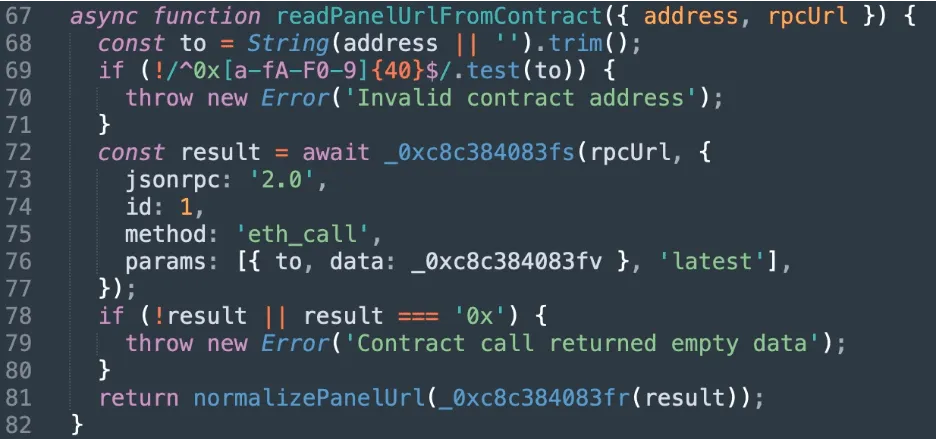 New ChainScript RAT Exploits ClickFix Lures with Blockchain C2 A newly discovered Node.js remote access trojan (RAT) named ChainScript is being deployed through ClickFix social engineering tactics, targeting Windows systems. The malware utilizes a unique command-and-control (C2) discovery method by querying a Polygon blockchain smart contract to dynamically rotate its server…
  Critical Zero-Day Exploited in BeyondTrust Remote Support by China-linked Group A critical vulnerability in BeyondTrust Remote Support, tracked as CVE-2026-102764 with a CVSS score of 9.3, has been exploited by the China-linked espionage group Armory Castle since August 29, 2026. This flaw allows unauthenticated remote attackers to perform file operations, gaining root control and access to…