 Inoni
Inoni Integration Gaps in Cyber Incident Response and Business Continuity Plans
Article Content

- •Most organizations have separate cyber incident response and business continuity plans.
- •Integration is crucial to avoid delays and confusion during cyber incidents.
- •A well-defined Statement of Work is essential for effective business continuity plan refreshes.
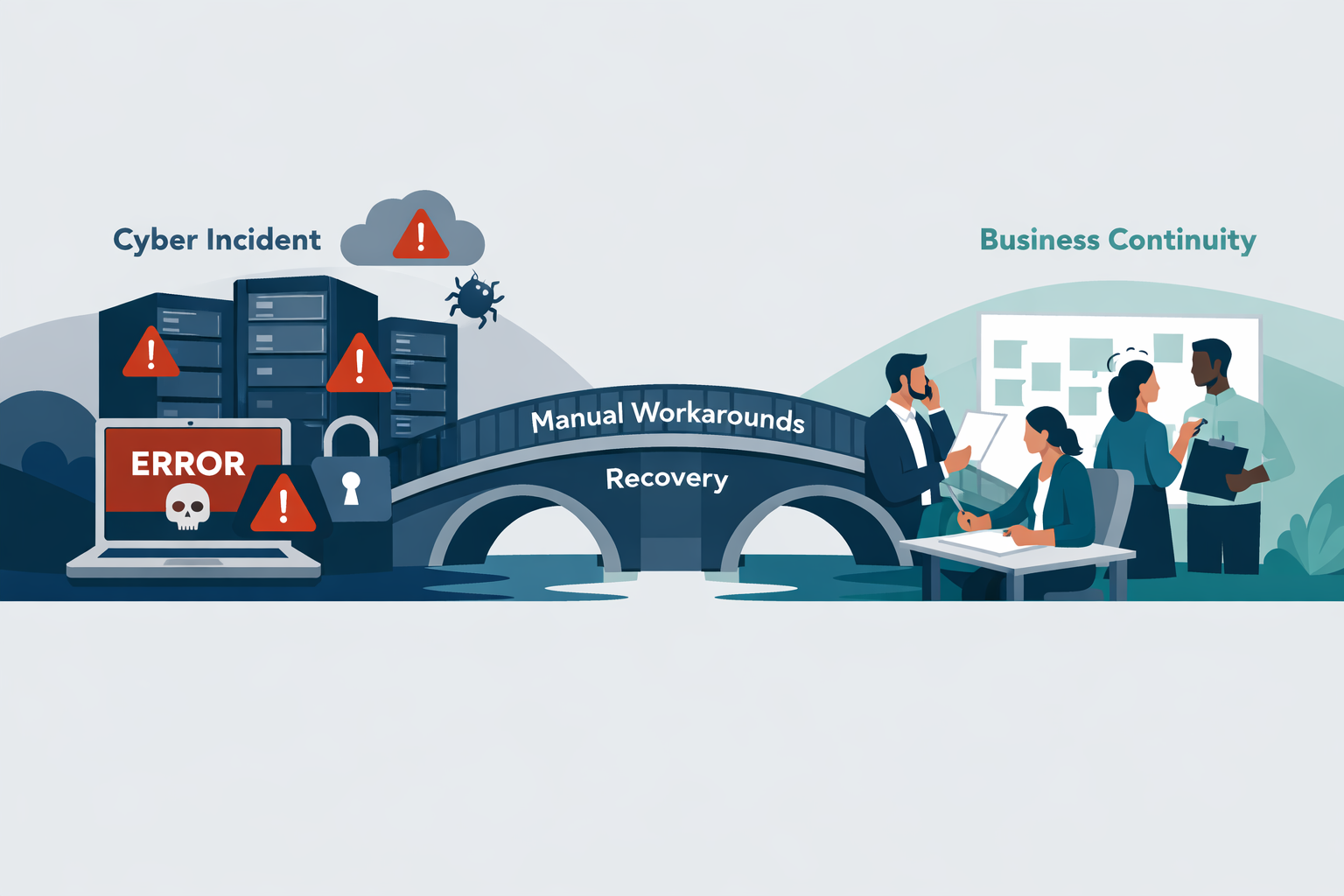
Organizations face significant challenges in aligning their cyber incident response plans with business continuity plans. The lack of integration leads to delays and confusion during incidents, as teams struggle to bridge the gap between IT and business operations. Cyber incidents are increasingly responsible for major disruptions, yet response and continuity strategies remain siloed. Effective integration requires clear escalation points and operational deliverables, which are often poorly defined. A robust Statement of Work (SOW) is essential to ensure that business continuity plans are actionable and tested under pressure. Without proper alignment, organizations risk being unprepared during critical incidents. The articles emphasize the need for practical triggers and clear governance to facilitate effective responses.
Ask AI about this cluster
Answers cite the sources they use
Timeline
More articles in this cluster (3)
Continue Reading
 Critical BeyondTrust 9.3 Vulnerability Actively Exploited by Threat Actor A critical vulnerability (CVE-2026-102764) in BeyondTrust Remote Support has been discovered and is actively being exploited by the threat group ARMORY CASTLE, reportedly linked to China. The vulnerability, which has a CVSS score of 9.3, allows unauthenticated attackers to upload files and potentially compromise host…
  Lazarus APT Launches Operation FlashHole Using AI and Post-Quantum Cryptography Kaspersky has identified a cyberespionage campaign, dubbed Operation FlashHole, attributed to the Lazarus APT group, active since July 2025. The campaign has targeted at least three organizations in South Korea's construction, software, and wire-communication sectors. Attack methods include spear-phishing emails…