 Gpsworld
 Rising Threat of GPS/GNSS Jamming and Spoofing in Europe
Article Content

- •GPS/GNSS jamming and spoofing incidents are rising, particularly in Europe.
- •Thirteen European nations have united to address growing GNSS interference.
- •The FAA's updated guide highlights global hotspots for GPS spoofing.
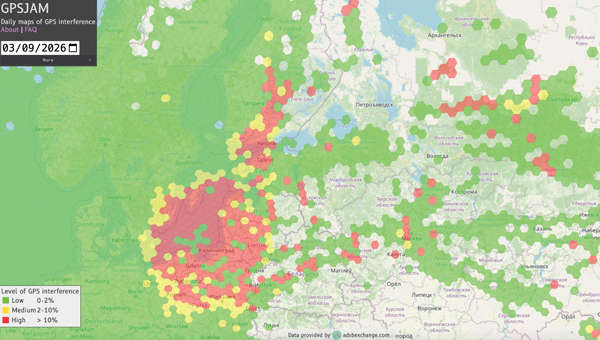
In 2026, GPS/GNSS jamming and spoofing incidents have surged, particularly affecting aviation and maritime operations in Europe. Thirteen coastal European nations and Iceland have reported increasing GNSS interference, prompting a collective response to reinforce compliance with safety regulations. The International Civil Aviation Organization (ICAO), International Telecommunication Union (ITU), and International Maritime Organization (IMO) issued a warning in March 2025, highlighting the urgent threat to public safety and international commerce. The FAA has updated its guidance on GPS interference, identifying hotspots for spoofing, including the Baltic Sea and other global regions. The FAA's revised guide emphasizes the need for operators to report interference incidents to improve coordination. The GPS Innovation Alliance (GPSIA) has called for a coordinated government strategy to combat these threats, focusing on deterrence and enforcement against bad actors. Without immediate action, the risk to public safety and global commerce is expected to escalate.
Ask AI about this cluster
Answers cite the sources they use
Timeline
More articles in this cluster (2)
Continue Reading
 CISA Mandates Urgent Patching of Five Critical Flaws Exploited by Flax Typhoon The U.S. Cybersecurity and Infrastructure Security Agency (CISA) has ordered federal agencies to patch five critical vulnerabilities by October 11, 2026, following exploitation by the China-linked hacking group Flax Typhoon. The vulnerabilities, added to CISA's Known Exploited Vulnerabilities (KEV) catalog, include…
  Critical Zero-Day Exploit Found in BeyondTrust Remote Support BeyondTrust disclosed a critical vulnerability, CVE-2026-102764, in its Remote Support product, exploited by the suspected China-linked group ARMORY CASTLE since August 2026. This flaw, with a CVSS score of 9.3, allows attackers to perform arbitrary file uploads and gain host-level control without requiring…