 Cybersecuritynews
 Stealthy Remcos RAT Campaign Utilizes Obfuscated Scripts in Phishing Attack
Article Content

- •Remcos RAT campaign utilizes obfuscated scripts and trusted Windows tools.
- •Attack begins with a phishing email containing a deceptive ZIP file.
- •Infection chain operates largely in memory, evading traditional defenses.
A new Remcos RAT campaign has been identified, employing obfuscated scripts and trusted Windows binaries to execute a largely fileless infection chain. The attack initiates through a phishing email containing a ZIP archive named 'MV MERKET COOPER SPECIFICATION.zip,' which mimics a legitimate business document to deceive users. This multi-stage attack does not rely on a single malicious file, making it more challenging for traditional defenses to detect. The infection runs almost entirely in memory, further complicating remediation efforts. Organizations utilizing Windows systems are particularly at risk due to the use of trusted binaries. The campaign highlights the evolving tactics of cybercriminals who are increasingly adept at evading detection. Current status indicates ongoing investigations into the scope and impact of the attack. No specific numbers or CVEs were mentioned in the articles.
Ask AI about this cluster
Answers cite the sources they use
Timeline
More articles in this cluster (2)
Following this threat?
Track Remcos RAT in your own feed — you're alerted when they show up in new reporting, leak sites or exploitation.
Free account · no card needed
Continue Reading
 Surge in Exploited CVEs and Malware Activity in H1 2026 In the first half of 2026, Insikt Group reported 215 actively exploited CVEs, marking a 34% increase from the previous year. Notably, AsyncRAT emerged as the leading malware, with nearly 60,000 unique hashes. The report highlighted a significant rise in NFC-based Android attacks, which surged by 188%. Threat actors…
 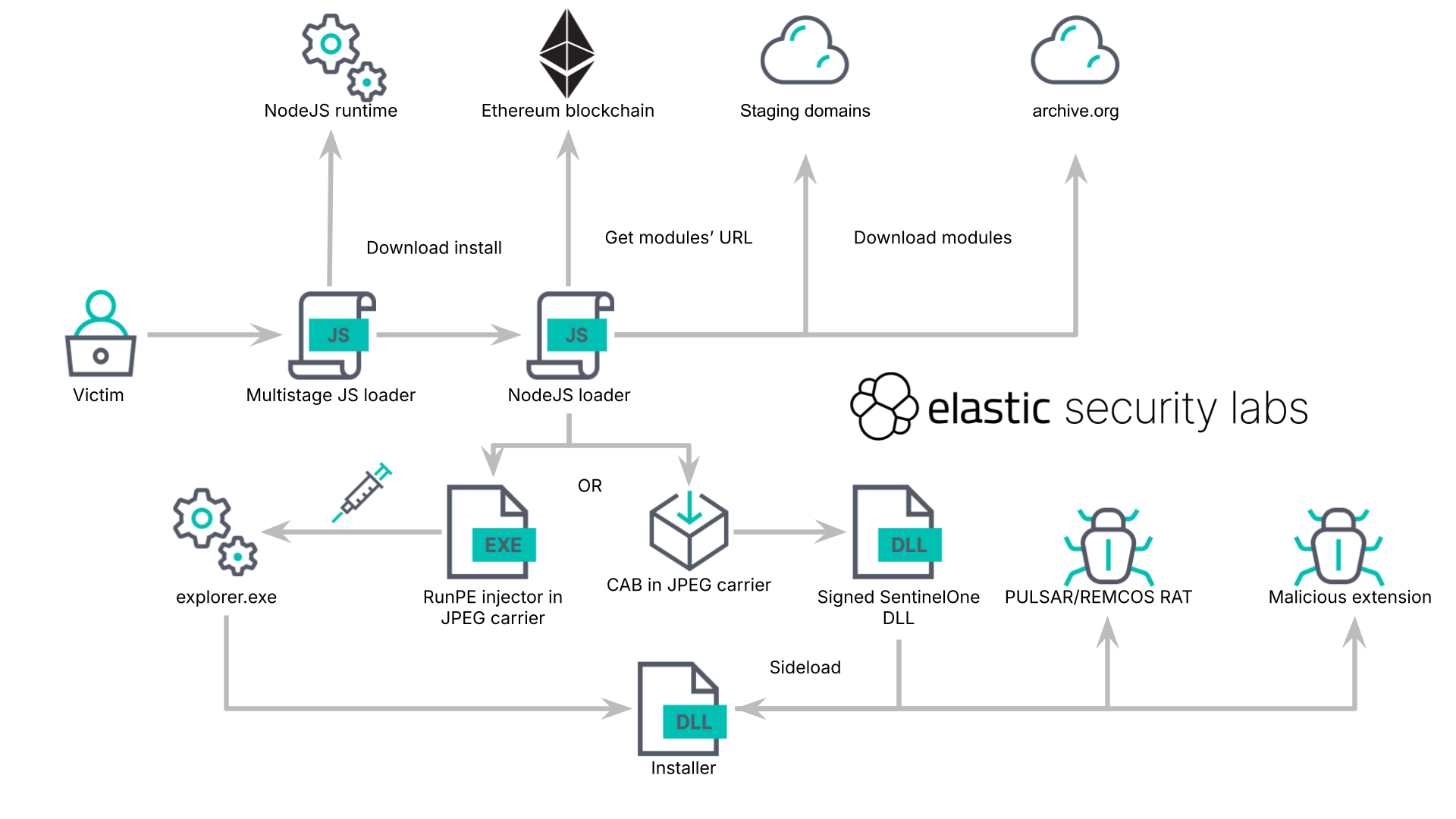 KREMLIN Malware Targets Brazilian Banking Users via Browser Extensions Elastic Security Labs has identified a Brazilian banking malware campaign named REF9334, active since May 2025. This campaign utilizes a malicious browser extension called KREMLIN to steal credentials and session tokens from users of Google Chrome and Microsoft Edge. The attackers employ social engineering tactics…