 Back Gbhackers
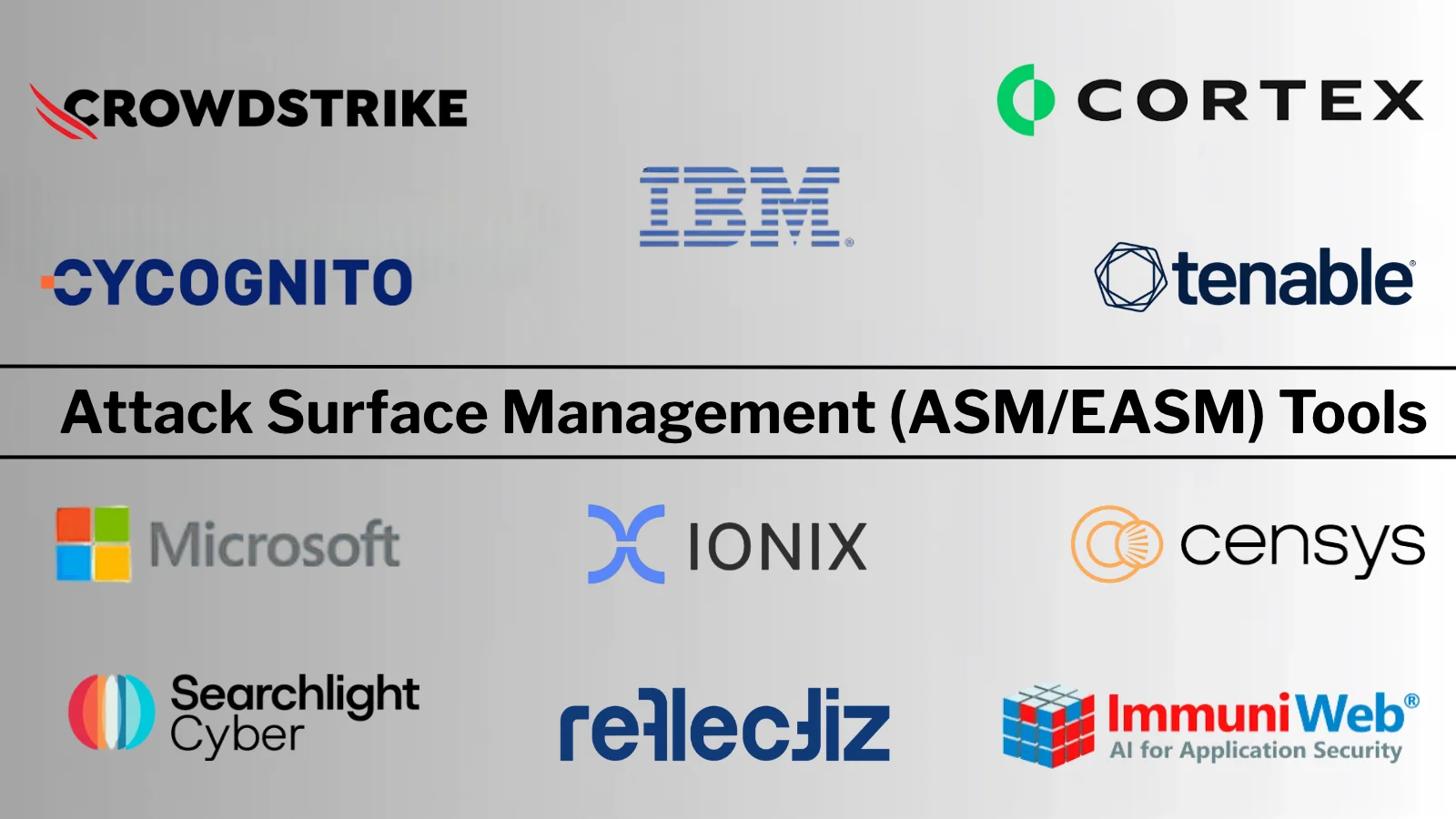
11 Attack Surface Management (ASM/EASM) Tools: The 2026 Buyer’s Verdict Guide
External attack surface management settles a question attackers resolve every day and most defenders never do: which of your assets is genuinely reachable from the internet at this moment? The buying trap is attribution mis-mapped assets in both directions flood teams with other companies’ infrastructure or miss your own, and it’s the complaint that kills programs.
This verdict guide judges eleven tools on attribution accuracy, refresh velocity, exploitability validation, and ownership-routing workflow, with the discovery-versus-validation philosophy declared on every entry. ASM maps the outside; our CAASM guide aggregates the inside, and both feed CTEM .
The Capability Grid First
Research-based assessment weighing five things: discovery depth and attribution accuracy, refresh speed, exploitability testing, ownership-routing workflow, and pricing clarity. No paid placements. [VERIFY]
The Eleven Tools, Reviewed and Judged
1. Palo Alto (Cortex Xpanse) — The Internet-Scale Attribution
Xpanse scans the entire internet without pause and attributes what it turns up with enough depth to act on the forgotten subdomain, the acquired company’s server, the cloud bucket stood up on Tuesday. Within Cortex, those discoveries flow on into automation.
Key capabilities: internet-scale discovery; attribution depth; freshness; Cortex routing.
Pricing structure: Cortex module.
Verdict: the attacker’s reconnaissance, running for you.
2. Microsoft (Defender EASM) — The Estate-Bundled Map
Defender EASM charts the external estate and ties it to the internal one Microsoft already monitors discoveries connected to Defender device and identity context, with findings feeding into Security Exposure Management’s attack paths .
Key capabilities: estate fusion; bundled-adjacent economics; exposure-path integration.
Pricing structure: Defender EASM licensing.
Verdict: the external map wired to your internal one.
3. Tenable — The Exposure-Estate Extension
Tenable’s ASM, from the Bit Discovery lineage, feeds the exposure estate external discoveries dropping into the same ranking calculus as infrastructure, cloud, and identity findings . One queue for Tenable programs.
Key capabilities: exposure-platform unity; one-queue economics.
Pricing structure: Tenable One.
Verdict: the surface joins the exposure math.
4. Assetnote — The Research-Grade Discovery
Assetnote (now within Searchlight Cyber) built research-grade continuous discovery with a focus on finding the exploitable fast: deep asset enumeration, exposure detection , and the security-research pedigree that surfaces what others miss. Confirm current packaging.
Key capabilities: research-grade discovery; exploitable-exposure focus; enumeration depth.
Pricing structure: platform tiers.
Verdict: the researcher’s discovery engine.
5. CyCognito — The Attacker-Logic Discovery
CyCognito reconstructs attacker logic: graphing organizational relationships to find unclaimed assets, then probes those discoveries for exploitability so the queue lands risk-ranked instead of raw.
Key capabilities: subsidiary-graph discovery; active testing; risk-ranked output.
Pricing structure: platform tiers.
Verdict: finds the unclaimed, proves the exploitable.
6. ImmuniWeb — The AI-and-Testing Lane
ImmuniWeb pairs AI-assisted attack-surface discovery with security testing and dark-web monitoring in one platform, at economics accessible below the enterprise anchors. The testing-inclusive value lane.
Key capabilities: AI discovery; security testing; dark-web monitoring.
Pricing structure: subscription tiers.
Verdict: discovery with testing, value-priced.
7. CrowdStrike (Falcon Surface) — The Console-Unified Map
Falcon Surface places the external map inside the console the SOC already lives in discoveries ranked by adversary intelligence, tied to the agent-truth internal estate , and acted on alongside detections.
Key capabilities: console unity; adversary-informed ranking; internal-external join.
Pricing structure: Falcon module.
Verdict: the surface map in the SOC’s console.
8. Reflectiz — The Client-Side Surface Lane
Reflectiz is a lane check: continuous monitoring of the client-side web attack surface third-party scripts, tags, and supply-chain code running in browsers rather than infrastructure-scale attribution. The web-skimming and script-risk specialist. (Lane: client-side web.)
Key capabilities: client-side script monitoring; supply-chain-code risk; browser surface.
Pricing structure: per-site tiers.
Verdict: the client-side web surface, not infra ASM scope accordingly.
9. Censys — The Internet-Scan Authority
Censys owns the underlying data internet-wide scan data at research-grade depth and freshness , an ASM platform built over it, and a raw dataset that drives a large of the industry’s investigations.
Key capabilities: dataset authority; research depth; API to raw truth.
Pricing structure: platform + data tiers.
Verdict: the internet’s scan record, queryable.
10. IBM (Randori) — The Adversarial-Recon Lineage
Randori’s craft reconnaissance that ranks discoveries by how tempting they are to an attacker and feeds continuous automated red teaming carries on inside IBM’s portfolio. The recon-to-attack pipeline stays distinctive; confirm packaging.
Key capabilities: temptation-ranked recon; red-team pipeline; IBM integration.
Pricing structure: portfolio packaging.
Verdict: the adversary’s shopping list, with receipts to confirm.
11. IONIX — The Exploitability-Validated Surface
IONIX tests while it discovers active probing that separates reachable-and-exploitable from merely-present, together with digital-supply-chain mapping of third-party service dependencies . Fewer findings, more of them true.
Key capabilities: exploit validation; supply-chain reach; signal economy.
Pricing structure: subscription tiers.
Verdict: the surface map that proves its claims.
Full Comparison Table
Run the trial as an attribution audit: seed each contender with assets you already know (two subsidiaries and an acquisition among them) and tally both misses and false attributions over-attribution buries teams in other companies’ infrastructure, the complaint that sinks programs.
Measure freshness for real (stand up a cloud asset and clock the hours to map), weigh the validation stance (active testing in the CyCognito, IONIX, or Assetnote class versus discovery-only engines fewer, truer findings against maximum coverage), and settle the ownership-resolution process before the first run, since unattributed discoveries linger forever and week one will throw up orphans.
Scope the lane checks honestly (Reflectiz covers client-side web, not infra attribution), price by seed-domain and subsidiary counts, demand API access so discoveries flow into existing queues, and route the whole feed into CTEM prioritization the surface map is scope-and-discover fuel, not a destination dashboard.
Portfolio-era packaging (Randori, Assetnote) gets confirmed in writing where shortlisted, and the CAASM lane handles the internal half.
What are the best attack surface management tools in 2026? Cortex Xpanse for internet-scale attribution, Defender EASM for estate fusion, CyCognito for attacker-logic discovery that tests as it finds, Censys for scan-data authority, alongside Tenable, Assetnote, ImmuniWeb, Falcon Surface, Reflectiz (client-side), IBM Randori, and IONIX by lens.
ASM versus CAASM what’s the difference? ASM/EASM charts the external, attacker-reachable estate; CAASM consolidates internal asset truth from your own tools complementary views that most mature programs keep in parallel.
What’s the chronic ASM problem? Attribution assets mis-mapped in both directions; test with seeded known assets before you buy, and set up the ownership-resolution process for whatever discovery leaves orphaned.
How fast should discoveries appear? Hours-class for new cloud assets among the leaders clock it for real in the pilot, since refresh speed is what separates EASM from archaeology.
Should ASM findings be actively tested? Validation-inclusive engines (CyCognito, IONIX, Assetnote) slash the noise, while discovery-only engines maximize coverage pick based on whether your constraint is finding things or trusting them.
Seed the test, count the false claims, pre-wire the orphans. Xpanse runs the adversary’s reconnaissance at scale, Microsoft and CrowdStrike and Tenable connect the outside map to the inside one, CyCognito and IONIX and Assetnote prove what they find, Censys holds the scan record, Reflectiz watches the browser check the attribution, clock the freshness, clear the orphans, and pipe it all into the CTEM cycle where maps become fixes.
The full story
This article is one source in a clustered incident — the cluster page carries the summary, timeline and every other outlet covering it.
