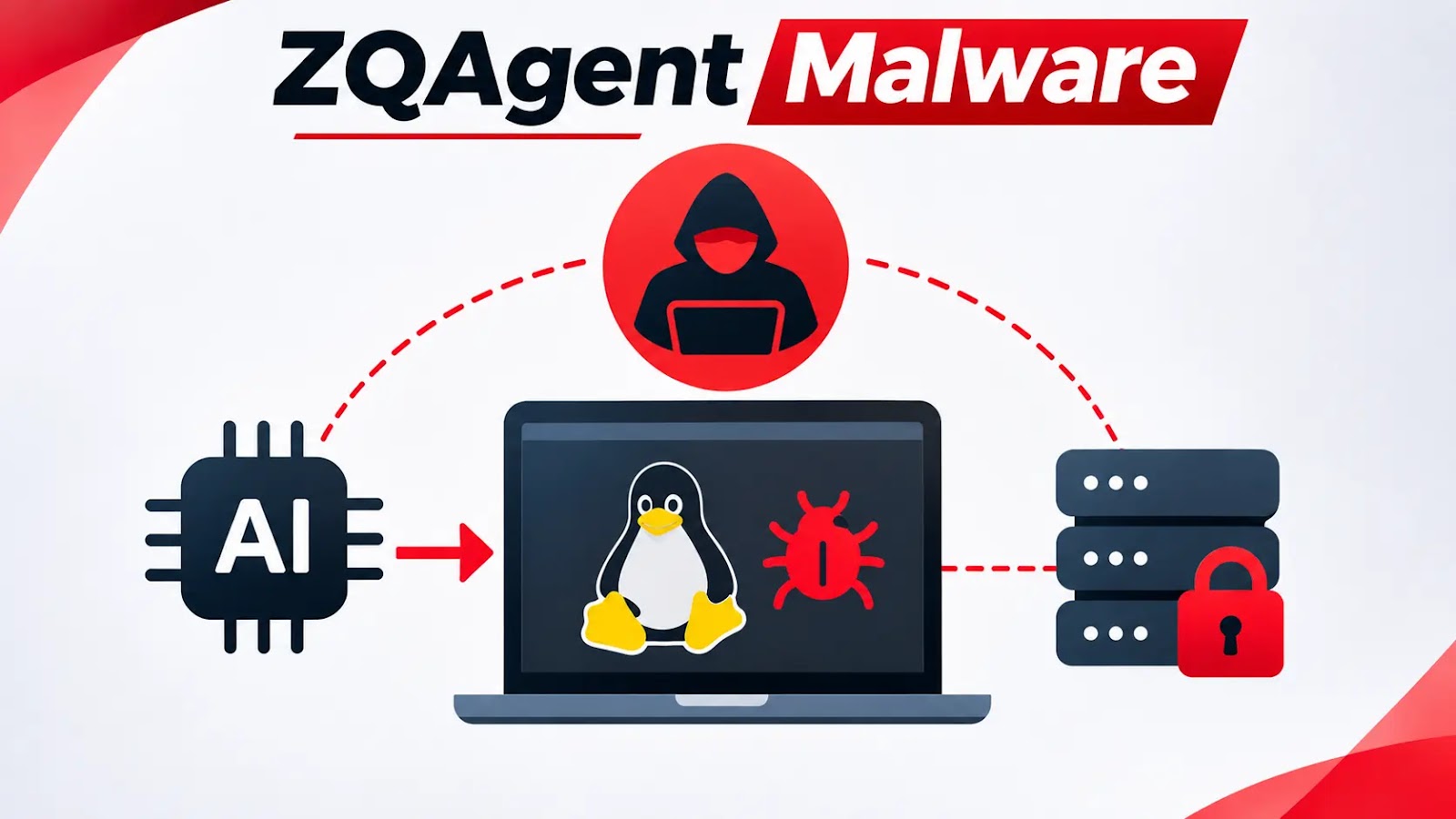
An LLM-driven intrusion tool has deployed a persistent Linux backdoor, which is unusual for this class of attack.
LLM-driven intrusions have mostly been fast, noisy smash-and-grab operations. They rarely leave footholds beyond staged credentials, so defenders can usually contain them by isolating the initial-access vector and revoking credentials.
ZQAgent breaks that pattern. NVISO believes the persistent backdoor reflects operator-specific instructions rather than autonomous behavior.
ARTEX is an open-source, multi-agent offensive platform written in Go. Google’s Threat Intelligence Group says it persists through community forks even though its original GitHub repository was removed in October 2026.
CrowdStrike separately documented VAPOR PANDA using ARTEX against more than 200 organizations.
NVISO found ZQAgent under /tmp/zqa/systemd-timesyncd. Similar samples were reported from Taiwan. All known samples use 37.122.150[.]15 and bloonspace[.]com for command and control.
NVISO ties this infrastructure to the cluster FOG0003. Team Cymru network intelligence suggests FOG0003 likely deployed the backdoor in Asia against government and human-rights organizations.
NVISO said that , ARTEX, installed a new backdoor called ZQAgent during an incident response engagement in Belgium. The backdoor gives its operator a long-term foothold.
ZQAgent copies itself into an anonymous in-memory file. The file shows up as /memfd:a (deleted). The backdoor then restarts as a detached process that impersonates the dbus-daemon utility, using a spoofed command line.
It also keeps its configuration encrypted except when it needs to read it. It layers network encryption, including ChaCha20 variants.
ZQAgent’s operation codes cover arbitrary command execution through /bin/sh -c and memory-only managed processes.
They also cover interactive shells, file listing, moving, renaming and deletion, process termination, and blocking and non-blocking TCP/UDP connection management. The last group supports network tunneling.
ZQAgent persists through both systemd services and cron jobs, and it time-stomps every artifact it stages. As root, it copies itself under /usr/lib/systemd and writes a unit to /etc/systemd/system.
Other users get $ /.local/ and $ /.config/systemd/user. The unit is described as “Device event journal daemon”.
It uses Restart=always with a 30-second delay and discards its output. Non-root instances call loginctl enable-linger so they survive logout.
A cron entry using @reboot adds a second path. Root writes it to /etc/cron.d, and other users append it with the crontab binary.
NVISO warns that LLMs could shorten ransomware’s time-to-ransom and widen espionage attack surfaces.
It urges stronger perimeter segmentation, asset telemetry, external attack surface management and faster response, including automated asset isolation.
Mandiant’s recommendations include short-lived credentials, control-plane isolation and behavioral detection.
Defenders should hunt for deleted memfd processes, a dbus-daemon process with no matching binary on disk, and unexpected systemd units or cron entries.
Indicators of Compromise
Note: IP addresses and domains are intentionally defanged (e.g., [.] ) to prevent accidental resolution or hyperlinking. Re-fang only within controlled threat intelligence platforms such as MISP, VirusTotal, or your SIEM.
Join ANY.RUN and Torq to learn how TI Feeds can help your SOC detect up to 30% of malicious IOCs earlier & accelerate investigations -> Attend Free Live Webinar
Artificial Intelligence
Cyber security Course
Cyber Security Resources
Cybersecurity
Information Gathering
Information Security Risks
New Android Camera Attack Lets Hackers Eavesdrop on Speech Without Microphone Access
EvilTokens Phishing Infrastructure Resurfaces After Microsoft Takedown With New Device-Code Attack Hosts
Hackers Could Suddenly Apply Trailer Brakes at Highway Speeds Through Bluetooth Vulnerability
12 Fraud Detection Software: The 2026 Buyer’s Verdict Guide
12 Brand Protection & Anti-Impersonation Tools: The 2026 Buyer’s Verdict Guide
12 Digital Risk Protection (DRP) Solutions: The 2026 Buyer’s Verdict Guide
