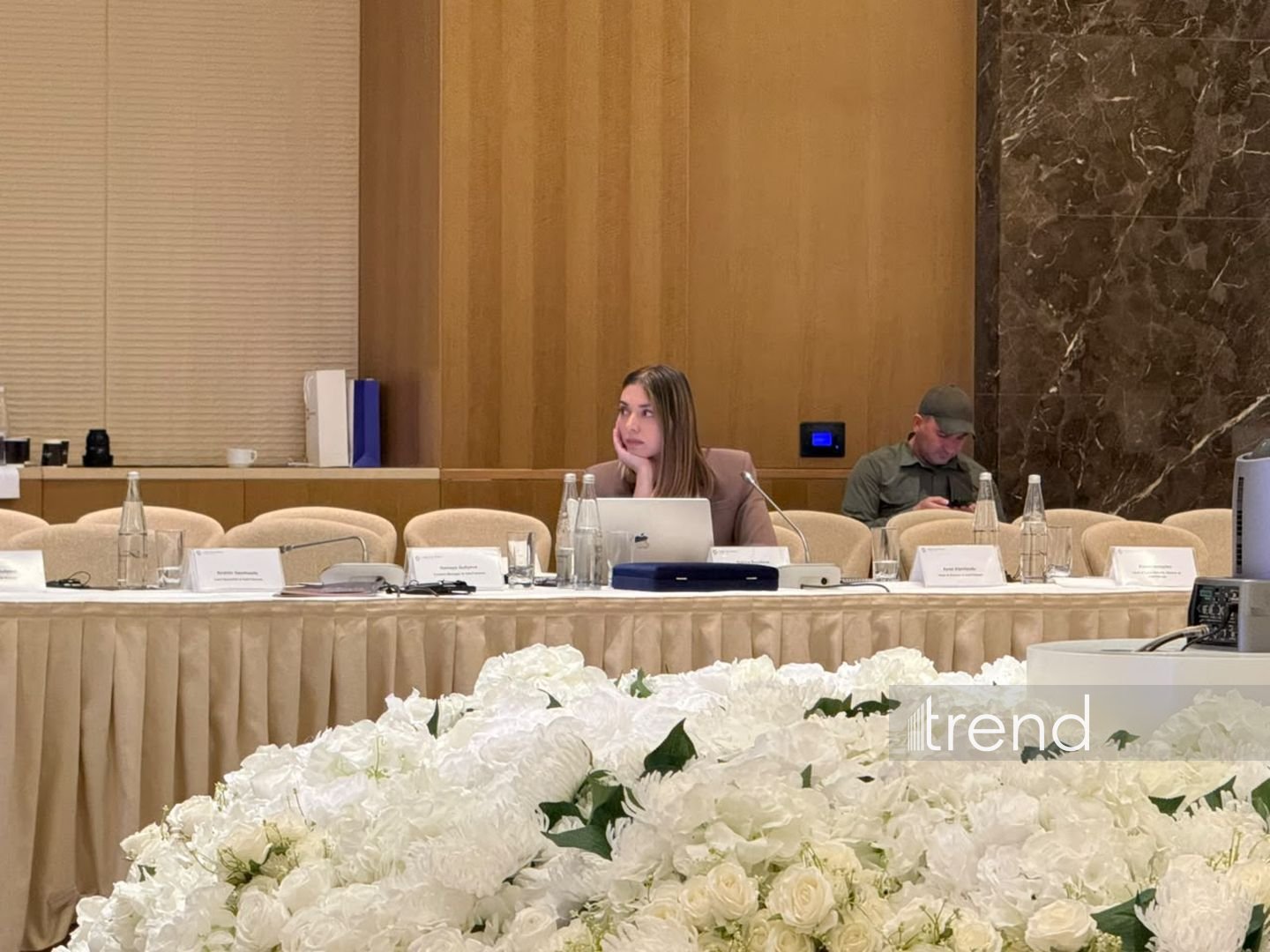
BAKU, Azerbaijan, November 19. AI has not only facilitated the spread of disinformation but has also increased its scale, persuasiveness, and ability to be tailored to specific audiences. Under these circumstances, the media’s primary task is not to be the first to publish information, but to verify its accuracy and safeguard public trust, Head of Department at the Media and Broadcasting Council of Azerbaijan Sabina Seyidova said, Trend 's correspondent reports.
Seyidova made the statement in Baku during her remarks at the panel discussion “Information Warfare and Deepfakes: Defending the Truth in the Digital Age,” held as part of the Second International Conference on Cyberdiplomacy.
She noted that the development of artificial intelligence has ushered in a completely new phase in both the spread of disinformation and the fight against it. Whereas previously, fabricating false information, manipulating visual content, and disseminating it to a wide audience required certain resources and technical skills, this process has now become significantly simpler and faster.
“Today, it is possible to imitate someone’s voice, create a video in the name of any person, and produce a realistic-looking account of events in just a few minutes. This, in turn, increases both the scale and the persuasiveness of disinformation,” she noted.
According to Sabina Seyidova, AI not only makes it easier to create fake news but also creates opportunities for more targeted and organized disinformation campaigns. The same information can be disseminated across various platforms, in different languages, and using visual materials, as well as tailored to the specific characteristics of individual audiences.
She emphasized that it is incorrect to view modern disinformation solely as fake news: “We must understand it as a broader system of influence.”
Sabina Seyidova noted that media organizations must first and foremost verify the source of published materials, the date of their initial publication, the location where they were recorded, and the context in which they were created. It is important to compare photos and videos with their versions, analyze audio and visual details, and cross-reference data with reliable primary sources.
She added that media organizations can use technological tools to help identify deepfakes, including artificial intelligence detectors. However, none of these tools guarantees 100% accuracy.
In closing her remarks, Sabina Seyidova reiterated that the primary goal in combating disinformation should not be to reduce the number of opinions expressed in the information space, but rather to facilitate public access to the truth.
The full story
This article is one source in a clustered incident — the cluster page carries the summary, timeline and every other outlet covering it.
