 Back Techtimes
Apple Pushes watchOS 27.2.1 and visionOS 27.2.1 as AI Weaponizes Patches Within Hours
Apple on Monday deployed security patches across nearly every software platform it ships — including watchOS 27.2.1 and visionOS 27.2.1 — in a coordinated release that reflects a sharper-than-ever urgency in the company's security posture. The updates carry no new user-facing features; they exist because the window between Apple publishing a patch and sophisticated attackers weaponizing it is now potentially measured in hours, not weeks.
That is not rhetorical urgency. As The Web reported, Apple told Reuters in June that it no longer expects its traditional annual release timing to be fast enough — specifically because AI tools now allow attackers to read code diffs, identify patched vulnerabilities, and generate working exploit candidates far faster than a human reverse-engineer ever could. That acknowledgment is what today's release looks like in practice: twelve distinct software builds across three OS generations, delivered simultaneously, before Apple has even published the CVE identifiers that would tell attackers exactly what was fixed.
Apple's November 9 rollout spans the full active software stack:
iPadOS (older devices)
26B131, 26B8132 for PROLED XDR models
The two notable absences: tvOS and HomePod software. Reports suggest those may follow later this week, potentially coordinated with the upcoming Apple TV 4K launch, though Apple has made no announcement on timing.
Security vulnerability details have not yet been published. Apple will post the CVE identifiers and descriptions at Apple's security releases page once the update window has passed — a deliberate delay designed to keep exploit details out of attackers' hands during the period when most users are still unpatched.
Why Apple Is Updating So Fast Now
This is the second significant security event since the late-October iOS 27.2 / watchOS 27.2 release, which itself patched 163 iOS and 263 macOS vulnerabilities — one of Apple's largest October security releases on record.
The acceleration is not coincidence. Apple's public position, articulated to Reuters in June , is that AI-powered tools have fundamentally changed the economics of exploit development. What previously required a skilled reverse-engineer spending days analyzing a binary diff can now be partially automated: an LLM reads the diff, identifies what changed, and suggests exploit pathways. The fix needs to reach users' devices before attackers complete that analysis.
That urgency is validated by what 2026 has actually looked like. In September, Apple patched a CoreGraphics code execution flaw — a bug allowing arbitrary code execution through a maliciously crafted file — that Apple acknowledged "may have been exploited in an extremely sophisticated attack against specific targeted individuals." Security researchers noted the attack profile was consistent with commercial spyware. Earlier in the year, Apple documented a zero-day in iOS 26.3 being actively exploited in targeted attacks before the patch closed it.
Today's 27.2.1 follows the same defensive logic: get patches to devices fast, withhold the CVE specifics, and trust the update infrastructure to do its job before attackers can reverse-engineer what changed.
How the Update Actually Reaches Your Devices
Understanding why you should update immediately is easier when you understand how the update reaches you — and why it cannot be faked.
The delta mechanism: Apple does not send you a full copy of watchOS or visionOS when you update. Instead, the update server sends a delta package — a mathematically compressed set of differences between your current version and the new one. For watchOS, this package typically lands in the low-tens-of-megabytes range, covering only the changed components. The binary patch format Apple uses ( Apple's BXDIFF50 patch format for current-generation updates) transforms individual on-device files into their patched equivalents without replacing the entire OS image.
System Software Authorization: This is the mechanism that makes Apple's OTA delivery secure against interception and downgrade attacks. When your device downloads an update, it doesn't simply install whatever arrives over the network. Instead, it sends a bundle to Apple's signing server for ECID verification : the cryptographic measurement of each component to be installed (the kernel, iBoot, the OS image), plus a random one-time nonce that prevents replaying a saved server response, plus your device's Exclusive Chip Identification (ECID) — a unique identifier burned into the chip during manufacturing.
Apple's server checks those component measurements against currently-permitted software versions, then cryptographically signs the result with your device's ECID baked in. Your device verifies that signature at every boot. The practical outcome: an older firmware image authorized for one device cannot be installed on another, and no one can install a version Apple has stopped signing — which is exactly what happens to known-vulnerable OS versions after a patch is released.
The watchOS path: Apple Watch adds a layer. Because the watch cannot connect directly to Apple's servers for initial update delivery in most configurations, the update is brokered through the Watch app on your paired iPhone. You initiate the process on the iPhone; the update package is relayed to the watch over Bluetooth. The watch's Bluetooth stack applies Apple Watch Bluetooth security features — bonding, authentication, message integrity, and address randomization — and once the update arrives, the watch verifies it through its own System Software Authorization chain before installation. The watch cannot be fed a spoofed update through the Bluetooth relay; the signed ECID binding prevents it.
The visionOS case: Vision Pro updates directly over Wi-Fi using the same SSA mechanism. What makes visionOS updates particularly time-sensitive is the nature of the device's sessions: the Vision Pro maintains a persistent spatial computing environment that processes location, biometrics, and eye-tracking data continuously. A lingering vulnerability in that environment is a lingering exposure of data that is significantly more personal than what a standard smartphone session typically handles.
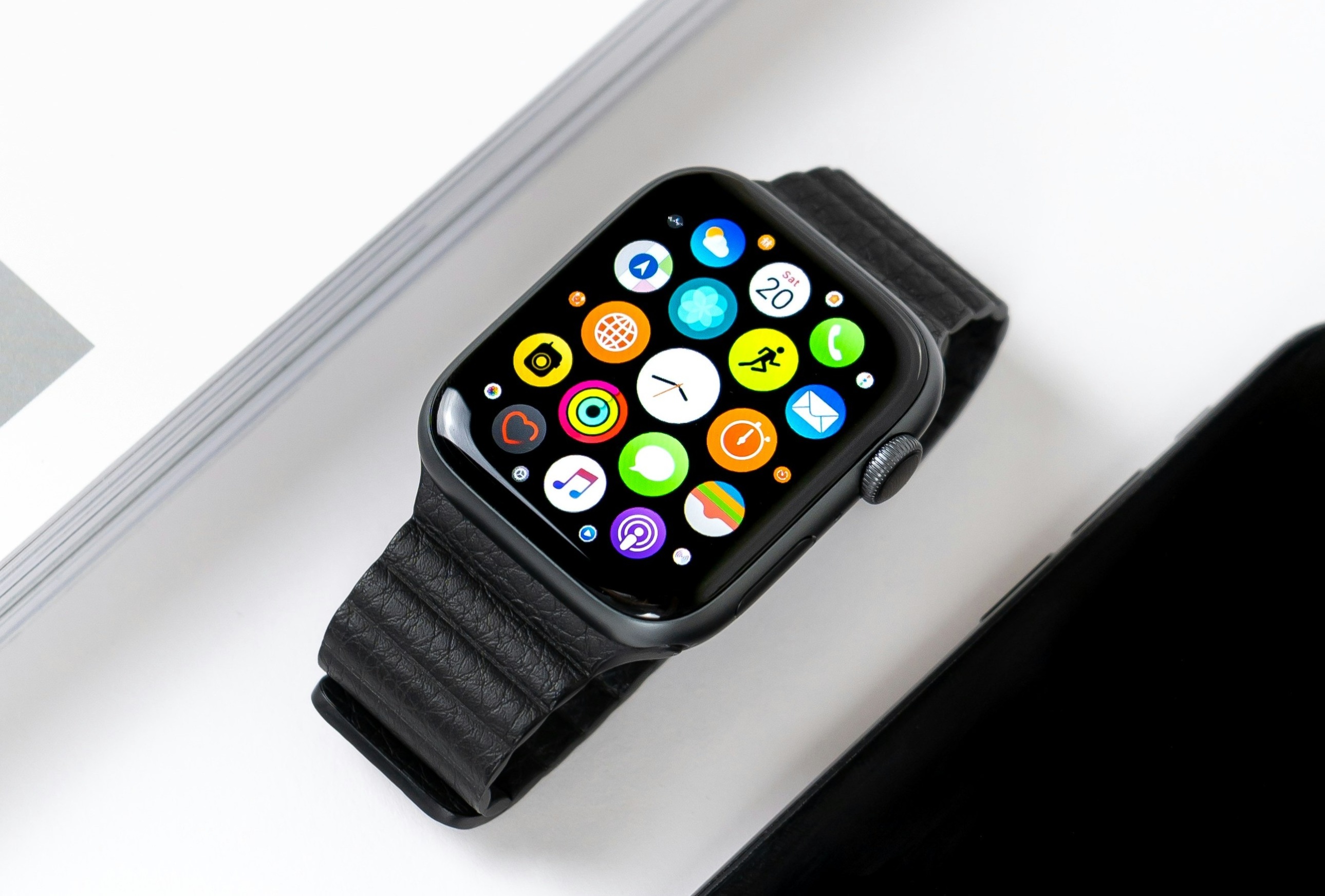
Apple Watch users: watchOS 27.2.1 is available for Apple Watch Series 10, Series 11, Series 12, Ultra, Ultra 2, and Ultra 4. If your watch is on watchOS 27.x in any prior version, install 27.2.1. If you are on a prior-generation device that has not yet moved to watchOS 27, Apple is simultaneously shipping watchOS 26.6.1 for that hardware. Update regardless of which line you're on.
Vision Pro owners: visionOS 27.2.1 is available for all Vision Pro units. Given the persistent-session nature of spatial computing and the device's access to biometric and spatial data, prompt installation is advisable as soon as the update is available in your region.
iPhone, iPad, and Mac users: iOS 27.2.1 and iPadOS 27.2.1 for current-generation hardware; iOS 26.7.3 / iPadOS 26.7.3 for prior-gen; iOS 18.7.12 / iPadOS 18.7.12 for older devices. macOS 27.2.1 for the current Golden Gate release; macOS Tahoe 26.7.3 or macOS Sequoia 15.8.3 for earlier macOS versions.
What tvOS and HomePod? Neither received an update today. If you are holding off on other updates until you see tvOS included, Apple's history suggests those will follow within days.
Open the Watch app on your paired iPhone
Tap General → Software Update
Download and install watchOS 27.2.1
Keep the watch on its charger during installation — Apple requires at least 50% battery
Inside the headset, go to Settings → General → Software Update
Download and install visionOS 27.2.1
Connect to power and Wi-Fi before starting
Settings → General → Software Update
Apple → System Settings → General → Software Update
The full list of patched security vulnerabilities will appear at Apple's security releases page once Apple publishes the CVE details. For now, the description is consistent across all today's releases: bug fixes and security updates. Given what 2026's exploit activity has looked like, that characterization should be treated as sufficient reason to update immediately rather than a cue to wait for more information.
The full story
This article is one source in a clustered incident — the cluster page carries the summary, timeline and every other outlet covering it.
