Get an unsolicited text or email offering you a job? It’s more than likely a scam.
But the tactics scammers are using to pull you into their schemes are changing.
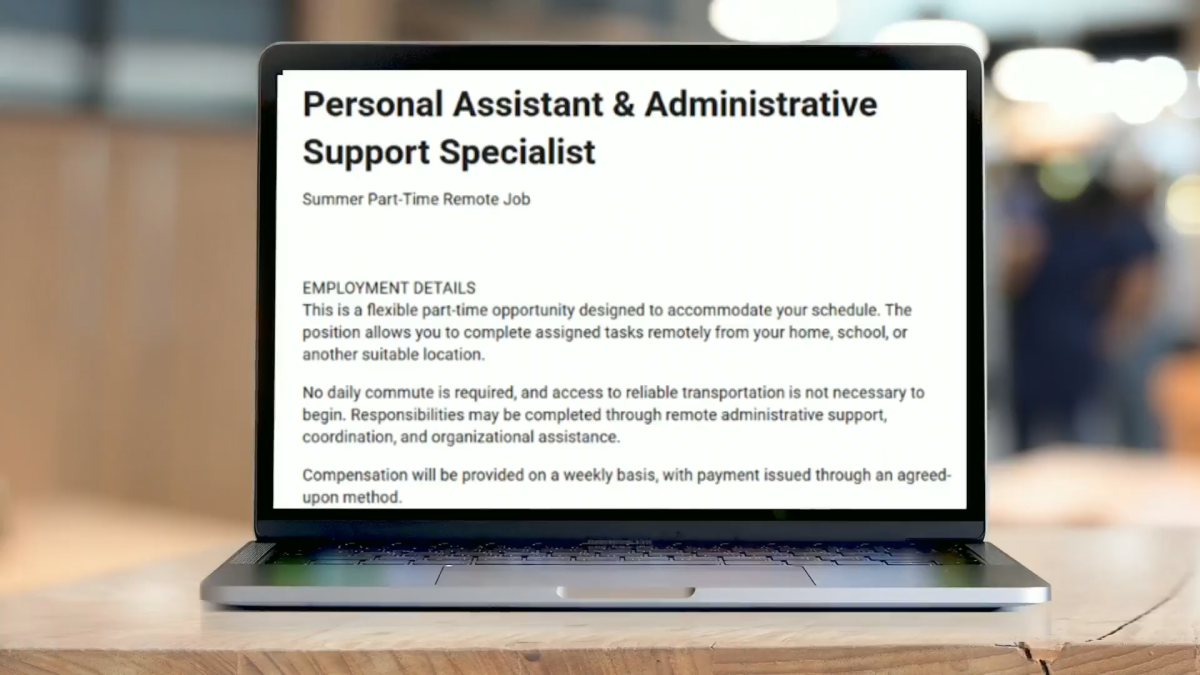
Take, for example, a phishing campaign that targeted thousands of students at one college, according to the cybersecurity firm Check Point.
Check Point did not reveal the name of the school. But it did redacted versions of the phishing emails with NBC 5 Responds.
According to Check Point, the email came from a compromised email account associated with the college. It offered part-time summer employment for currently enrolled students. Included in the email is a link to “apply here." The link then takes the recipient to a Google Forms page that asks for personal information, including banking details.
Cyber Security expert Tony Sabaj explains the shift experts are noticing from scammers.
“This was a legitimate Google Docs link that could be used for recruiting purposes, but it was asking for sensitive information before you even have the job offer,” Sabaj said.
He said fraudsters are starting to shift away from sending random texts or sending you a link that would install malware on your device. Though, those phishing campaigns are still common.
“In fact, this morning… I got a text” [offering remote work]. “You can make $100 an hour kind of thing,” Sabaj said.
He explained the text included the name of a real company, but he spotted the scam right away because he hasn’t been applying for jobs, and the offer was for a field of work in which he has no job experience.
You can spot a scam by paying close attention to the questions the prospective employer is asking you before a job offer is made.
Sabaj explained, “If they're asking for banking information, if they are asking for Social Security numbers, if they are asking for maybe even health care information, that's another red flag. And then another big red flag is the sense of urgency.”
He also suggests looking to see if you’re qualified or in the field of work that you’re being contacted . Chances are, it’s not a fit. And that’s another red flag.
If you’re not applying for jobs, it can be pretty easy to spot a phony job offer. Strangers likely won’t you directly, offering work. But what if you are searching for your job or career opportunity?
According to Sabaj, scammers may use job recruitment websites to pin you as their target.
“That information is fairly public and that information can be gathered to target you for certain attacks.”
Sabaj said he’s not against using employment-seeking websites, but he advises you remain cautious.
“Once you sort of signal that you're open for work, just put your guard up and be on the lookout for some of those red flags in these job offers," he added.
The Better Business Bureau and the Federal Trade Commission say you should be suspicious of job offers when:
The most recent data from the FTC found in 2024, Americans lost more than $750 million to scams promising business and job opportunities.
The full story
This article is one source in a clustered incident — the cluster page carries the summary, timeline and every other outlet covering it.
