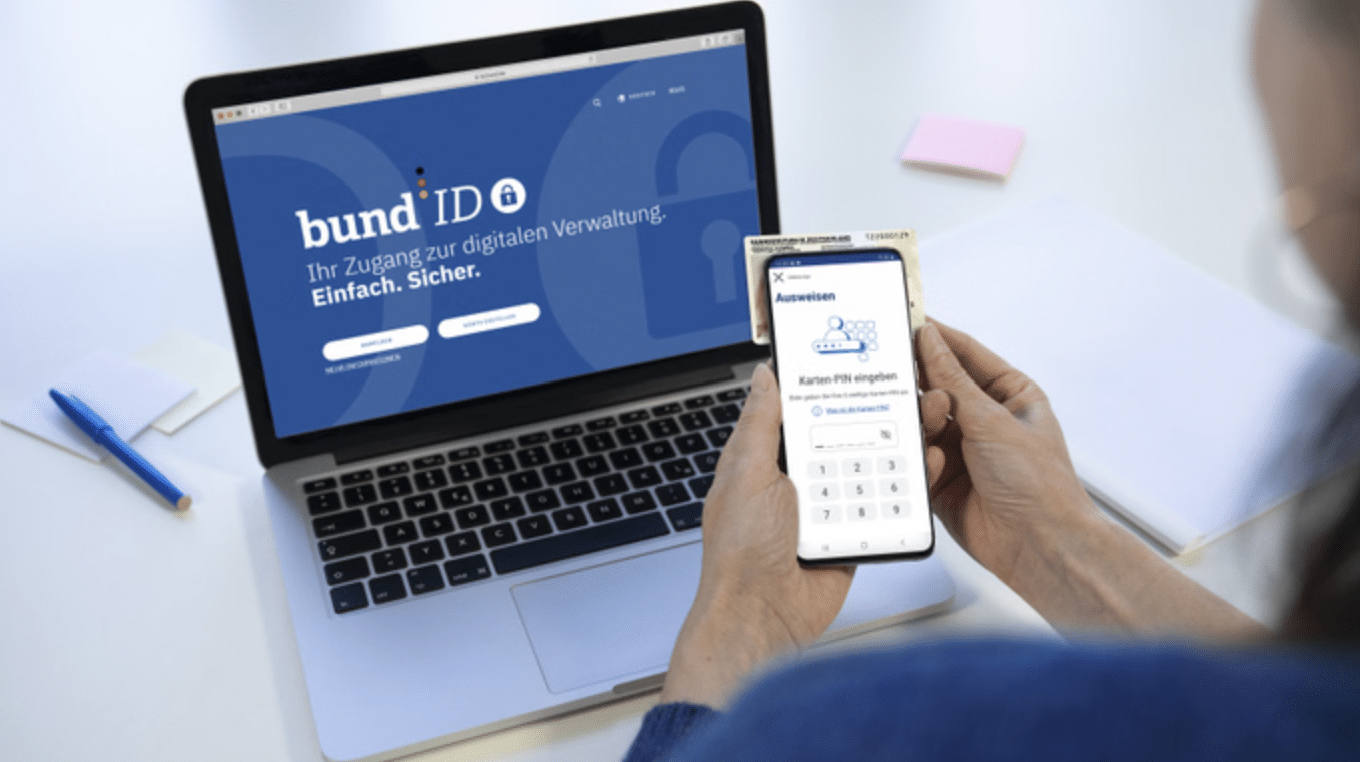
Germany has added email security codes to password logins for BundID, the federal citizen account, after a wave of automated login attempts locked legitimate users out of their accounts. The Federal Office for Information Security (BSI) confirmed the attack on Monday, November 16. A dpa report carried by Handelsblatt said there was no evidence that attackers had accessed profiles or stolen data.
The attackers used credential stuffing, testing username and password combinations leaked from other services, Anadolu Agency reports . The technique preys on password reuse and requires no breach of BundID itself.
Password logins suspended, then hardened
Authorities switched off username-and-password logins on Monday morning and restored them that afternoon with an added verification step. BundID says two-factor authentication has been enabled by default for existing accounts using username-and-password login. Users receive a security code at their registered email address to complete the process. The additional check can be disabled manually, although BundID strongly advises against doing so.
Logins using the online ID function of the national identity card and ELSTER, the tax authority’s certificate-based login, kept working throughout, RND reported . The attack disrupted one access route, not the platform.
Legitimate users still paid the price. Under BundID’s login rules , nine incorrect entries disable the password route and force a reset, so the flood of failed attempts locked out real account holders, who received automated emails telling them to reset their passwords. Users who had already linked the eID card or ELSTER could sign in that way instead. On November 18, the Digital Ministry said at least 10,000 accounts had been affected, with the number in the low five figures. Officials reported no further mass login attempts and no evidence that attackers had gained access to accounts.
The attack landed on BundID’s lowest-assurance entry point. A username and password grants basic-level access, while ELSTER and the eID card identify users with certificates and hardware-backed credentials. Credential stuffing exploits reused passwords, but stronger authentication methods make those credentials insufficient on their own. The eID card and ELSTER routes were not disrupted by this attack.
The emergency fix narrows the gap without closing it. An emailed code stops attackers holding only a recycled BundID password, but users who reuse that same password on their email account remain exposed, and email codes can be phished. The durable defense is moving citizens onto the eID card, which Germany introduced in 2010 and has struggled to make mainstream ever since.
A single point of failure
BundID serves as the shared login across federal and state portals, including applications for student financial aid (BAföG), parental benefits (Elterngeld) and housing subsidies (Wohngeld). It prefills forms with stored personal data and runs a digital mailbox for official correspondence. When the login fails, the citizen is stuck, even if the agency’s own service is running.
That makes lockouts costly for a system already fighting to keep users. A review by the public-sector network , drawing on seven case studies from 2022 to 2025, found abandonment rates of 70 to 90 percent for online government services that require identification, driven by confusing instructions, smartphone card-reading errors and limited support. recommends clearer error messages, dedicated help and judging success by actual use rather than technical uptime. Sudden lockouts with unfamiliar recovery steps push in the opposite direction.
National logins under fire
Germany’s incident follows a DDoS attack on the Netherlands’ DigiD and breaches around Japan’s My Number program , each exploiting a different weak point in national login infrastructure. For BundID, the weak point is the password. As Germany builds its EUDI Wallet under the EU’s eIDAS 2.0 regulation, how quickly it moves citizens off that route will decide how exposed BundID remains to the credential-stuffing run.
BundID | cybersecurity | digital government | Germany | identity infrastructure | passwords
Latest Biometrics News
Identity verification faces challenges on both sides of the trust equation
Consumer confidence in identity verification depends on how personal information is protected, while organizations face increasingly sophisticated fraud that can…
Sri Lanka seeks Ukraine, Estonia, and Google expertise for digital ID plans
Sri Lanka is seeking international expertise to advance its digital public infrastructure (DPI), holding discussions with Ukraine, Estonia and Google…
Sri Lanka looks to infrastructure investment as AI challenges digital economy ambitions
Achieving Sri Lanka’s target of a $15 billion digital economy by 2030 will require investment in physical, digital and institutional…
Building resilience into digital identity takes on new urgency
Businesses and governments around the world are working to make biometric and digital identity systems more resilient, and the urgency…
Dutch tests find smart glasses privacy safeguards fail in practice
The Dutch Data Protection Authority, known as Autoriteit Persoonsgegevens (AP), examined six AI camera glasses sold in the Netherlands and…
Sri Lanka’s digital ID ambitions face a bigger test: Making government data work
Sri Lanka is entering the stage of its digital transformation with the Sri Lankan Unique Digital Identity (SL-UDI), the…
The full story
This article is one source in a clustered incident — the cluster page carries the summary, timeline and every other outlet covering it.
