Ukraine ‘s biometrics sector continues to develop despite Russia’s ongoing attacks and economic pressures, although adoption remains uneven across government, financial services and commercial applications. Industry executives see significant opportunities in biometric identification and authentication, but differ on how quickly the market will grow.
Oleksandr Iefremov, CEO of Ukrainian GovTech company Kitsoft , says interest in biometric technologies is increasing, particularly in banking and public services.
Eugene Rimek, CEO of Ukrainian biometric technology provider Biosol , offers a more cautious assessment.
Rimek says demand has grown more slowly than expected, although he sees considerable potential for biometric identification beyond its established uses.
“In general an interest to biometrics has grown considerably in Ukraine in recent years, particularly in the segment of biometric identification. Currently, the most widespread application of biometric identification in Ukraine is for access control to premises. However, it is still very underutilized for personal identification in other contexts,” Rimek said.
Digital identity drives biometric adoption
Fingerprint and facial recognition dominate Ukraine’s biometrics market, Rimek says, reflecting the availability of relatively affordable solutions and smartphone-based authentication.
“The primary biometric technologies currently used in Ukraine are fingerprint and face recognition. This is driven by both the relative affordability and the availability of a large number of solutions built on these technologies, as well as the ability to use smartphones for personal identification. The adoption of the Zero Trust concept by Ukrainian companies (in cooperation with international software vendors) leads to the implementation of multi-factor authentication (MFA), of which biometric authentication is a component.”
Iefremov points to established uses of biometrics in banking and government identity services.
“Ukrainian banks already use biometric authentication, including facial recognition and fingerprint scanning, to provide secure access to mobile banking applications. In the public sector, one of the most widespread applications of biometric technologies is the issuance of biometric international passports and national ID cards. According to Ukraine’s State Migration Service, more than 2.2 million such documents were issued in the first half of 2026 alone.”
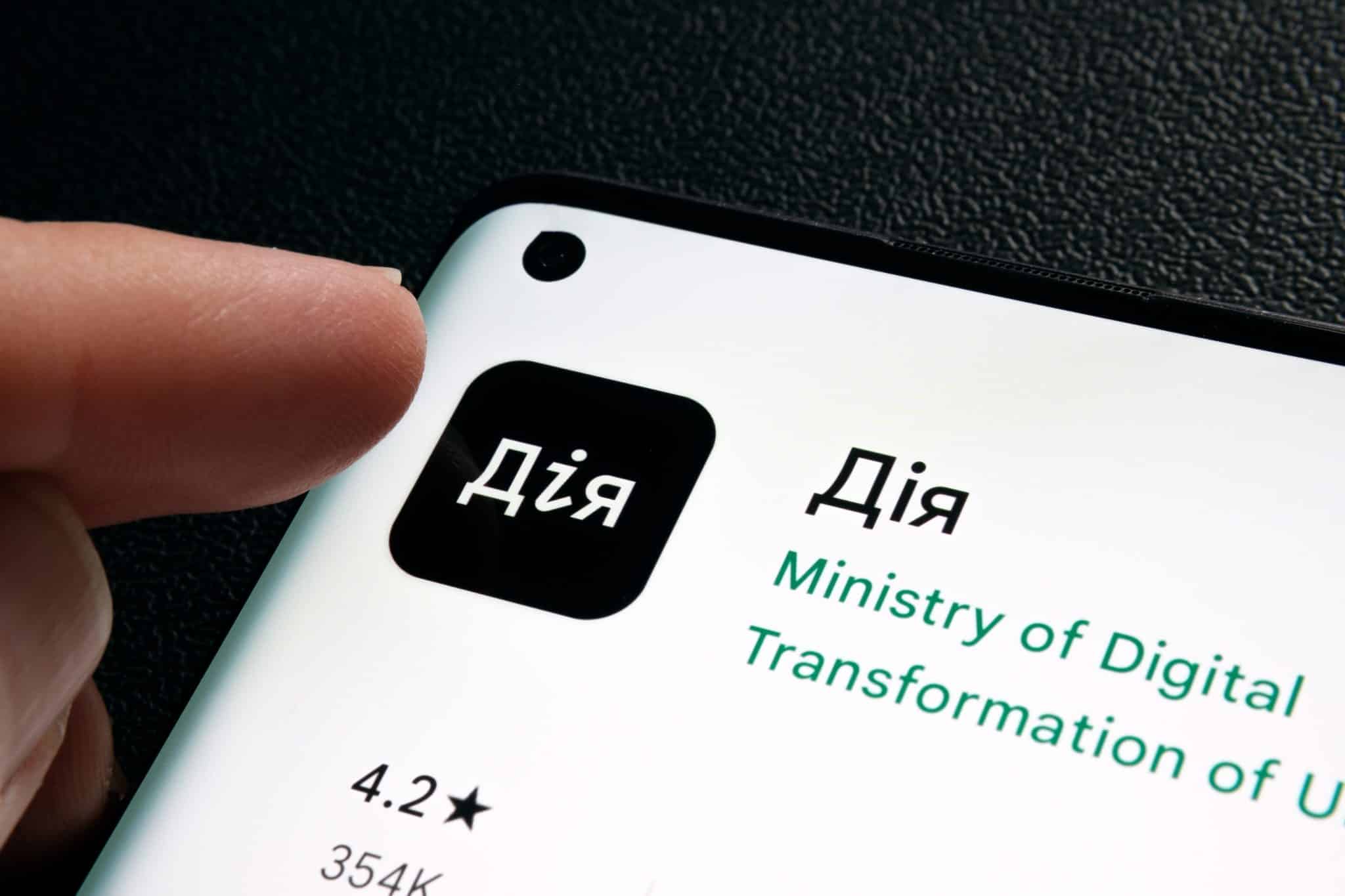
Iefremov sees secure, convenient remote identity verification as a priority for government digital services. One example is Diia.Signature, a cloud-based qualified electronic signature used for identification, authentication and document signing through Ukraine’s Diia ecosystem and integrated third-party services.
Since February 2026, activating Diia.Signature has required reading the NFC chip in a biometric ID card or passport, completing facial verification through photo ID and creating a six-digit PIN. Once activated, the signature can be used without repeating facial verification and remains valid for one year.
Diia.Signature also supports third-party services, including remote identity verification for Ukraine’s Pension Fund. Iefremov says the service allows pensioners living abroad or in temporarily occupied territories to verify their identities remotely.
Oleksandr Sokolov, CEO of Ukrainian market research firm Pro-Consulting, expects biometric authentication to be a major source of market growth in the coming years.
Sokolov points to the growing use of remote identification in government services. Figures from Ukraine’s Ministry of Digital Transformation show that Diia.Signature (Diia.Pidpys) had been used more than 48 million times by October 2024. By the end of 2025, cumulative usage had exceeded 122 million, with 13 million people having activated the service.
Demand for biometric identity documents has also remained strong, with approximately 3.87 million national ID cards and international passports issued in 2025, according to Sokolov.
Biometric data regulation remains a challenge
Iefremov identifies the need for clearer regulation of biometric data as another challenge for Ukraine’s biometrics sector.
“Ukraine already has legislation on personal data protection, but certain aspects of biometric data use require clearer regulation. These include the legal grounds and purposes for processing such data, retention periods, access procedures, and independent oversight. This is also linked to Ukraine’s efforts to align its legislation with European Union requirements.”
War clouds the commercial outlook
The war and Ukraine’s economic difficulties continue to constrain prospects for large-scale biometric deployments.
Rimek cautions that wartime damage and reduced business spending will continue to hold back major deployments.
“Given that Russia’s armed attack on Ukraine has been ongoing for five years, causing significant damage to infrastructure, office, and production facilities, the Ukrainian economy is suffering substantial losses and cost reductions across many business segments. Therefore, significant breakthroughs regarding large-scale biometric technology implementation projects should not be expected until the war ends.”
Sokolov takes a more optimistic view, particularly of demand from banks and financial technology companies.
“The demand for biometric technologies in Ukraine is expected to maintain a positive trend in the coming years. The digital identification and financial services segment is likely to remain the most dynamic, driven by the need among banks and fintech companies for rapid identity verification. Demand for remote services utilizing biometrics is also on the rise—most Ukrainians now use “Diia” tools to open accounts, creating a favorable environment for the further adoption of biometric verification and other digital identity protection technologies.”
Sokolov also expects biometric payment authentication to gain ground in 2027 as the technology moves from limited deployments into wider e-commerce use.
“For instance, in April 2025, Visa launched “Visa Payment Passkey” in Ukraine, which enables payment authorization via facial recognition or fingerprint,” Sokolov said.
Visa has since expanded Payment Passkey in Ukraine through integrations with payment service providers PSP Platon in January 2026 and RozetkaPay in April 2026, extending the use of biometric-enabled authentication for online transactions.
Whether these developments translate into broader commercial adoption remains uncertain, however, as wartime economic pressures continue to limit investment in large-scale biometric projects.
biometrics | Biosol | data protection | digital identity | Diia | Kitsoft | Ukraine
The full story
This article is one source in a clustered incident — the cluster page carries the summary, timeline and every other outlet covering it.
