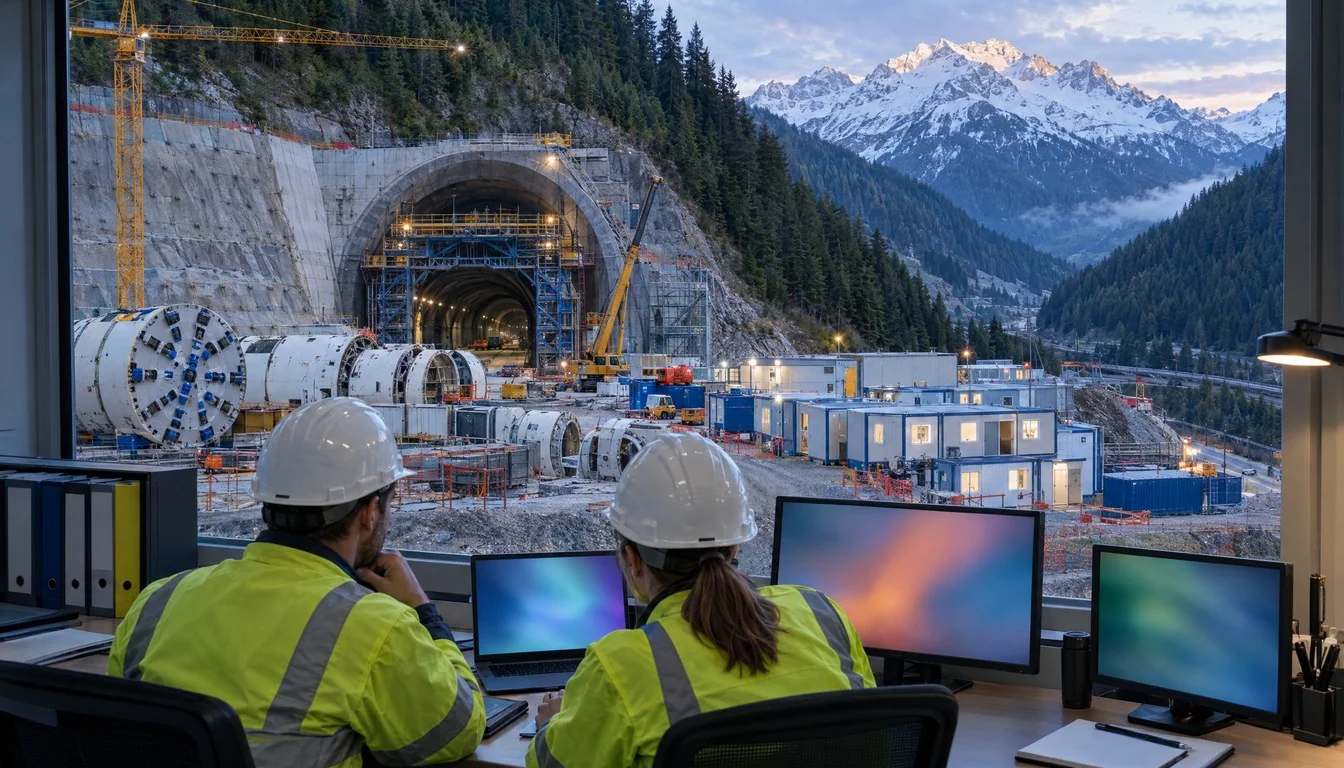
BBT SE, the company building the Brenner Base Tunnel between Austria and Italy, has confirmed it was the target of a cyberattack. dpa international reported on 7 November 2026 that the attackers reached some data that was accessible via the internet. The Brenner Base Tunnel cyberattack happened in mid-October 2026, and BBT SE specifically reports 17 October. The company says the incident has not touched tunnel construction or operational processes.
That is the confirmed core, and it is short. How much data the attackers saw, what kind of data it was, and how deep they got into the network all remain unclear. Claims that the Russian-speaking group Everest was behind the attack, that Noname057(16) played a role, or that anyone demanded a ransom are unconfirmed. Anadolu Agency carried the story as a company behind the tunnel project hit by a cyberattack, which matches the narrow set of facts the company has put on the record.
This analysis separates what BBT SE has said from what outlets have speculated, explains why the gap matters, and lays out what to watch . Infrastructure supply chains have a track record of surprising their owners. Our earlier report on how the EFS blood bank attack was not aimed at the blood bank at all and traced to a refrigeration vendor across three sites is a useful comparison for the questions now facing BBT SE.
Don't miss new tech stories on Google
Add Shattered once in the Google app and our stories show up in your news suggestions.
What BBT SE Confirmed the Brenner Base Tunnel Cyberattack
Start with the facts the company itself stands behind. BBT SE confirmed a targeted cyberattack against the company responsible for constructing the Brenner Base Tunnel. It confirmed that attackers accessed some data that was available over the internet. It said it isolated the affected systems or data source, activated its cybersecurity procedures, brought in external cybersecurity specialists for forensic analysis, and informed the relevant authorities.
The company also said the incident did not affect tunnel construction or operational processes. A BBT spokesperson told Deutsche Presse-Agentur that high-security data was not affected. The tunnel itself is 64 kilometres long, a figure that appears in the dpa coverage and gives a sense of the scale of the project behind the company.
The table below sorts every claim in circulation into confirmed and unconfirmed. It uses only the company statements and the outlets named in this article.
Timeline: From 17 October to the 7 November Reports
The dates tell their own story. BBT SE places the attack on 17 October 2026, and the first wave of coverage in the verified sources carries a 7 November date. That is a gap of 21 days between the incident and the public conversation it. The sources do not say when BBT SE first told the authorities or when the story reached reporters, so the gap proves nothing by itself.
Still, three weeks is a normal window for a company that is working through containment and forensics before it says anything in public. Companies that notify authorities and hire outside specialists usually want a first picture of the damage before they speak. Pressure to disclose often arrives from the outside, in this case through media reports that circulated alongside the company statement.
What happened in the first hours
The company’s own account is procedural. Once it detected the incident, it activated IT security protocols, isolated the affected systems immediately, and engaged external cybersecurity specialists. The detail that matters most is the order of operations. Isolation came first, which suggests the company prioritised stopping further access over preserving a live view of the attacker.
The steps were forensic analysis by outside specialists and notification of the relevant authorities. BBT SE said all required procedures had been initiated. The sources name no regulator, no police unit, and no completion date for the forensic work, so readers should not assume any of those details until the company or an authority supplies them.
What BBT SE and Its Spokesperson Actually Said
Direct statements are scarce here, which makes each one worth reading closely. The longest comes from BBT SE and appears in the English-language Unione Sarda report . The company said: “As soon as the incident was detected, the company activated its IT security protocols, immediately isolating the affected systems and engaging the support of external cybersecurity specialists to conduct the necessary forensic analyses. All required procedures have been initiated and the relevant authorities have been informed.”
On impact, La Repubblica quotes BBT SE as saying: “The incident has not affected the construction of the tunnel.” Note the scope of that sentence. It speaks construction, and the broader company statement extends the claim to operational processes. It does not say that no company data left the building. The company already conceded that attackers reached some data.
The third voice is BBT SE spokesperson Julia Gruber, as reported by Bluewin . In the German-language version of that coverage, she says the attackers partly gained access to data that could be reached from the internet. That wording matches the company statement and adds the word partly, which hints that access was limited rather than total. It does not tell readers how limited.
Taken together, the three statements form a consistent but thin account. The company describes containment, outside help and official notification. It offers reassurance on construction, operations and high-security data. It offers no numbers, no file counts, no description of the data categories and no timeline for a fuller report.
Internet-Accessible Data: What the Phrase Can and Cannot Mean
The phrase “accessible via the internet” carries a lot of weight in the confirmed facts. It tells readers where the attackers got in, or at least what they reached. It does not tell readers whether they got in by exploiting a vulnerability, by using stolen credentials, or by simply finding something that was open. Each of those paths points to a different security lesson.
In general terms, data that sits on internet-facing systems includes document portals, file transfer servers, collaboration platforms and web applications. A large construction company works with many partners, so these systems often hold project documents, correspondence and administrative records. That is analysis based on how such organisations typically work, not a finding BBT SE. The company has not described which system the attackers touched.
The spokesperson’s statement that high-security data was not affected draws a line between two data tiers. Public-facing or business data sat on one side and protected data sat on the other. If that separation held, it did its job. Outside forensic specialists can test it, and their findings will matter more than any company reassurance.
Access windows matter as much as access type. In our coverage of the Sussex County prosecutor breach and its eight-day access window , the length of time attackers stayed inside shaped the whole response. BBT SE has not said how long the attackers had access, and that omission is one of the larger open questions in this story.
BBT SE’s Response: Isolation, Forensics and Notification
Judged against the standard incident response sequence, the company’s described steps are textbook. Detect, contain, investigate, notify. What sets this case apart is how little the company has said the middle two steps, which is typical in the early weeks of an investigation. The table below maps each confirmed action to what remains unknown.
Why outside forensics matters
Hiring external specialists serves two purposes. It adds capacity that an internal IT team rarely has during a live investigation, and it gives the company an independent voice if regulators, partners or the public question its conclusions. When BBT SE eventually says how far the intrusion went, the credibility of that statement will rest on the forensic work behind it.
Containment is only half the job. A survey we covered found that 74% of UK firms rush recovery and risk reinfection , which shows how often organisations restore systems before they understand how attackers got in. Nothing in the BBT SE statements suggests that happened here, but the company has not described its recovery plan either.
Construction and Operations Unaffected: Reading the Claim
BBT SE has made the same reassurance in every statement. The incident did not affect tunnel construction or operational processes. For a project with a 64-kilometre tunnel, that is the claim the public cares most, and it appears credible on its face. The attackers reached data reachable from the internet, and construction machinery and operational systems do not usually sit there.
Still, a careful reader should hold two points in mind. First, the company based its claim on the information it has today. La Sicilia’s headline says BBT SE confirmed data access while operations were not compromised, which captures the company’s message. Second, a claim of no operational effect is different from a claim of no future risk. Stolen documents can feed later attacks, phishing campaigns or extortion attempts even when the first intrusion leaves production untouched.
That distinction explains why security teams treat data access incidents seriously even without downtime. The harm often arrives later and sideways. Employee names, project contacts and document formats give attackers material for convincing messages to staff and partners. BBT SE has not said whether any of that material was exposed, and the sources do not allow anyone to rule it in or out.
The Everest Question: Attribution Without Confirmation
Several outlets point at Everest, a Russian-speaking group. La Repubblica’s headline frames the story as an action by the Russian group Everest, and Unione Sarda’s headline says suspicions are rising a pro-Russian group. Both are media framings. BBT SE has not confirmed that Everest was the attacker, and the sources provide no statement from investigators naming any group.
Early attribution in the press deserves caution for a simple reason. Groups that run extortion operations benefit from publicity, and claims on leak sites can overstate or misstate what they hold. A group name in a headline can travel faster than the evidence behind it. Until forensic specialists or authorities publish findings, the safest wording is that reports suspect Everest.
The distinction matters for readers who defend similar systems. If the attacker was an extortion-focused group, the likely moves involve pressure and publication of data. If the attacker was a different kind of actor, the risks and the response differ. Our look at the HYFLOCK ransomware that encrypts only 4,096 bytes of big files shows how quickly the technical picture of an extortion crew can shift once researchers get hold of samples. Attribution rarely stays fixed in the first weeks.
Noname057(16) and the Ransom Question
A second group name, Noname057(16), also surfaced in coverage. The verified fact sheet marks that involvement as unconfirmed, and the sources do not describe any evidence behind it. Two group names pointing in different directions is itself a sign that the public record is still unsettled. Readers should treat both names as unverified until an authority speaks.
The same goes for any ransom. No source confirms a ransom demand, a ransom amount or negotiations with the attackers. Silence on this point can mean several things, from no demand having been made to a company declining to one. The responsible reading is that nothing has been confirmed and nothing should be assumed.
Euronews adds one more thread. Its headline pairs the BBT SE incident with cyberattacks on the Italian foreign minister. The sources available for this article do not establish that the two events are linked, so this piece treats them as separate until reporting says otherwise. The pairing shows how an incident at an infrastructure company can get bundled with other cyber news and shape how readers perceive the threat.
How Outlets Covered the Story
Coverage on 7 November split into two camps. One group stuck to the company statement and its limits. The other leaned into attribution. Comparing headlines shows how the same facts can read very differently depending on the emphasis. The table lists the outlets in the verified source set and what each headline foregrounds.
The pattern is clear. Wire services and the more cautious outlets report the company statement and stop there. Two Italian outlets lead with the Everest suspicion. Readers who see only a headline might believe attribution is settled, which it is not. The gap between headline and fact sheet is the biggest source of confusion in this story.
Why the Tunnel Matters and What It Means for the Market
The Brenner Base Tunnel is 64 kilometres long, according to dpa, and it ties into a cross-border rail corridor between Austria and Italy. A project company at that scale handles contracts, engineering documents and communications with many suppliers. That makes it a rich target even when the construction systems themselves stay out of reach.
No outlet in the verified set reports a market reaction, a financial loss figure or a change in project schedule. BBT SE is a project company, and the sources include no price, no insurance claim and no cost estimate. Any claim financial impact would be speculation, so this article makes none. The effect so far is reputational and procedural.
The broader sector impact is a matter of analysis. Contractors, rail suppliers and public clients will likely ask hard questions document-sharing portals and third-party access. Insurers and auditors tend to follow high-profile incidents with tighter questionnaires. Readers who track the wider threat picture can find more in our security coverage hub , which collects breach and ransomware reporting in one place.
The takeaway for infrastructure owners is that the weakest link may not be the control system. It may be the portal where project partners swap files. Attackers choose the easiest door, and an internet-reachable system with business data often beats a hardened operational network on ease of entry.
Comparison With Other Recent Disclosures
Compared with other incidents we have covered recently, BBT SE has disclosed few scope figures. Other organisations gave readers at least one hard number, such as an access window, a count of branches or a count of files. BBT SE has given one date and a tunnel length that has nothing to do with the breach itself. The table sets the headline scope figures from our earlier coverage beside the BBT SE case.
The comparison does not mean BBT SE is hiding anything. Most of the organisations above published their numbers after weeks of work, and some only after attackers leaked data. It does show where the BBT SE story sits on the usual disclosure curve. It sits near the start, with a containment story and little else.
Historical Context: Infrastructure Project Companies as Targets
Attacks on companies that build or run critical infrastructure are not new, and they rarely start at the machinery. Attackers tend to go after the business layer first, where email, documents and partner portals live. That layer holds the information needed to plan a second move, and it usually has weaker segmentation than the systems that run a plant or a worksite.
The pattern also reflects economics. Extortion groups look for victims whose reputation or contracts give them reasons to pay, and they favour targets with many partners and a lot of sensitive paperwork. A megaproject company fits that profile. The Brenner Base Tunnel is a long-running public works effort with a high profile, which raises both the attacker’s interest and the cost of a leak.
For BBT SE, the historical lesson is mostly sequence. Incidents of this type often begin with a quiet intrusion, move to a data theft stage and only later surface through a leak site post or a media report. The 17 October date and the 7 November coverage fit that arc, though the available sources do not prove that the BBT SE case followed it.
A Defender’s Checklist for Internet-Reachable Data
The confirmed facts point at one controllable weakness, data reachable from the internet. Any organisation can audit that exposure in an afternoon. Start by listing every system, domain and cloud storage bucket you own, then check what each one shows to an outside visitor. Small teams can lean on the scanners in our guide to seven vulnerability scanners for lean security teams .
The commands below give a quick first pass. Run them only against assets you own or have written permission to test. Replace the placeholder domain with your own.
Beyond scanning, five habits cut risk quickly. Put partner document portals behind multi-factor authentication. Separate business data from high-security data, as BBT SE says it did. Log and retain access records long enough to answer the question of how long an attacker stayed. Rehearse isolation so the first step takes minutes, not hours. Pre-arrange an outside forensic firm before an incident, not during one.
Predictions: What to Watch After the BBT SE Disclosure
The following expectations are analysis, not reporting. None comes from a source quoted above, and each could change as new information arrives.
A narrower account of the data is likely. As forensic specialists finish their work, BBT SE or the authorities will probably say which categories of data were reached. The company has already said high-security data stayed safe, so the statement will probably describe business or project data.
Attribution will lag the headlines. Media reports name Everest, but formal attribution usually takes longer and may never arrive in public. Expect the group name to stay in the category of suspicion for some time.
Leak-site activity may decide the story. If the attackers publish material, the debate shifts from what the company says to what the files show. Readers should treat any claimed leak as unverified until the company or investigators confirm it.
Other megaproject companies will audit their portals. Public works contractors and their partners will likely review which systems face the internet. The BBT SE case gives security teams a concrete argument for that budget.
Clients and insurers will ask more questions. Procurement teams and underwriters tend to tighten their questionnaires after visible incidents, especially when a spokesperson confirms that attackers reached real data.
The takeaway: the Brenner Base Tunnel cyberattack is confirmed, contained by the company’s account, and still mostly unexplained. What BBT SE says in the coming weeks data categories, access duration and attribution will decide whether this stays a limited data access incident or grows into something larger.
FAQ: Brenner Base Tunnel Cyberattack
What did BBT SE confirm the cyberattack?
BBT SE confirmed a targeted cyberattack against the company responsible for building the Brenner Base Tunnel. It said attackers accessed some data that was reachable via the internet, that it isolated the affected systems, and that it notified the relevant authorities. The company dates the attack to mid-October 2026, specifically 17 October.
Did the attack affect tunnel construction or operations?
According to BBT SE, no. The company said the incident did not affect construction or operational processes. A spokesperson also told Deutsche Presse-Agentur that high-security data was not affected. These are the company’s assessments based on what it knows today.
Who is behind the Brenner Base Tunnel cyberattack?
Nobody has confirmed an attacker. Some media reports suspect the Russian-speaking group Everest, and another claim involves Noname057(16). BBT SE has not confirmed either, and the sources show no investigator statement naming a group.
Was a ransom demanded?
No source confirms a ransom demand, a ransom amount or negotiations. Treat any such claim as unverified until BBT SE or an authority addresses it.
What data did the attackers access?
The company has not said. The confirmed fact is that the data was accessible via the internet. The extent of the compromise, the specific data affected and the depth of any network intrusion remain unclear.
How long is the Brenner Base Tunnel?
The tunnel is 64 kilometres long, according to dpa coverage of the incident.
Inventory every internet-facing system, check what data each one exposes, require multi-factor authentication on partner portals, keep access logs long enough to reconstruct an intrusion, and line up an outside forensic firm before you need one. The checklist section above includes starter commands for a first pass on assets you own.
The full story
This article is one source in a clustered incident — the cluster page carries the summary, timeline and every other outlet covering it.
