 Back Eeas.Europa.Eu
EEAS How the EU works with partners on maritime security in the Gulf of Guinea, Red Sea ...
From the Gulf of Guinea to the Red Sea and the Western Indian Ocean, the EU is strengthening its maritime diplomacy efforts and cooperation with partners to address shared security challenges.
Funded by the European Commission’s Service for Foreign Policy Instruments (FPI) and implemented by Expertise France under the guidance of the EEAS Senior Coordinator for Maritime Security and FPI, the new project, EnMAR+ (Enhanced MARitime Action in the Gulf of Guinea, Red Sea and Western Indian Ocean), builds on more than three years of experience in the Gulf of Guinea and extends this work to two other strategic maritime regions.
Europe’s security and prosperity are closely tied to the sea. More than 80% of global trade is transported by sea, while up to 99% of international data flows rely on undersea cables. Protecting these routes and connections is therefore essential to international trade, global communications and economic stability.
Europe’s maritime connections with Africa, the Middle East and Asia extend across key strategic waterways, notably the Gulf of Guinea, the Red Sea and the Western Indian Ocean. Security and stability in these areas are therefore essential.
However, these waters face growing security challenges. Piracy, trafficking, illegal fishing and transnational organised crime continue to threaten coastal states, while regional conflicts and geopolitical tensions put freedom of and vital shipping routes at risk. Critical maritime infrastructures, including undersea cables, are also increasingly exposed to risks.
No single country can solve these problems on its own. That is why, under its revised Maritime Security Strategy adopted in 2023, the EU works with coastal states, regional organisations and international partners to keep the seas free, safe and open .
Between October 2022 and April 2026, the EU-funded project EnMAR (Enhanced MARitime Action in the Gulf of Guinea) contributed to advancing the EU’s maritime security objectives in the region.
Also funded by FPI and implemented by Expertise France under the guidance of the EEAS Senior Coordinator for Maritime Security and FPI, EnMAR supported political dialogue with the Yaoundé Architecture, the regional framework for maritime security in the Gulf of Guinea.
It also helped EU-funded projects in the region coordinate their work and information. It also trained national and regional institutions on various issues including port security and maritime domain awareness.
Through events, videos and podcasts, the project also raised awareness of EU action in the region. In three and a half years, the project organised more than 100 activities and brought together over 2,000 participants from navies, ports, foreign ministries, research institutes and the media, one-third of whom were women.
Promoting women’s participation in the maritime sector was another important dimension of EnMAR’s work. Working with the Network of Professional Women in the Maritime and Port Sectors for West and Central Africa, the project raised the profile of women in these sectors, facilitated the exchange of experiences and highlighted their contributions to maritime security.
With its podcast EnMAR Voices , it also gave women working in maritime and port security a platform to their stories, helping to inspire more women and girls to pursue careers in the sector.
EnMAR has helped strengthen the EU’s maritime security engagement in the Gulf of Guinea, supported the consolidation of the Yaoundé Architecture, and contributed to improving regional capacities and operational coordination.
EnMAR has helped strengthen the EU’s maritime security engagement in the Gulf of Guinea, supported the consolidation of the Yaoundé Architecture, and contributed to improving regional capacities and operational coordination.
Dr Alison Weston, EEAS Senior Coordinator for Maritime Security
Building on the experience and lessons learned in the Gulf of Guinea, the EU launched EnMAR+ in September 2026, with implementation running until February 2028. The project extends the work developed under EnMAR to two additional maritime regions, adapting its activities to their specific security challenges and regional priorities.
In the Red Sea, freedom of and the protection of strategic shipping routes and critical maritime infrastructures are central concerns. EnMAR+ will support political dialogue between the EU and coastal states on maritime security, including the protection of shipping and undersea cables.
In the Western Indian Ocean, the project will build on existing regional cooperation and the EU’s longstanding support for regional maritime security frameworks notably the Djibouti Code of Conduct-Jeddah Amendment, the Indian Ocean Commission and the Indian Ocean Rim Association. This includes support for information sharing and the coordination of their responses to maritime threats.
EnMAR+ forms part of the EU's broader commitment to strengthening maritime security through cooperation, dialogue and partnership.
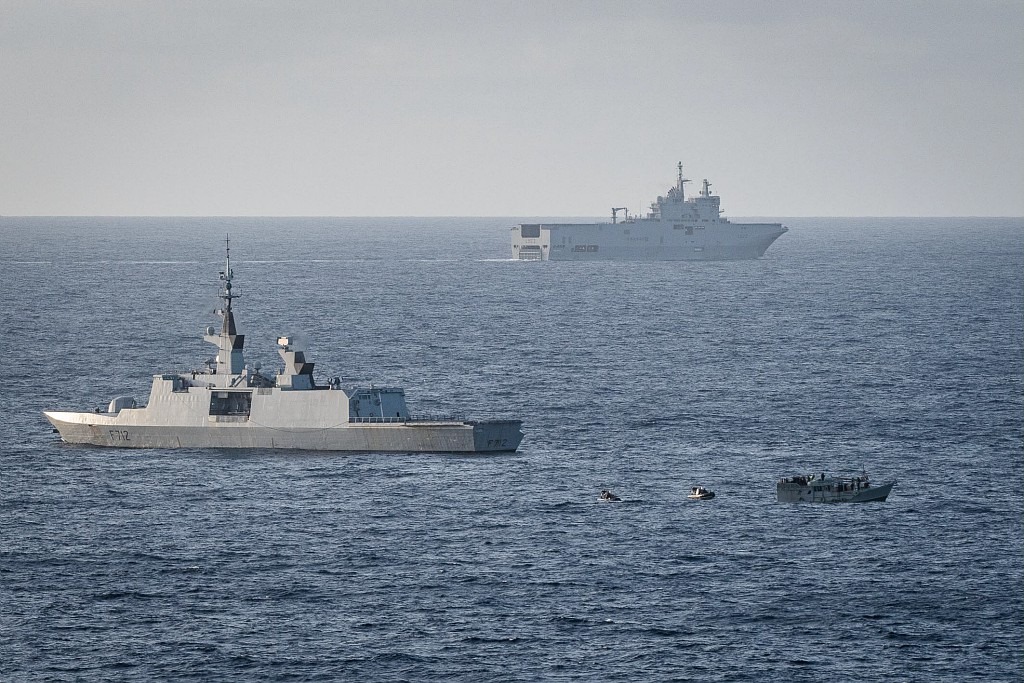
It complements the EU's Coordinated Maritime Presences in the Gulf of Guinea and the EU naval operations EUNAVFOR ATALANTA and EUNAVFOR ASPIDES, which contribute to maritime security in their respective areas of operation.
Across the Gulf of Guinea, the Red Sea and the Western Indian Ocean, EnMAR+ pursues three main objectives:
deepening the EU's maritime diplomacy, political influence and partnerships, including on the protection of critical maritime infrastructure;
streamlining EU maritime security efforts to make better use of resources, strengthen operational synergies and avoid duplication; and
reinforcing the EU's role as a leading maritime security provider through strategic communication that raises the visibility of its engagement, promotes EU values and highlights the benefits of collaborative security initiatives.
Building on EnMAR's work in the Gulf of Guinea, the project will also continue to promote women's participation and visibility in maritime security across all three regions.
Ultimately, our objective is straightforward: to make the EU’s maritime security engagement more coordinated, more coherent and more impactful, while supporting our partners in strengthening their own maritime security frameworks and capacities.
Ultimately, our objective is straightforward: to make the EU’s maritime security engagement more coordinated, more coherent and more impactful, while supporting our partners in strengthening their own maritime security frameworks and capacities.
Dr Alison Weston, EEAS Senior Coordinator for Maritime Security
The full story
This article is one source in a clustered incident — the cluster page carries the summary, timeline and every other outlet covering it.
