 Back Securityaffairs.Co
Electrolux Smart Boilers in Ukraine Connect to Russian Servers, Raising Privacy Concerns
Electrolux Smart Boilers in Ukraine Connect to Russian Servers, Raising Privacy Concerns
Researchers found Electrolux-branded smart boilers connecting to Russian servers, raising concerns household data and privacy.
A router in Ukraine recorded a water heater doing something odd. The owner, Alexander Unger, saw his Electrolux EWH 80 look up a server called mqtt.cloud.rusklimat.ru and then try to connect to it. He published the records on , including a lookup timed at 18:00 on November 23, 2026.
Mysterium VPN’s research team checked the finding. They repeated the lookup on November 25 and got the same address, 130.193.49[.]173. RIPE, the registry for Europe and Russia, lists that block under Yandex.Cloud LLC at 16 Lva Tolstogo Street in Moscow.
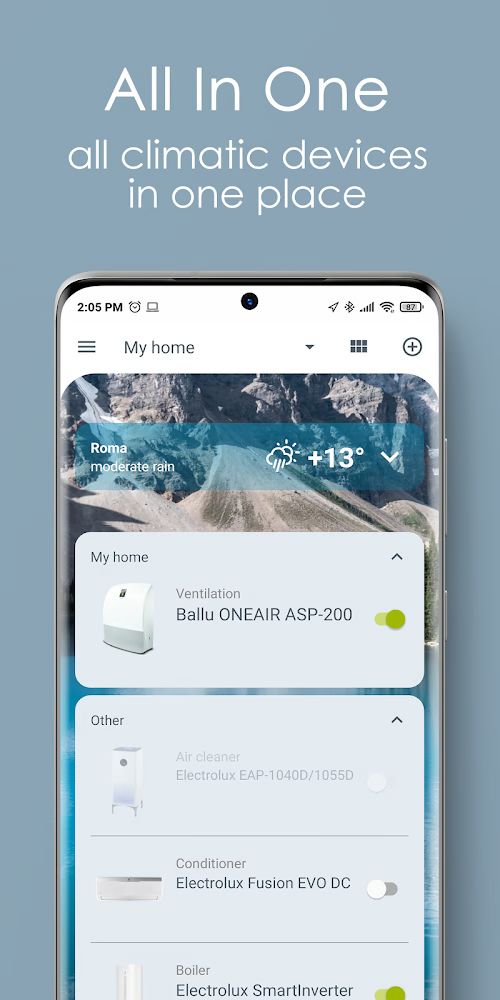
The server belongs to Rusklimat, a Moscow group that calls itself the leader of Russia’s climate-equipment market. Its Hommyn app uses that name to reach heaters, air conditioners and ventilation units. Developers who link such devices to Assistant list it as the official cloud for Ballu, Electrolux, Zanussi and Royal Thermo, and a 2025 guide on Habr says the devices it by default.
Rusklimat sells Electrolux-branded boilers in Russia and advertises them for Hommyn and for Yandex’s voice assistant, Alisa. Mysterium VPN adds, citing Meduza , that Ukraine struck three of Yandex’s six data centers in October 2026 and disrupted Yandex Cloud, where Rusklimat’s server runs.
“ The manual for the EWH SI EEC series , hosted by the Austrian arm of the -improvement chain Hornbach, names CladSwiss AG of Zug, Switzerland, as the manufacturer and says the boiler is made in China. It says the Electrolux name is used under license from AB Electrolux, the Swedish parent company.” reads the report published by Mysterium VPN. “It adds that the remote-control app, ClimatOn, comes from CladSwiss and isn’t provided by Electrolux.”
The manual also says the Electrolux name is used under license from AB Electrolux of Sweden, and that the remote-control app, ClimatOn, comes from CladSwiss, not Electrolux. Retailers lean on the Swedish angle: Rozetka gives Sweden as the country of brand registration, and the series is sold in Serbia, Poland and Lithuania.
This single appliance has links to five countries: Sweden, Switzerland, China, Germany, and Russia. That’s quite a complicated background for a water heater installed in someone’s bathroom.
According to CladSwiss, the data collected by its ClimatOn app should be stored in Frankfurt, Germany. Mysterium VPN also found a ClimatOn server hosted on Amazon infrastructure in Germany. This means the boiler can connect to two different servers, depending on which app the owner uses.
Both apps use the same technology platform. A developer who created software to control an Electrolux SmartInverter boiler locally found that the device identifies itself on the network as a Syncleo device. Syncleo is based in Israel, has an office in Russia, and lists Rusklimat among its customers.
Why did a buyer in Ukraine end up on the Russian app? Mysterium VPN doesn’t know. Unger, it was told, set the boiler up with Hommyn, and a buyer of another Electrolux model wrote on Rozetka in June 2026 that the Wi-Fi worked properly only through the Russian app. Mysterium VPN has asked CladSwiss which app buyers in Ukraine and the EU are pointed to.
Mysterium VPN didn’t use the credentials and won’t publish them. Neither will I.
The brand’s website points the same way. English manuals send buyers to -comfort.com, which gives CladSwiss, at an address in Baar, Switzerland, as its . Its form asks visitors, in Russian, to let a company called RK-Region process their data under Russian federal law 152-FZ. Rusklimat’s shop names RK-Region in its payment details, and ballu.ru carries the same consent text.
Swiss register data show CladSwiss was entered in December 2019 to trade technical equipment, especially air-conditioning units. Mysterium VPN found nothing that shows who owns the company or how it connects to Rusklimat beyond these records.
“A record of when a household heats water shows when people are at . The line that carries those reports also carries commands to switch the boiler on or change its temperature. For a boiler tied to mqtt.cloud.rusklimat.ru, that line ends at a Russian company’s server in Moscow.” Mysterium VPN states. “Russia isn’t among the countries the European Commission recognizes as protecting personal data adequately, and Ukraine first ordered its internet providers to block Yandex’s services in 2017.”
The same line also carries commands to switch the boiler on or change its temperature. Mysterium VPN notes that Russia isn’t among the countries the European Commission recognizes as protecting personal data adequately.
One claim remains untested. Developers who studied a Ballu ventilation unit from the same family wrote that every unit shipped with the same cloud login and didn’t check the server’s certificate. Mysterium VPN hasn’t tested that and doesn’t know whether it applies to the boiler.
Mysterium VPN sent questions to AB Electrolux, CladSwiss and Rozetka on November 25, and none had replied at publication. AB Electrolux sold its Russian business in 2022 and said then that it had no production in Russia and wouldn’t supply the company it sold. Rusklimat’s Russian shop sells heaters under the Electrolux name today.
Mysterium VPN stresses that its findings are limited. Researchers did not connect to the servers or examine the boiler itself. They only reviewed the Hommyn app’s code, so they cannot confirm what data the device actually sends.
Users can check their router logs for connections to “rusklimat” or use DNS monitoring tools such as Pi-hole, AdGuard or NextDNS. Blocking the Russian server stops remote access, although local control may still work over Wi-Fi. Users can also disable the boiler’s Wi-Fi and place smart appliances on a separate guest network to keep them away from computers and phones. These checks also apply to Hommyn and ClimatOn devices from Ballu and Zanussi.
“A VPN on your phone or laptop doesn’t change where an appliance on your Wi-Fi sends its data, so the fix here sits at the router.” concludes the report.
Follow me on Twitter: @securityaffairs and and Mastodon
( SecurityAffairs – hacking, Electrolux Smart Boilers)
