 Back Irishexaminer
From smart fridges to toothbrushes: Could your everyday devices be helping cybercriminals?
What do cyberattackers have to gain by heating SuperValu fridges ? Should we be stockpiling canned goods in case the attackers return to finish the job?
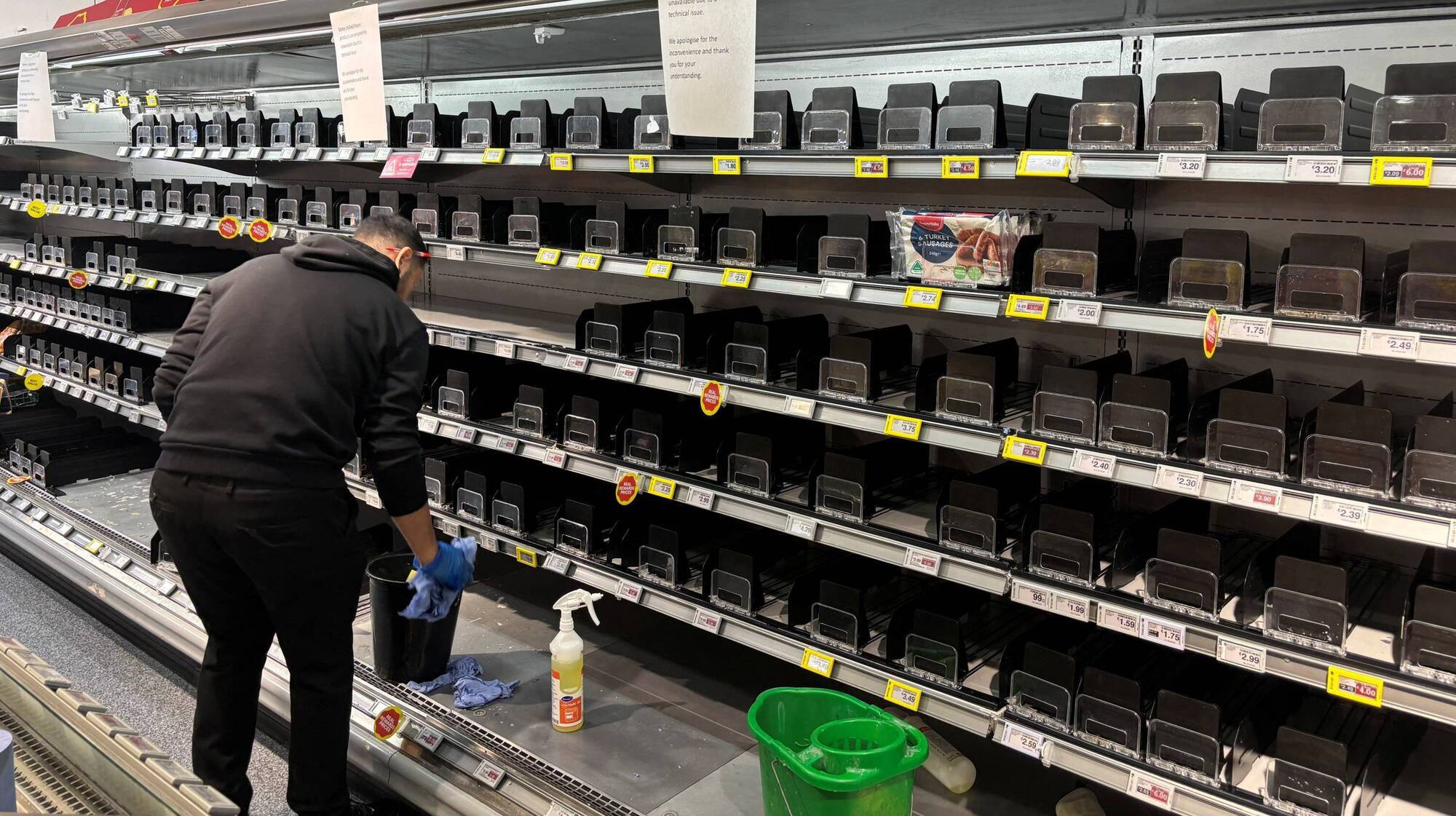
Unsettling questions have emerged after tonnes of food, worth thousands of euros, had to be thrown out from 13 of Musgrave’s Supervalu stores, and other international supermarkets, following a Europe-wide cyberattack this week .
Musgrave's monitoring systems had alerted it to the attack, and it “took immediate action” by removing all chilled and frozen products in the affected stores. The issue was resolved later that day, but cybersecurity experts have warned that any device connected to the internet could be a target , and that more devastating outcomes are possible.
Ireland was one of seven European countries where an attack of this nature was reported, just weeks after hundreds of French supermarkets were hit by a similar cyber breach . It is not yet known if the incidents are linked.
Hazel Murray, chair of Cybersecurity at Munster Technological University, told the Irish Examiner that while we don’t know what vulnerability allowed the attackers to gain access to the fridge systems, the process can be “surprisingly straightforward”.
“I definitely think we’re going to see much more of this in the future. The way a lot of these things work is that they’re remotely controlled by manufacturers or engineers.
“The company that provided those fridges to different stores has the ability to remotely access them, to push updates and change settings, but you have to be very careful how you set up that access. In this case, I believe it was just via the internet, so if I went onto Google Chrome and had the correct URL, it would maybe ask me for a password.
“If I can guess that password, then I have the same control the manufacturers have. I can increase the fridge temperature or turn it off. If you want to give someone halfway across the country access to a fridge, it’s going to open it up to the possibility of being hacked.”
Should the public be worried that they could be ?
Ms Murray said: “If you have a smart fridge, technically this can happen. If it’s connected to the internet, and you control it from your phone, but the attackers are going for scale.
“It was the same piece of equipment in all these fridges they took advantage of.
"When you buy a fridge, someone from the company is not monitoring it, but technically anything connected to the internet could be a target.
She said that people buying cameras or smart doorbells should check that the information recorded can’t be accessed by anyone else.
Concern shouldn’t just be personal, she said, as attackers can also build “bot nets”, a virtual network of robots, because all these different smart devices, even a toothbrush, have tiny computer chips in them.
“Attackers will use as much computing power as possible to guess passwords or try to find a vulnerability, and if they have control of all these small computers in lots of different devices, they can use these rather than paying a cloud provider or a data centre,” Ms Murray said.
“So there is concern for ourselves, but also maybe you don’t notice someone has taken over your toothbrush, but an attacker has used it to target others.”
Ms Murray acknowledged that it is “mad” to imagine these threats, but that the supermarket fridge cyberattack was an example of what can be done remotely.
“Usually when you think an attack, you imagine someone making a monetary gain, but in the case of these fridges it seems no one is actually benefitting — that’s even more concerning, just chaos for the sake of it.”
The onset of artificial intelligence means "we’re probably going to see much more hacking of devices," Ms Murray said.
She acknowledged the increased risks for older people who haven’t grown up with digital skills.
“The blame part is a problem, saying people were stupid enough to click on a link or have an obvious password or not have their software updated — at the end of the day, these are criminal gangs who are experts at attacking things and who have perfected their scams.”
Catching the criminals
Ms Murray said there are big problems with trying to find these criminals and make them face consequences, as they often leave behind no evidence.
“Figuring out who remotely accessed a computer is very challenging, and you may never know who it was unless they put their hand up afterwards.
“Secondly, they can be in any country of the world, and not all countries prosecute citizens for cybercrime,” she said, noting that estimates indicate one-third to half of North Korea’s state budget income is generated through State- cyberattacks and virtual currency heists.
“Not all countries treat cybercrime as a bad thing, so if they’re operating from one of those countries, they are not going to prosecute them.”
Ms Murray called for “a strengthening of the law", saying legislation tends to be “reactive” rather than proactive, with governments often playing catch-up when new threats emerge.
Protection against cyberattacks
The EU’s Cyber Resilience Act, which entered into force in December 2024, sets mandatory cybersecurity requirements for almost all hardware and software products with digital elements sold in the European Union.
Ms Murray described this as “brilliant”, explaining that products have a mark to show they meet requirements in the area of cybersecurity, and that consumers can look for this, like they would a food safety mark, when buying products.
The Irish government has looked at the security of “the things we can’t survive without”, such as food, energy, transport, and communications.
Under Ireland's Critical Entities Resilience (CER) Regulations, which also came into operation in 2024, these designated critical entities must meet strict minimum standards and timelines to ensure the protection and continuity of essential services.
For individual citizens, preparedness and resilience are important; having conversations so that there isn’t “mass panic if some country or group is intentionally causing disruption".
“If they can cause huge chaos, financial damage, for no reason, I can see how that might evolve into taking down communications or energy,” she said.
Ms Murray said that businesses should focus on their supply chains, including making difficult decisions to choose more expensive products that are better protected.
What's your view on this issue?
“It’s hard, particularly for a smaller business that is trying to get through their day, but it’s making it as difficult as possible for someone who wants to target you,” she said.
“You could keep your head down and hope it won’t be you, but that’s not going to work anymore.”
TODAY
Be the first to know the latest news and updates
more cybercrime articles
A selection of images chosen by the Irish Examiner picture desk
The full story
This article is one source in a clustered incident — the cluster page carries the summary, timeline and every other outlet covering it.
