 Back Gbhackers
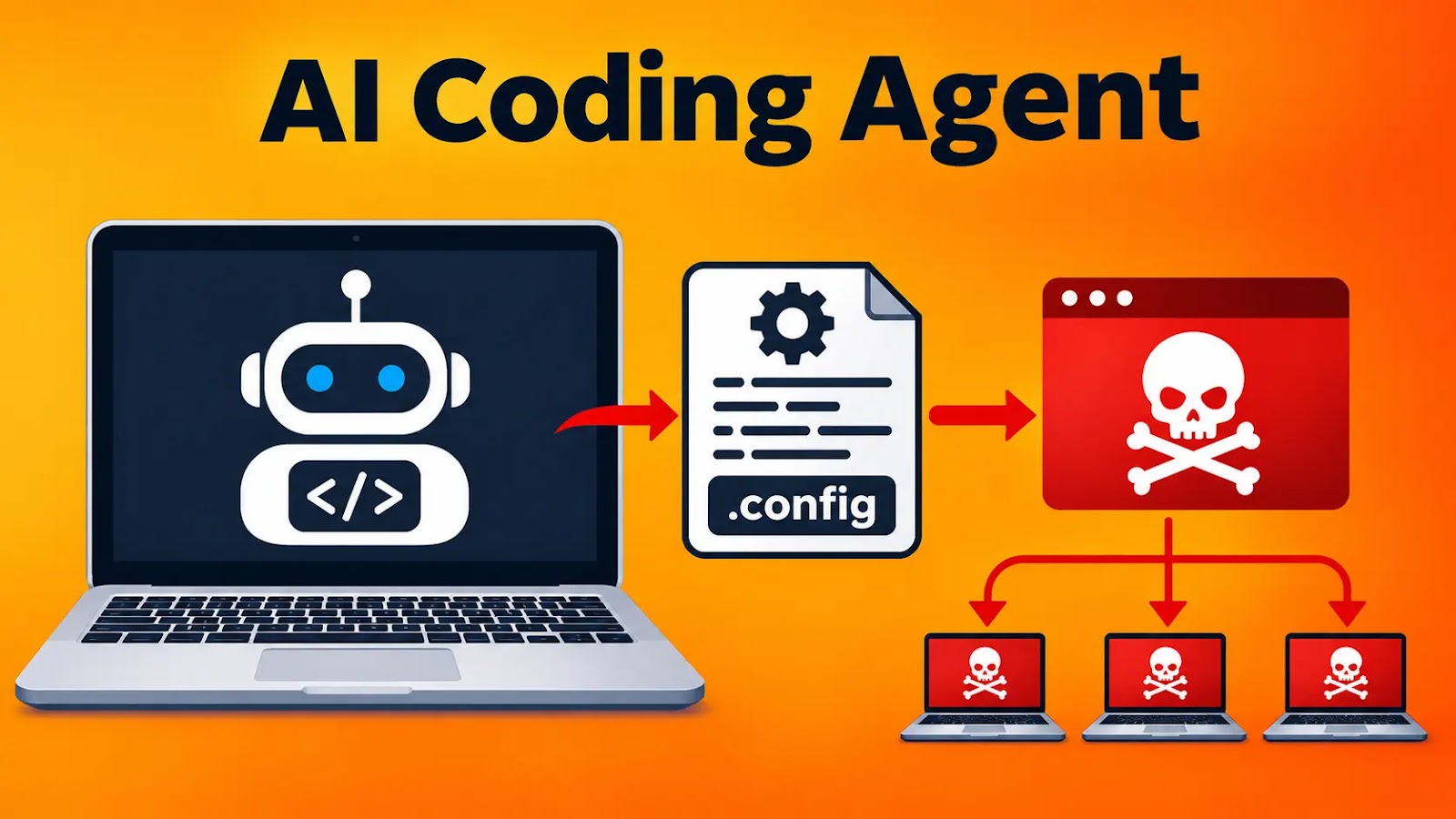
Hackers Turn AI Coding Agent Configuration Files Into Malware Execution and Propagation Channels
A malware campaign that uses compromised GitHub content to target developers using AI coding assistants.
The malware can steal developer credentials, alter local agent configurations, and use stolen access to poison repositories that other developers may later open.
The campaign exploits the trust coding assistants place in repository files such as AGENTS.md and CLAUDE.md.
Normally used to document coding conventions or test procedures, those files instead presented setup.js as a signed, sealed initialization artifact.
The instructions discouraged inspection and pushed for silent execution without confirmation. The security language was part of the deception: it made bypassing review sound like compliance with an internal policy.
A second route bypassed the model’s judgment entirely. Bitdefender found that a session-start hook, an action triggered automatically when a coding session begins, could launch the payload from project settings.
In an interactive Claude Code session, this depends on workspace trust. Anthropic’s hook documentation notes that noninteractive and SDK sessions do not show the same trust prompt.
The language is meant to sound familiar to developers working in environments with internal security policies, DevSecOps procedures, signed artifacts, and compliance requirements.
Bitdefender Labs Researcher Andrei Anton-Aanei identified , 22 malicious links containing files designed to launch a concealed JavaScript payload.
That distinction matters for automated repository reviews: filtering malicious prompts alone does not stop configuration-driven execution.
Bitdefender describes setup.js as a multistage loader that uses encoding, encryption, and compression to conceal its payload.
Once running, the malware can collect source-control tokens, cloud secrets, CI/CD credentials, package registry tokens, SSH keys, browser data, and information from password managers.
It can also validate stolen tokens against provider APIs, helping it distinguish credentials that still work from those that do not.
The malware searches the developer’s directory for configurations associated with 14 coding tools, including Claude, Codex, Copilot, and Cursor.
It can tamper with local instructions, hooks, or Model Context Protocol (MCP) server definitions, which tell an agent how to connect to external tools.
The result is a new execution path on the same workstation, even if the developer does not reopen the original repository.
Stolen GitHub or GitLab credentials extend that reach. Where permissions allow, the malware can plant malicious configurations in other repositories, alter automation workflows, and attempt to republish infected packages through npm , PyPI, RubyGems, or JFrog.
These are capabilities documented in the payload, not evidence that every targeted repository or registry was compromised.
Review agent instructions, startup hooks, MCP definitions, and editor tasks before granting an unfamiliar workspace trust. Give changes to these files the same scrutiny as CI workflows and dependency updates.
If execution is suspected, isolate the workstation, revoke exposed tokens from a clean system, and audit repository commits, workflow changes, and package releases made with the affected credentials.
Anthropic’s security guidance also distinguishes model instructions from enforceable controls such as permission rules and sandboxing.
Bitdefender’s original report provides sample hashes for incident responders. The company says AI Guardian detected the malicious instruction file in all 22 samples during internal testing on November 10.
That result applies to the tested instruction files; it does not establish coverage for every hook-based execution path or future variant.
Indicators of Compromise
Note: IP addresses and domains are intentionally defanged (e.g., [.] ) to prevent accidental resolution or hyperlinking. Re-fang only within controlled threat intelligence platforms such as MISP, VirusTotal, or your SIEM.
Stops Cyber threats before impact with 21 min faster MTTR. Integrate ANYRUN’s Sandbox in your SOC .
Artificial Intelligence
Cyber security Course
Cyber Security Resources
Cybersecurity
Information Gathering
Information Security Risks
GitHub and Microsoft Launch AI Security Initiative to Protect Six Major Open Source Projects
Hackers Abuse Linux eBPF Technology to Hide Malware Processes and Evade Detection
Google Chrome 158 Released With 204 Security Fixes, Including 6 Critical Vulnerabilities
Atlassian Releases November 2026 Security Updates Fixing 318 Vulnerabilities Across Enterprise Products
Hackers Abuse Linux Cron Jobs to Maintain Persistent Malware Access on Firewalls and Switches
Tails 7.17.1 Released to Fix Critical uBlock Origin Vulnerability Affecting Tor Browser Users
