 Back Jpost
Inside operation midnight hammer: B-2 pilots reveal Iran nuclear strike
A thin red moon lit up the Iranian sky. After 18 hours in the air, two American B-2 bomber pilots were approaching their target. They checked their switches again, then their maps and watches, and suddenly noticed the lights of the city below.
“Oh my God, it’s Tehran!” one of them exclaimed. They had practiced this mission over and over, but now it was actually happening. “We’re doing it. It’s real.”
Minutes later, the bomb bay doors opened. Two huge bombs, each weighing 30,000 pounds, were released from the plane's belly and began to plummet toward the underground nuclear facility at Fordow. Freed from the enormous weight of the bombs, the plane suddenly became easier to maneuver.
“Let’s get out of here!” said one of the pilots. “No, wait,” his friend replied. The two turned the plane around and looked back, waiting to see if the bombs would actually explode. Five seconds passed, then ten, then fifteen. Suddenly, a ball of fire rose to the height of a ten-story building and lit up the mountains below as if it were daytime.
Thus began the American bomber attack on Fordow in June 2025, as part of Operation Midnight Hammer.
In an extensive investigation published this week by the US military magazine Air & Space Forces Magazine, journalists Chris Gordon and Tobias Naegele reveal, for the first time through interviews with the air crews who participated in the operation, what happened inside the planes and in the planning rooms.
The names of the participants have been replaced with pseudonyms for security reasons.
Fifteen years of planning, and a plan that changed at the last minute
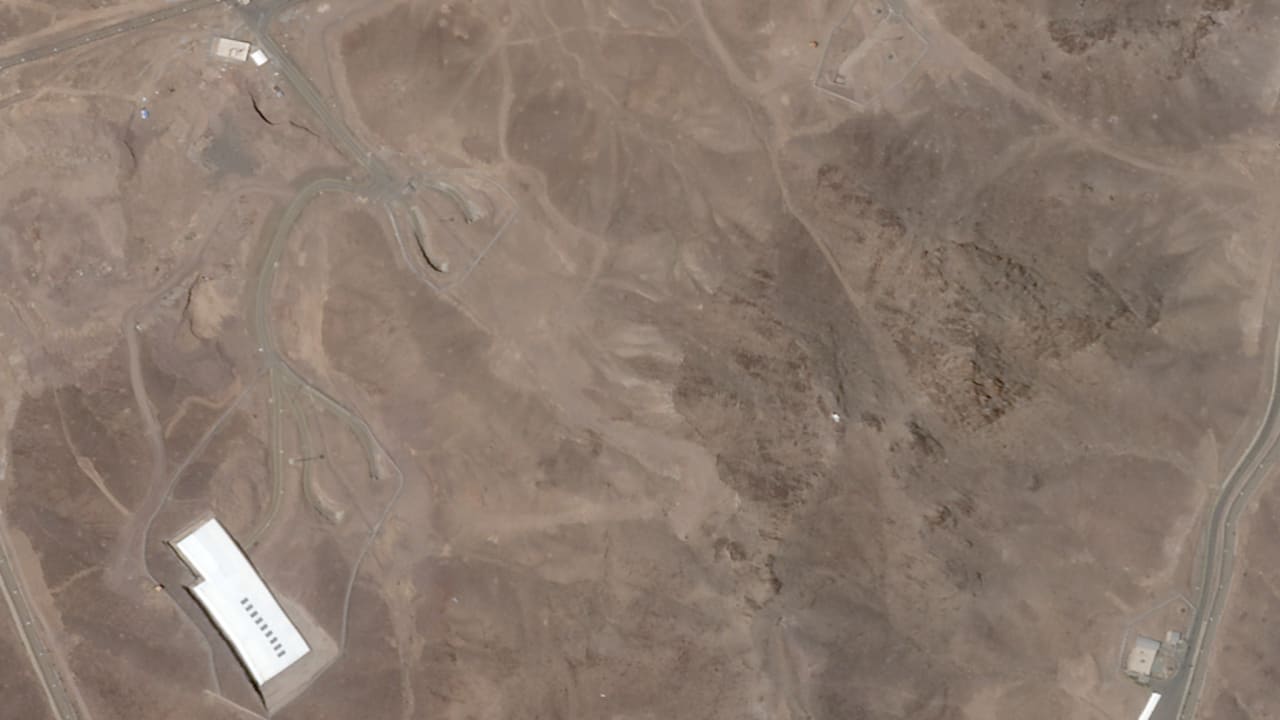
Planning to destroy the Fordow facility actually began in 2009, when American intelligence identified suspicious construction in the mountains southwest of Tehran. For 15 years, American experts examined the facility's structure, its ventilation and electrical systems, and possible vulnerabilities.
One of the key components of the program was the development of the GBU-57, a massive ordnance penetrator bomb designed to penetrate deep-ground fortifications. The B-2 is the only aircraft capable of carrying it.
The plan focused on the Fordow ventilation shafts, through which the Americans hoped to channel the force of the explosion into the facilities buried beneath the mountain.
The timing and depth of each explosion were carefully calculated so the bombs would work in sequence and destroy the underground infrastructure.
However, in the days leading up to the attack, the Americans discovered that the Iranians had tried to seal the shafts with concrete.
The change forced the planners to update the bombing order: first the concrete layer had to be removed, and only then would the facilities beneath it be hit. The changes continued until the final hours. According to the investigation, the final plan was approved only 16 hours before the mission, while some pilots were already asleep in preparation.
The deception exercise: The planes that took off in the wrong direction
One of the biggest challenges was to conceal the departure of seven B-2 bombers from Whiteman Air Force Base in Missouri. To mislead those tracking the US Air Force's movements, additional bombers took off westward in plain sight.
Media reports of the movements led to speculation that the planes were being sent to Guam or the Diego Garcia base in the Indian Ocean. In reality, these were decoys. The seven bombers intended to attack Iran secretly took off eastward, crossed the Atlantic Ocean, and continued through the Mediterranean toward the Middle East.
The pilots' families also did not know where their loved ones were sent. "I didn't tell her anything," the pilot known as Alpha said of his wife. "I just went to work and didn't come back."
The mission was an extreme endurance test. Two pilots per plane, long hours in a cramped cabin, mid-air refueling, and sleep in 30- to 45-minute bursts. Some relied on medically prescribed stimulants, others on coffee and energy drinks. The cabin also had a microwave, a toilet, and limited space to lie down.
The entire operation was assisted by approximately 125 aircraft, including F-22 and F-35 fighter jets, attack aircraft, and refueling aircraft. The pilots emphasized that the refueling aircraft were one of the decisive factors in the success of the mission.
The Israeli aid that cleared the way
The Israeli attack on Iran, which began on June 13 as part of Operation Rising Lion, had a significant impact on the American plan. According to the pilots’ testimony, Israeli F-35 and F-15 aircraft wiped out many of the air defense threats that had worried American planners in the days leading up to the attack.
“They eliminated a lot of threats and made the mission much safer for us,” Alpha said, describing the Israeli operation as an impressive lesson in the use of Western air power.
Six of the American bombers were sent to Fordow, and the seventh to Natanz. At 2:10 a.m., Iranian time, the bombing wave began on Fordow. The first plane was intended to blow up the concrete layer, and the five planes that followed dropped their bombs in a timed sequence.
The pilots knew that a few-second mistake could disrupt the entire plan. One of them said that the time window for carrying out the operation was limited to 15 seconds in each direction. After the bombing, the planes began to race out of Iranian airspace. Warnings of hostile activity were heard in the cockpits, but post-mission analysis showed the Iranians did not fire at the B-2 bombers themselves.
'We are done, we are safe'
Only after they safely left Iranian skies did the pilots broadcast their second message since entering the operation area: “We’re done, we’re safe!”
On the way back, the crew of a refueling plane discovered that the operation had already been revealed to the public and that word of the attack had been reported in the media. President Trump had announced the operation while the bombers were still on their way .
After 37 hours in the air, the crews landed at their base in Missouri, exhausted, sweaty and unshaven. Some discovered that their families had heard the mission on television. After a brief meeting with their loved ones, they were taken for medical examinations, given intravenous fluids, and entered a classified debriefing, where they were shown satellite photographs of the targets being attacked.
Only then, during the classified debriefing, did some of the participants learn the official name of the operation in which they had taken part.
A total of 14 bunker-penetrating bombs were dropped, weighing a total of 190 metric tons. Submarine-launched Tomahawk missile strikes also hit the Isfahan nuclear facility.
Post-operation damage assessments suggest that the attack destroyed a large portion of Iran's ability to enrich nuclear material to military-grade levels. However, the exact extent of the damage is still unknown.
David Albright, a former UN weapons inspector and now president of the Institute for Science and International Security, told the magazine that the Iranian centrifuge program as it existed before the attack no longer exists, and that what remains of it is mostly remnants.
But for the pilots, behind the strategic assessments and the debate over the extent of the damage, a much simpler memory remains: hours of tension, two bombs that fell into the darkness, and a huge fireball that lit up the mountains in Iran.
The full story
This article is one source in a clustered incident — the cluster page carries the summary, timeline and every other outlet covering it.
