 Back Palestinechronicle
Israeli Elections Fueled Digital Incitement against Palestinians
A new 7amleh report documents how racism, digital incitement and AI-generated disinformation were used to undermine Palestinian political participation in Israel.
A new 7amleh report documents how racism, digital incitement and AI-generated disinformation were used to undermine Palestinian political participation in Israel.
Some 43 percent of Hebrew-language content discussing Arab parties’ inclusion in a governing coalition contained hostile rhetoric.
Researchers identified widespread accusations of disloyalty, racist stereotypes and calls for violence, expulsion and restrictions on Palestinian rights.
Fake accounts and AI-generated content were used to fabricate political alliances and undermine the legitimacy of Palestinian electoral participation.
Racism as an Electoral Tool
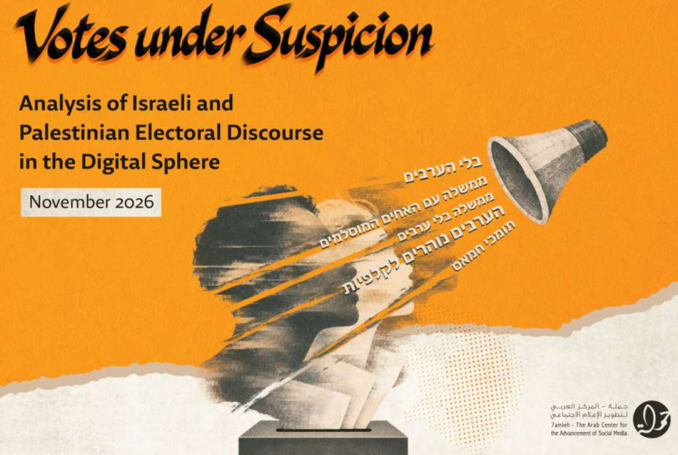
Anti-Palestinian racism, digital incitement and disinformation played a central role in Israel’s October 27 parliamentary elections, according to a report published Wednesday by 7amleh – the Arab Center for the Advancement of Social Media.
The report, titled ‘Votes Under Suspicion: An Analysis of Israeli and Palestinian Electoral Discourse in the Digital Space (2026)’, examined 30,808 Hebrew-language posts and 12,037 Arabic-language posts, alongside their , across , X and TikTok.
Researchers found that 6.7 percent of the analyzed Hebrew-language content contained racist remarks or incitement against Palestinian citizens of Israel.
Hostile rhetoric appeared in 43 percent of content discussing the inclusion or exclusion of Arab parties from a governing coalition and 42.3 percent of content addressing their disqualification.
“Security concerns, racism, and incitement have become central instruments of political mobilization in Israeli discourse,” the report stated.
AI and Digital Disinformation
7amleh documented the use of fake accounts, coordinated influence networks and AI-generated content to discredit political opponents by associating them with Palestinian parties.
Among the examples were manipulated images circulated by Likud and an AI-generated video published by Bezalel Smotrich depicting an apparent political alliance between Israeli opposition figures and Palestinian leaders.
The report also cited a video published by Itamar Ben-Gvir depicting Palestinians being transported to a place resembling a concentration camp.
“An alliance with Arab parties has become an accusation that Israeli candidates hurl at each other,” 7amleh notedl.
Following the elections, in which two Arab lists secured 19 Knesset seats, unsubstantiated accusations of electoral fraud and foreign funding intensified.
Citing separate post-election research by the Israeli organization Fake Reporter, 7amleh noted a 428 percent increase in anti-Palestinian online discourse.
Israeli police, however, said they had found no evidence supporting Likud’s allegations of electoral misconduct.
7amleh concluded that digital incitement and disinformation extend far beyond electoral competition, “reinforcing patterns of exclusion and erosion of their rights, security, and the legitimacy of their political participation.”
