 Back Icirnigeria
ISWAP adapts commercial drones, satellite technology for insurgency – Report
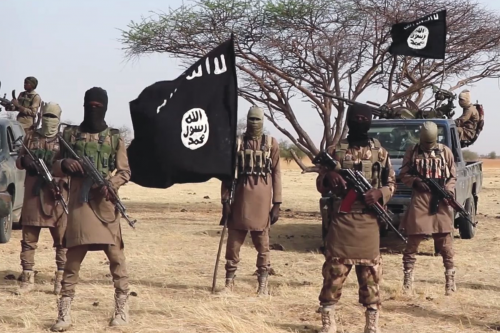
THE Islamic State West Africa Province (ISWAP) has developed a technology programme that enables it to adapt commercial drones, satellite communication devices and other civilian equipment for intelligence gathering, propaganda and combat operations, a new report has found.
The November 2026 report by the Institute for Security Studies (ISS), titled Wiring the Insurgency: Inside ISWAP’s Adaptive Technology Programme, said the group’s technological development was supported by links to the Islamic State (IS) network, which provides technical training, financing and media infrastructure.
The report drew on interviews with 17 people, including former insurgents, security and intelligence officials, traders and researchers.
It said ISWAP initially used drones for surveillance after fighters reportedly captured the devices during raids on Nigerian or Cameroonian forces around 2014. The group later expanded their use to intelligence gathering, coordinating attacks and producing propaganda.
The report noted that by 2023, the insurgents were modifying commercial drones for offensive operations, including attempts to drop improvised explosive devices.
The first recorded use of weaponised drones in direct combat occurred on December 24, 2024, when ISWAP deployed four drones to drop locally made grenades on the Nigerian Army’s Forward Operating Base in Wajiroko, Damboa Local Government Area of Borno State. At least five soldiers were injured.
In February 2025, the group reportedly launched what it called the “Camp Holocaust” campaign, targeting poorly resourced military positions in Nigeria and Cameroon. The ISS said it documented at least 15 successful attacks by July 2025.
Citing data from the Armed Conflict Location and Event Data (ACLED), the report identified 16 drone-related incidents between 2024 and February 2026, adding that ten involved direct combat or bombing attacks, while six involved reconnaissance and intelligence gathering ahead of ground assaults.
Former fighters told the ISS that drones carrying explosives were used to unsettle soldiers before ground fighters attacked military positions while also providing aerial views and footage for the group’s propaganda operations.
The report said the attacks often resulted in the loss of military weapons, helping ISWAP replenish its arsenal.
Insurgents establish drone workshops
The report said ISWAP had established workshops in several locations, including Tumbun Magari, Tumbun Jakar, Dogon Chiku and Tumbun Allura, where fighters modified commercial drones and produced weapons.
Former fighters cited in the report, said combat-drone training took place at Tumbun Allura before the December 2024 attack on Wajiroko. They identified three foreign instructors involved in the training.
Photographs shared by former fighters suggested that the group modified Chinese-made DJI Mavic drones for its operations.
The report also identified two additional trainers, Abu Zaid and Abu Fadhil, who reportedly arrived through Libya in 2026 to improve the group’s drone capabilities. It named Abdurahman Abubakar, known as Abu Hanifa, as the person appointed to lead its drone operations.
A former drone operator told the ISS that his unit had 15 operators and eight drones among approximately 320 fighters, suggesting that drone operation had become a specialised role within the group.
The ISS withheld detailed descriptions of how the drones were modified and explosives attached, saying it wanted to avoid publishing instructions that could be used for violent purposes.
Satellite technology sustains insurgent communications
Beyond drones, ISWAP relies on satellite communication devices to maintain between fighters and external networks, parti cularly in areas where regular telecommunications services have been disrupted.
The report identified Thuraya satellite phones, Wi-Fi devices and Starlink as tools used by the group to access the internet.
The report traced the group’s reliance on satellite technology to restrictions on GSM services in parts of the North-East in 2013. It said ISWAP also limits the use of local SIM cards to protect its communications.
Its communications department, known as the Ilan, links the group with the wider Islamic State network, relaying technical knowledge and instructions and processing propaganda materials.
The ISS also identified commercial supply networks through which ISWAP obtains drones, satellite devices and media equipment. It named Lagos and Kano as important points in the supply chain, while Dubai and N’Djamena were identified as routes for some communication equipment.
Mustapha Usman is an investigative journalist with the International Centre for Investigative Reporting. You can easily reach him via: [email protected]. He tweets @UsmanMustapha_M
We invite you to support us to continue the work we do. Your support will strengthen journalism in Nigeria and help sustain our democracy.
We need your support to produce excellent journalism at all times.
