 Back Forbesmiddleeast
Jordan To Join EU-Backed Medusa Cable Network
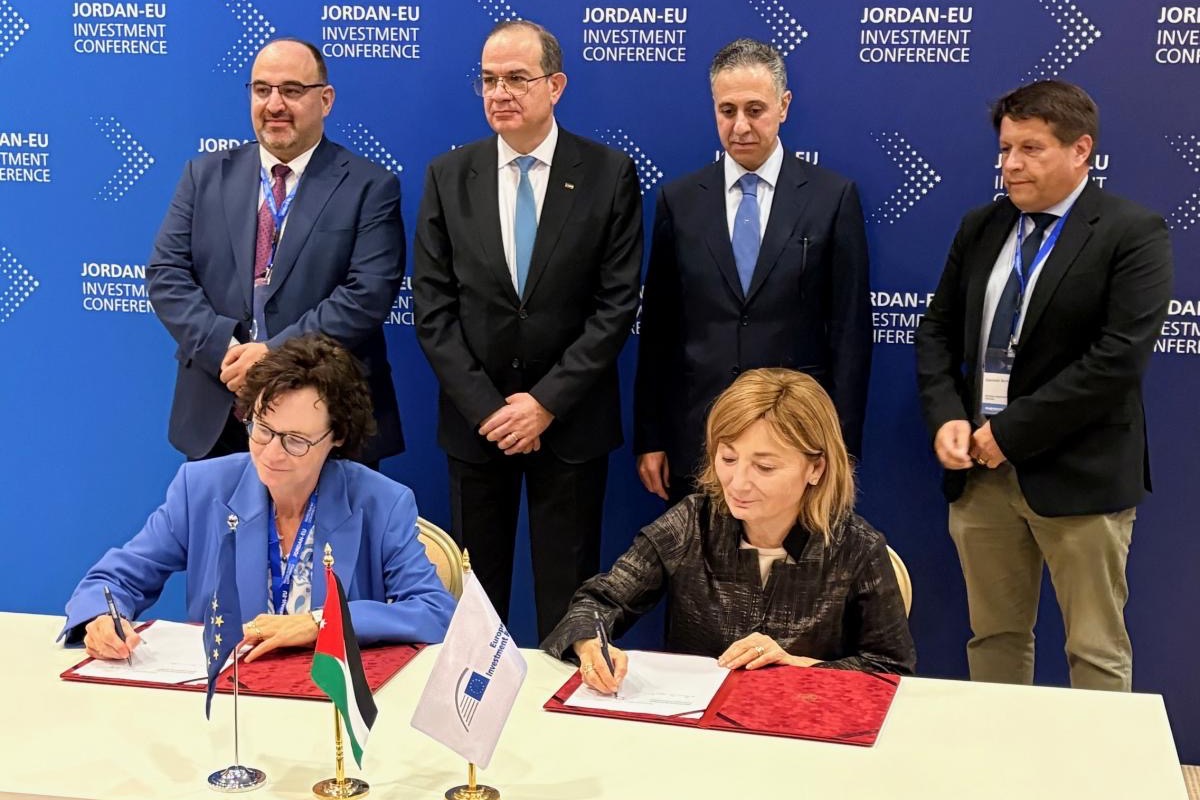
The European Union (EU) and the European Investment Bank (EIB) are committing $12.2 million (€11.1 million) to extend the Medusa submarine cable network to Jordan , the EIB said Thursday.
Extending the network to Jordan
The project aims to connect around 500 research and education institutions in North Africa and Jordan with European universities and research centers.
The funding includes a $12.2 million (€11.1 million) EU grant for a terrestrial connection between the cable system’s landing point in Port Said, Egypt, and Jordan, alongside an EIB loan of up to $65.9 million (€60 million), signed in October, supporting the wider Mediterranean network.
The project is being developed by AFR-IX Telecom, a Spanish telecommunications and infrastructure operator, to improve digital connectivity between Europe , North Africa, and the Middle East. It is part of the EU’s Global Gateway strategy, which supports infrastructure investment and international partnerships.
Connecting research, education institutions
The new grant builds on $43.9 million (€40 million) in EU funding previously awarded through the Neighbourhood Investment Platform for a dedicated research and education network across the Mediterranean.
With the latest funding, EU grants channeled through the EIB for the research and education connections total $56.1 million (€51.1 million).
Working with GÉANT, Europe’s research and education networking organization, Medusa aims to link around 500 institutions in North Africa and Jordan with European universities and research centers. The connections are expected to facilitate data exchange, scientific collaboration, and access to digital resources.
EIB Vice President Gelsomina Vigliotti said the Jordan extension would help researchers, universities, and businesses access faster and more reliable connections, while supporting innovation and cooperation.
8,000-kilometer cable network
The Medusa system will span more than 8,000 kilometers and include 21 landing points, connecting Portugal, Spain, France, Italy, Malta, Greece, and Cyprus with Morocco, Algeria, Tunisia, Libya, Egypt, and Syria, as well as Jordan through the planned extension.
Its first phase, linking France, Morocco, and Tunisia, has been completed and is already operational. Deployment of the second phase, supported by the EIB loan, is underway.
The system uses 24 fiber pairs and an open architecture designed to provide additional capacity and flexibility for telecommunications operators and other users. It is expected to support services including 5G, cloud computing, and artificial intelligence.
EU Commissioner for the Mediterranean Dubravka Šuica said the Jordan connection would help researchers, including those at the SESAME scientific research center, collaborate with European counterparts.
Medusa is also intended to diversify digital routes across the Mediterranean, strengthening network resilience and supporting businesses and public services.
The full story
This article is one source in a clustered incident — the cluster page carries the summary, timeline and every other outlet covering it.
