 Back www.nbcmiami.com
Local Officials Identify Pilot Killed In Helicopter Crash In Biscayne Bay 3884191
Authorities have identified the man killed in a helicopter crash in Biscayne Bay on Wednesday.
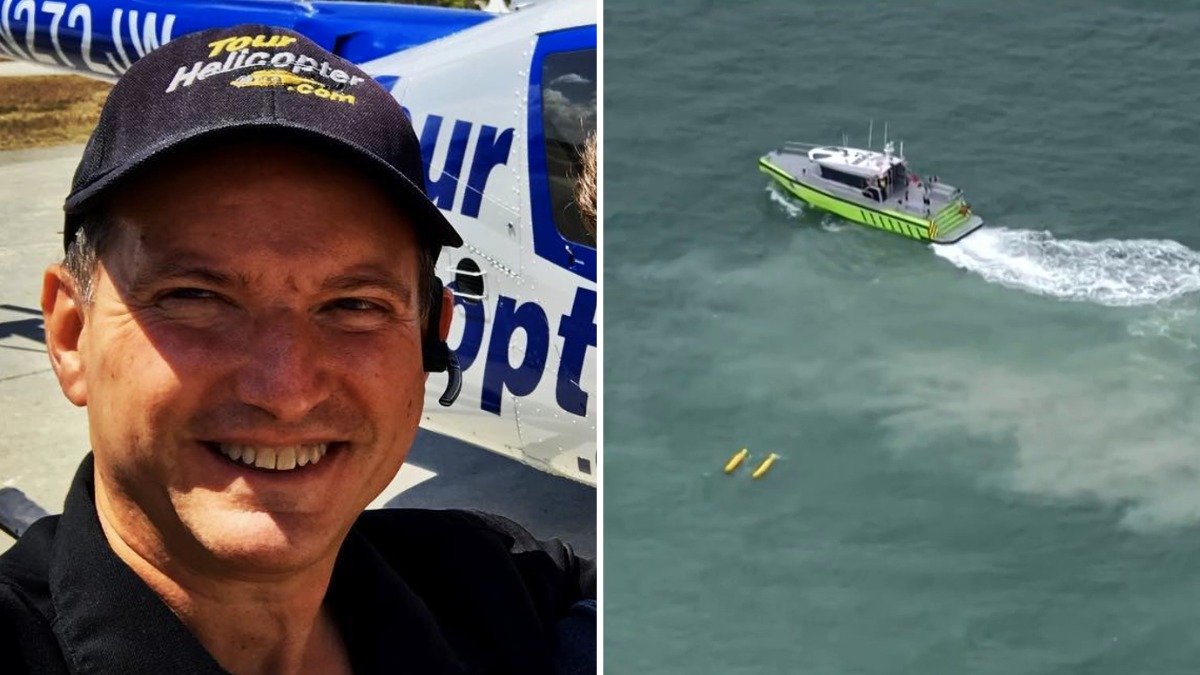
Pilot Tomas Pendas, 63, died when the Robinson R44 II helicopter crashed into Biscayne Bay near Bill Baggs State Park, off Key Biscayne, while on a trip to film boats on the water, the Miami-Dade Sheriff’s Office said.
Watch NBC6 free wherever you are
Two others aboard the chopper, men 52 and 27 years old, suffered minor injuries and are no longer hospitalized, authorities said.
Who was Tomas Pendas?
Pendas was also president of Global Aerials Inc., the company listed as the helicopter’s registered owner, according to Florida corporate records.
He was flying a helicopter that was conducting a photoshoot of a speedboat event known as a "poker run," said Gene Ranbo, a National Transportation and Safety Board investigator.
Adonis Lugo, an aerial photojournalist for NBC6 and Telemundo 51, said he had known Pendas for years and described him as a driven person.
“I’ve known Tom for five years now; he’s definitely a go-getter. He was always kind every time we had interactions,” Lugo said.
The crash survivors were identified as Ryan McCoy and Ryan Ferraro, the owner of Boats Daily, a full-service digital marine marketing agency.
Image shows men rescued from water after helicopter crash in Biscayne Bay
1 killed, 2 hurt in helicopter crash in Biscayne Bay, Coast Guard says
What's in the investigation of the Learjet crash in Florida that killed 9?
Helicopter went down in Biscayne Bay
Rescue workers from several local agencies, as well as the U.S. Coast Guard and U.S. Customs and Border Protection, responded to the crash before 11:30 a.m.
When the sheriff's office marine patrol units reached the scene, they reported finding a Good Samaritan trying to help one of the victims, now identified as Pendas, and take him to shore. Miami firefighters attempted to save his life, but he didn't survive, Sheriff Rosie Cordero-Stutz said.
Now the sheriff's office is looking to speak to the good Samaritan to thank them for their "swift actions and lifesaving efforts."
Meanwhile, border protection officers found the two other men from the helicopter and turned them over to Miami-Dade rescue workers for transport to the hospital.
Footage from Chopper6 shows the aircraft upside down underwater with two yellow floats attached to the bottom of its landing skids. Those emergency floats are designed to help keep a helicopter afloat in a water landing.
View this post on Instagram A post shared by CBPAMO (@cbpamo)
A post shared by CBPAMO (@cbpamo)
A powerful image shows the moment an agent rescued two men from the water.
"Courage, teamwork, and lifesaving action when it matters most," U.S. Customs and Border Protection wrote along with the photo on Instagram.
Information on the online flight tracker FlightAware shows that a helicopter of the same model was flying for five minutes over Biscayne Bay before it recorded a sudden drop in altitude at around 11:17 a.m. Authorities have not confirmed if this is the exact aircraft involved in the crash.
Before that flight, the helicopter had departed North Perry Airport at 10:48 a.m. and flown for 13 minutes toward Biscayne Bay. It was not immediately clear if the chopper landed before taking off again.
Crews remove helicopter out of the water
Authorities said the cause of the crash remains under investigation.
The NTSB is now examining the pilot’s background, the helicopter’s maintenance history and the conditions surrounding the flight.
“When we’re investigating, what we do is we look at the man, the machine and the environment,” Rambo said.
Investigators are also looking into any specific requirements associated with the aerial photoshoot.
“The pressures they were operating under,” said Rambo.
Footage from Chopper6 shows crews towing the downed helicopter on Thursday.
“We try to do as little damage as possible in the recovery,” said Rambo. “Which is really difficult pulling something out of water.”
Once recovered, the helicopter will be taken to a secure location for a more thorough examination.
The NTSB expects to release a preliminary report in 15 days, but the final report could take 18 months. They are asking anyone with information to them at witness@ntsb.gov .
The full story
This article is one source in a clustered incident — the cluster page carries the summary, timeline and every other outlet covering it.
