 Back Rivieraradio.Mc
Monaco leads European debate on disinformation and journalists' safety in Strasbourg
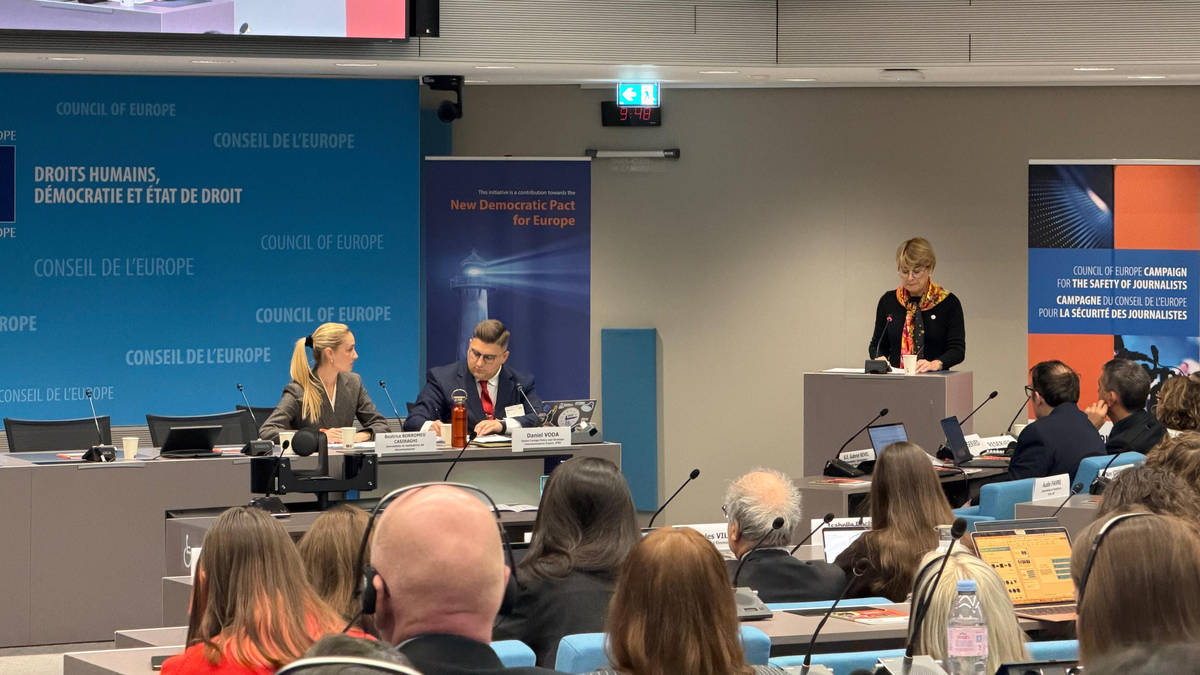
Monaco has opened a two-day conference at the Council of Europe in Strasbourg, bringing together journalists, young people and European institutions to tackle disinformation, defend press freedom and strengthen democracy.
Riviera Radio is attending the conference, which marks one of the final initiatives of Monaco's Presidency of the Council of Europe's Committee of Ministers.
Listen to this article
The conference, Youth Facing Disinformation: Why Journalists Matter , forms part of the Council of Europe's Journalists Matter campaign, which seeks to strengthen the safety of journalists and protect the conditions in which independent reporting can operate.
Opening the discussions, Isabelle Berro-Amadeï, Monaco's Minister of Foreign Affairs and Cooperation, placed particular emphasis on the role of young people in defending democratic institutions.
Their participation, she explained, had been a central priority throughout the Principality's presidency.
“Youth is not merely a promise for the future; it is already a force in the present,” she told participants.
Her message was that young people should not simply be taught democracy but given a meaningful role in shaping it.
Their concerns, ambitions and proposals must be heard, while education and critical thinking remain essential to their ability to distinguish reliable information from manipulation.
“Protecting our democracies does not mean making decisions for young people, but making them with young people,” she said.
The conference reflects that approach, combining high-level discussions on Monday with workshops on Tuesday, designed to encourage young participants to develop practical responses to the challenges facing journalism and democratic debate.
European Court warns of new threats to freedom of expression
Mattias Guyomar, President of the European Court of Human Rights, addressed the difficult balance between protecting freedom of expression and safeguarding other fundamental rights in an increasingly digital world.
“The Court has already recognised that the ability of individuals to express themselves on the internet represents an unprecedented tool for freedom of expression. Unprecedented, but not without limits,” he said.
Guyomar referred to the growing legal questions surrounding online content, including the protection of privacy, personal image and reputation.
He also warned that the same technologies which have expanded opportunities for public participation can be exploited to undermine democratic institutions.
“These new forms of communication also bring unprecedented dangers and risk being used by those who attack the democratic model and the values on which it is founded,” he said.
His remarks underlined the responsibility facing European institutions as social media increasingly shapes public debate.
The Court itself has been adapting its communication to reach younger audiences, seeking advice from students on how to engage with them without losing its institutional credibility.
Behind that lighter observation was a serious point: defending fundamental rights requires institutions not only to uphold democratic principles, but also to communicate them effectively to generations whose understanding of public affairs is increasingly shaped online.
Guyomar ended with a firm commitment to the Court's role in protecting those principles.
“You can count on us. The Court will stand firm.”
Why journalism matters in the digital age
The discussions come at a time when journalists face mounting pressure from online harassment, intimidation and the rapid circulation of misleading information.
The growth of artificial intelligence and the changing habits of younger audiences have added further questions how credible reporting can maintain public trust.
The Strasbourg gathering brings those concerns into the same discussion as freedom of expression and democratic participation.
Among the contributors to the programme is Benedict Townsend of Global's Scroll Deep , bringing a perspective from digital media and the ways younger audiences encounter news and information.
The central question is not simply how to counter false information, but how to ensure that independent journalism remains accessible, credible and relevant to the people who will shape Europe's democratic future.
For Monaco, the conference also provides an opportunity to conclude its presidency with a focus on a longer-term challenge: strengthening democratic resilience by involving the generation directly in the debate.
As the programme continues on Tuesday with workshops dedicated to young participants, the emphasis will move from identifying the dangers of disinformation to exploring how education, responsible communication and independent journalism can help address them.
Riviera Radio is reporting from Strasbourg and will continue following the discussions and contributions throughout the two-day conference.
The full story
This article is one source in a clustered incident — the cluster page carries the summary, timeline and every other outlet covering it.
