 Back News18
'Phuljhari Of Phishing': PIB Issues Diwali Warning Against Fake Discounts And Online ...
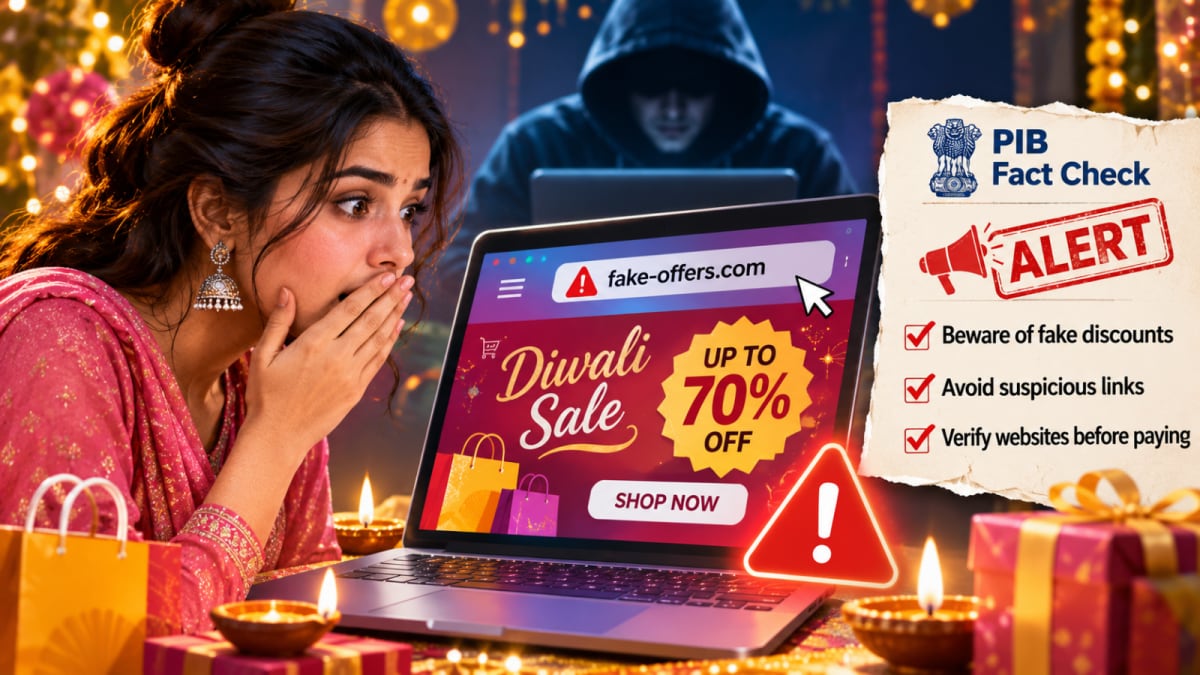
PIB Fact Check has cautioned shoppers against fraudulent Diwali deals and phishing links, urging them to verify websites before clicking links or making payments
With Diwali shopping in full swing, scammers are also looking to cash in on the festive rush. From unbelievable discounts to suspicious shopping links, cybercriminals are using tempting offers to deceive unsuspecting buyers.
Amid this, the Press Information Bureau (PIB) Fact Check has issued a warning, urging consumers to watch out for fake festive deals and phishing links that could put their personal and financial information at risk.
In an awareness campaign titled ‘The Phuljhari Of Phishing’, PIB has used the imagery of a traditional Diwali sparkler to highlight the potential dangers lurking behind seemingly irresistible online offers.
The campaign draws a comparison between the excitement of festive shopping and the risks associated with clicking on suspicious links, reminding consumers that not every deal they come across online is genuine.
Sharing the awareness poster on X, PIB Fact Check wrote, “Festive offers may look tempting, but beware of the hidden sparks of cyber fraud! Scammers often use fake discounts, festive deals and phishing links to steal your personal and financial information.
Always verify the authenticity of a website or offer before clicking on links or making payments. This #Diwali, let your celebrations sparkle, not your personal data fall into the wrong hands. Think before you click. Verify before you pay."
How Do Online Shopping Scams Work?
With e-commerce platforms and digital payments becoming an integral part of festive shopping, fraudulent websites and phishing attempts have emerged as potential threats to online consumers. Cybercriminals often create websites that resemble legitimate shopping platforms or circulate messages promising unusually high discounts to attract buyers.
Once users click on these links, they may be redirected to fraudulent websites or payment pages designed to collect sensitive details, including banking information, passwords and other personal data. In some instances, scammers may also impersonate popular brands or retailers to make their offers appear authentic.
Such scams can result in financial losses and the misuse of personal information. Therefore, consumers are advised to exercise caution before making purchases, particularly when deals are shared through unfamiliar websites, social media accounts or unsolicited messages.
How To Stay Safe While Shopping Online This Diwali
PIB Fact Check’s advisory encourages consumers to verify the authenticity of websites and festive offers before proceeding with any online transaction. Shoppers should avoid clicking on suspicious links, especially those promising unbelievable discounts or limited-period deals without a credible source.
Consumers should also refrain from sharing sensitive information, such as passwords, One-Time Passwords (OTPs) and banking credentials, with unknown individuals or websites. Checking website addresses carefully and making payments only through trusted platforms can help minimise the risk of falling victim to such fraudulent activities.
The advisory further reminds shoppers to think twice before clicking on unfamiliar links and verify an offer before making a payment.
In case someone becomes a victim of online financial fraud, the incident can be reported through the National Cyber Crime Reporting Portal. Individuals can also the cybercrime helpline at 1930 for assistance.
Diwali 2026: India Lights Up as Markets, Streets and Cities Glow With Festive Celebrations | News18
Bombay HC Rebukes BMC for Politicizing Pollution Awareness Video Featuring Dia Mirza | Brass Tacks
Diwali Campaign Controversy: BJP Targets Dia Mirza, BMC Takes Down Video | Air Pollution | News18
Chawri Bazaar Building Collapse: Two Dead, NDRF Launches And Rescue Operation | News18
6-Year-Old Girl Assaulted Inside School | Digital Exposure Angle Emerges in Panchkula Probe | News18
As festive shopping continues, the message remains simple: a discount that looks too good to be true could come with hidden risks. This Diwali, shoppers are encouraged to stay alert, protect their digital information and ensure that their celebrations are not interrupted by cyber fraud.
Disclaimer : This article is based on user-generated content. The claims made in the original post have not been independently verified by News18.
What is the 'The Phuljhari Of Phishing' campaign launched by PIB?
How do online shopping scams and phishing websites operate during festivals?
Cybercriminals create duplicate websites resembling legitimate e-commerce platforms or circulate messages promising unusually high discounts. When users click these links, they are redirected to fraudulent payment pages created to steal banking details, passwords, and other sensitive personal data.
What should I do if I become a victim of online financial fraud?
If you fall victim to cyber fraud, you can report the incident through the National Cyber Crime Reporting Portal or the dedicated cybercrime helpline at 1930 for assistance.
The full story
This article is one source in a clustered incident — the cluster page carries the summary, timeline and every other outlet covering it.
