 Back Finance.Biggo
South Korea's FSS Chief Becomes Deepfake Star to Warn Against AI Investment Scams
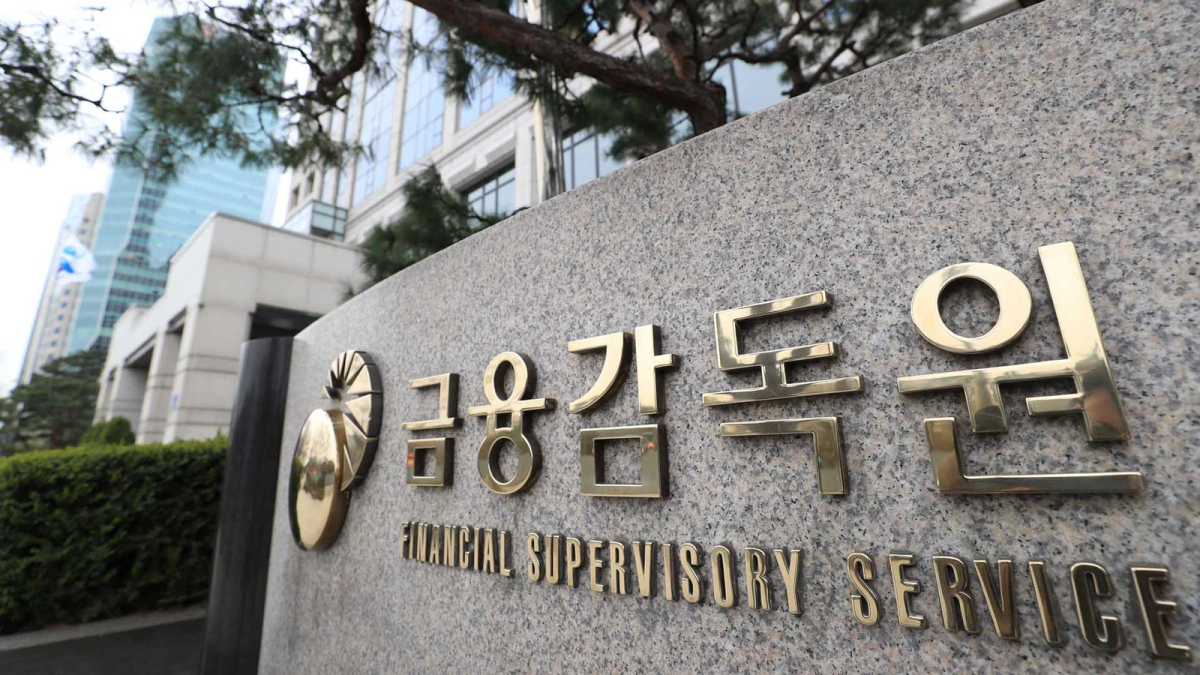
South Korea's Financial Supervisory Service (FSS) has issued a warning against a new breed of financial fraud in which artificial intelligence (AI) is used to forge the faces and voices of celebrities or financial authorities to induce investment. After a synthetic video impersonating the FSS governor surfaced and even recommended a specific stock, the regulator and a telecom carrier joined forces to launch a hands-on campaign in which citizens can personally try to tell real from fake.
The FSS and South Korea's KT (030200) said on the 25th that they jointly operated an "AI Financial Fraud Prevention Experience Center" at Yeouido Park in Seoul for three days from the 23rd to the 25th. The center was set up as a side program of the "2026 World Investor Week" that the FSS is running from the 23rd to the 27th. World Investor Week is a global investor education and protection campaign that the International Organization of Securities Commissions (IOSCO) has held annually since 2017; this year's themes are investor resilience, understanding AI, and strengthening financial fraud prevention.
The most eye-catching element was a series of short-form videos (Shorts) produced by the FSS itself and posted on social media. FSS Governor Lee Chan-jin appeared in person before the camera. In the video, a figure who looks exactly like the governor—wearing a Hawaiian shirt and standing against a backdrop of blue sea and palm trees—introduces "palm tree semiconductor" as a promising stock. The real governor then appears and dismisses it: "I never said any such thing. That's not me—it's AI."
The FSS stressed that even when a video shows a celebrity recommending investment in a particular stock, people must first verify whether the remarks were actually made. Investment information encountered online and on social media must be checked for its source and authenticity, and fake investment websites and forged documents are deployed through the same tactics, it explained. IOSCO's investor advisories likewise include verifying the source of AI-generated investment information and not handing over personal or financial information to unverified online platforms.
The experience center was organized into six content zones using KT's mobile "KT AI Station" facility. Among them, the "AI Ethics and Safety Experience" corner consisted of four parts: deepvoice, AI text spam blocking, deepfake, and fake news. The deepvoice experience showed how AI imitates a real person's voice and cases in which this is abused for voice phishing, while the deepfake and fake news experiences focused on distinguishing manipulated videos and false information.
The deepvoice and text spam blocking corners applied technology from KT's customer protection brand "Ansim 365." Visitors could directly observe the process of detecting synthetic voices used in voice phishing and how AI identifies and filters new types of spam text messages. Other content, including "AI Lee Kang-in" and "AI Studio," introduced general applications of AI technology.
Separately from the experience center, the FSS is running education programs in parallel. On the 1st of month it will hold a special lecture on investor resilience by Professor Kim Kyung-il and offer free AI financial literacy courses from the Korea Banking Institute. Along with a self-assessment of vulnerability to AI financial fraud, 13 rounds of visiting financial education will be conducted at schools and institutions nationwide, reaching 1,100 people. The stories of teams that won an AI competition hosted by IOSCO will also be introduced via YouTube.
Warnings from the international community are also growing louder. IOSCO warned that scams targeting retail investors using AI and social media are evolving rapidly. In particular, it pointed out that "social engineering" techniques—which exploit trust built between people to break down vigilance—can be mobilized for financial fraud. IOSCO Chair Jean-Paul Servais (chairman of Belgium's Financial Services and Markets Authority) said in a message commemorating his participation in the FSS campaign: "We have access to a wider range of information, digital tools and investment opportunities than ever before, but that makes careful judgment by investors all the more important."
KT also plans to go beyond this campaign and continue expanding customer protection activities based on AI and telecommunications technology as well as AI ethics education opportunities. Choi Se-jun, managing director and head of the Customer Strategy Division in KT's Customer Business Group, said, "As AI technology advances, financial fraud methods that abuse it—such as deepfakes and deepvoice—are also evolving," adding, "I hope this campaign helps citizens directly experience the risks of AI financial fraud and more easily understand the importance of preventing damage."
The implications of this case are clear. As generative AI drives the cost of producing investment content to virtually zero, "fake recommendations" that steal the faces and voices of authoritative figures have become the cheapest fraud route for reaching retail investors. It is in the same context that the regulator, placing weight on cultivating the ability to identify fakes in advance rather than on post-hoc detection, has built a common front with telecom carriers and international organizations. For investors, the step of verifying whether remarks in a video are genuine has become as important as picking a stock.
Once added, BigGo Finance appears first in Google Top Stories, so you get the broadest, most up-to-the-minute, and most comprehensive global financial news first.
The full story
This article is one source in a clustered incident — the cluster page carries the summary, timeline and every other outlet covering it.
