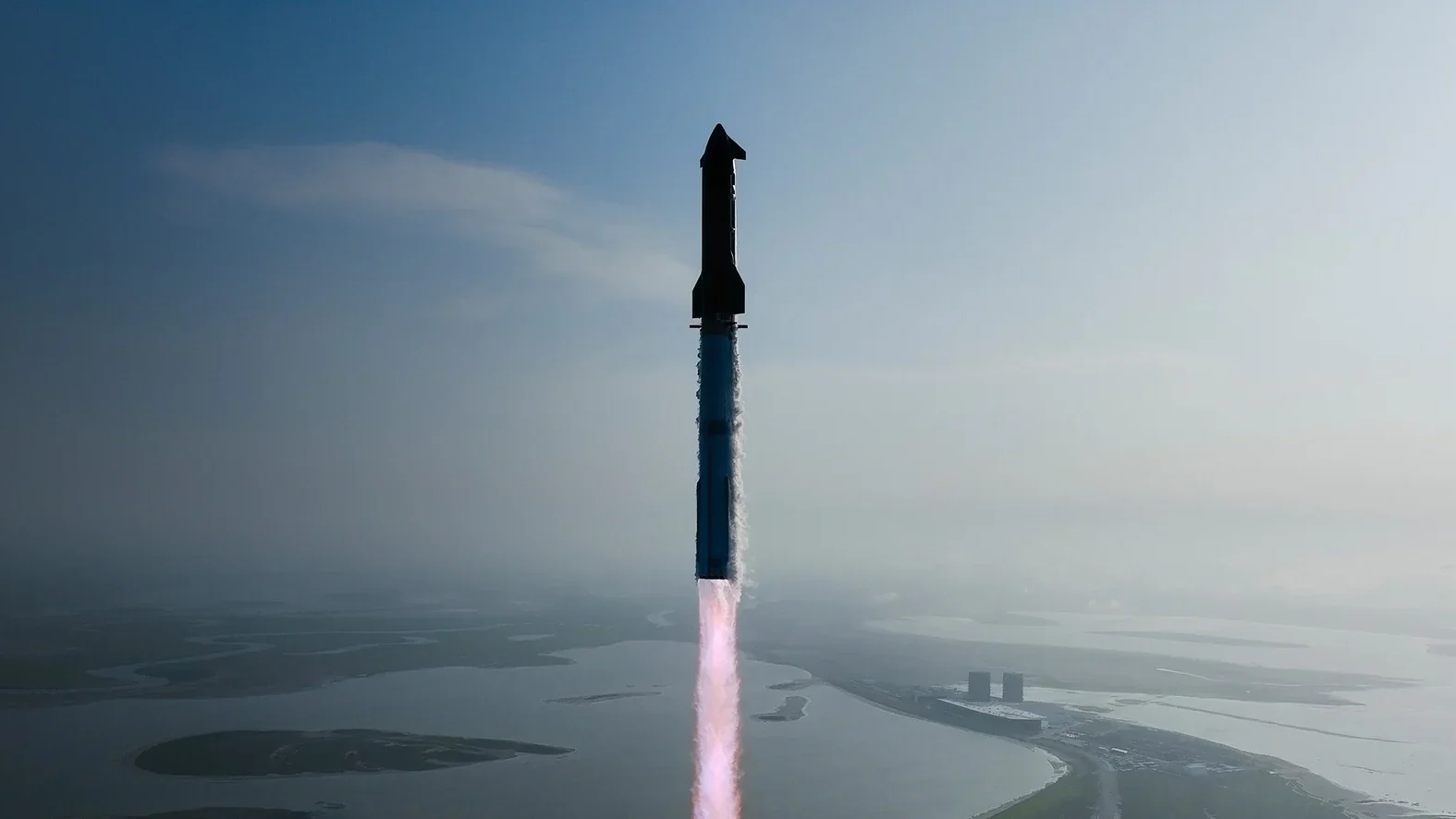
SpaceX wants federal permission to put up to 1 million solar-powered data-center satellites into low Earth orbit, and scientists say the atmospheric bill could be enormous. Space.com asked what a fleet that size would do to Earth’s climate , and on November 22, 2026, Futurism and hi-Tech.ua both reported the scientists’ warning, with a headline framing the plan as an environmental catastrophe.
That headline needs a careful read. The reporting confirms the application and the scientists’ concerns. It does not confirm that the Federal Communications Commission (FCC) has approved anything, that exactly 1 million satellites will fly, or that a peer-reviewed study has proven a catastrophe. We covered the first pollution models earlier. This piece sorts what is established from what is modeled, and asks what it means for anyone who buys or builds cloud capacity.
Don't miss new tech stories on Google
Add Shattered once in the Google app and our stories show up in your news suggestions.
What SpaceX Asked the FCC to Approve
The core facts are short. SpaceX, led by Elon Musk, asked U.S. federal regulators for permission to launch up to 1 million satellites into low Earth orbit (LEO). Reports call the system the SpaceX Orbital Data Center System. The satellites would run on solar power, and the application went to the FCC.
Note the words “up to.” An application sets a ceiling, not a build order. Companies often file for more capacity than they end up deploying, and regulators often grant less than they are asked for. Nothing in the available reporting says the FCC has acted, and nothing sets a launch schedule.
Several details are also missing. Reports do not give satellite dimensions, price, total project cost, data-center capacity , orbital altitude, or the number of rocket launches the plan would need. Any article that quotes those figures as fact is guessing. We will not do that here.
How Big Is 1 Million Satellites to Starlink?
Scale drives every concern in this story. Coverage describes the proposed constellation as nearly 100 times larger than SpaceX’s existing Starlink network, which reports put at 9,600 live satellites. A fleet that is two orders of magnitude bigger than the largest one ever flown changes the physics of the problem, not just the arithmetic.
Two of those rows come from modeling, not measurement. Nobody has launched a million satellites, so every emissions figure is a projection built on assumptions satellite mass, lifespan and launch cadence. The assumptions matter as much as the totals.
The Scientists’ Warning: What Futurism and hi-Tech.ua Reported
Futurism and hi-Tech.ua framed the story around scientists who fear the atmospheric cost of launching and later burning up an enormous fleet. The worry has two halves. Rockets pollute on the way up, and satellites pollute on the way down.
Scientists quoted across the coverage warn that launches and reentries could introduce nitrogen oxides, black carbon, aluminum and other metals into the upper atmosphere. Those are not exotic fears. Atmospheric researchers have tracked rocket exhaust and reentry debris for years, though at volumes that were small to what this filing implies.
The headline word “catastrophe” is the outlets’ framing of that warning. It is not a finding from a peer-reviewed study. The available reporting does not establish one, and the fact sheet we work from lists the catastrophe claim as unconfirmed. Readers should hold both ideas at once: the concern is serious, and the proof is not in yet.
Inside the Preprint: 150x Launch Emissions, 70-150x Reentry NOx
The sharpest numbers come from one preprint that is still awaiting peer review. It estimates the constellation could lift rocket-launch emissions by more than 150 times compared with 2025 levels. It also puts reentry nitrogen oxides at 70 to 150 times current levels. Scientific American’s coverage walks through the same estimates.
A 150-fold jump over 2025 does not mean 150 times today’s total pollution from all human activity. It means 150 times the rocket-launch slice, which started small. Launch emissions are a niche source today, so a large multiple can still land on a modest base. The preprint’s real test is whether its launch-cadence assumptions survive review.
Reentry is the less familiar half. Satellites that reach end of life burn up as they plunge through the atmosphere, and the heat forms nitrogen oxides from the air itself. A larger fleet with regular replacement would mean far more of those events. The 70 to 150 times range is wide because small changes in lifespan and mass swing the total.
Peer review will test these figures. Until it does, treat them as a credible warning flag and not a settled measurement. The preprint authors’ own uncertainty shows in that wide range.
Why Aluminum, Black Carbon and Metals Worry Atmospheric Scientists
The pollutant list in the reporting reads like a short chemistry exam. Each item has a different concern attached, and the evidence behind each varies. The table below groups them by how the coverage describes the risk.
The key word in the last column is “level.” Modeling, warnings and opinion all count as evidence, but none equals a controlled measurement. For terrestrial data centers the picture is clearer, and our look at Harvard’s map of 403 data centers and 25.7 million tons of CO2 shows what a measured footprint looks like. Orbital capacity has no such baseline yet.
That gap is itself a finding. Regulators can price what they can measure. They struggle to price a pollutant that enters the stratosphere, stays there, and shows up in the data years later.
Hugh Lewis and the Collision Problem at 17,000 MPH
Chemistry is only one risk. The other is physical. Reports describe orbital satellites traveling at 17,000 miles per hour, so even a small fragment carries destructive energy in a crash. Pack a million spacecraft into LEO and the odds of an encounter rise with the density of the swarm.
Hugh Lewis, a space-debris expert and professor of astronautics at the University of Birmingham, gave one of the plainest assessments on record. He said: “I think these plans are somewhat optimistic, premature, and possibly naïve from safety and sustainability perspectives.”
Lewis stopped short of predicting a specific disaster, and so should we. A confirmed Kessler syndrome, the runaway chain of collisions that could close an orbital band, is not something the reporting supports. Lewis questions whether the plan is safe and sustainable as drawn. That is a narrower and more defensible claim.
Debris from today’s launch industry already reaches the ground in odd places. We tracked reports of Starship debris on a Mexican beach , which remain unconfirmed. Whatever the final count, the episode shows how hard it is to account for hardware once it leaves a launch pad.
Expert Voices: Boley and Lawler on a Million Satellites
Two astronomers have commented on the proposal in named, linked sources. Aaron Boley, a professor of physics and astronomy at the University of British Columbia and co-director of the Outer Space Institute, told Scientific American : “It’s one thing to make a data center. It’s another thing to make a data center and then put it into orbit.”
Boley also put the plan in historical context in an interview with CBC : “We saw this transition from thousands of satellites to 10,000 satellites largely done through SpaceX. And we were very worried maintaining a healthy orbital environment with that.” His point is that the field has already stretched once, and a jump to a million stretches it far further.
Samantha Lawler, an astronomer at the University of Regina and co-author of the CRASH study, was blunter in an interview reported by Mongabay . She said: “Having a million satellites is completely unsafe for collisions.” She added: “Satellites have a huge environmental footprint.”
Both scientists work in orbital sustainability, so their views carry weight, but they are opinions and warnings. Neither claims a measured catastrophe. Beyond the physical risks, Axios reported on stargazing concerns tied to space data centers, a sign that the critique now reaches astronomy and public opinion, not just atmospheric chemistry.
“Environmental Catastrophe”: What Is Proven and What Is Not
Journalism on a fast-moving story fails most often at one point: it lets a modeled risk harden into a stated fact. The table below keeps the two apart.
The pattern is clear. The filing is real, and the warnings are real. The worst-case outcomes are projections. A reader who remembers one sentence should remember this: scientists have raised alarms, and the evidence for the biggest claims is still preliminary.
Cloud Market Impact: What Orbital Capacity Means for Buyers
For cloud buyers, the immediate effect is zero compute and a lot of uncertainty. No launch schedule exists, and the reporting gives no data-center capacity figure. Nobody can book an orbital instance today, and procurement teams should not plan around one.
The financing side moves faster than the hardware. We reported that Apollo and Goldman priced a $44 billion SpaceX GPU debt deal , which shows how much capital is already chasing SpaceX compute. Whether that money ends up in orbit or on the ground is a separate question.
Lenders have their own view. Reports said creditors pressed for limits on sending chips to space, and we covered the lenders’ push on the $43 billion Saturn debt . If financiers resist, the orbital plan faces a commercial hurdle that no regulator has to impose.
FinOps and sustainability teams also have a new risk to log. Many enterprises publish emissions figures for their cloud use. If a provider ever sold orbital capacity, the upstream footprint from launches and reentries would raise hard accounting questions that today’s carbon-reporting methods do not answer. That is our analysis, not a reported development.
Competitive Comparison: Orbital Versus Ground Data Centers
SpaceX is not the only company eyeing orbit. Google picked Blue Origin to launch its TPU satellites in 2029, as we reported on Project Suncatcher . The idea of compute above the clouds has moved from slide deck to launch contract at more than one firm.
The comparison with ground facilities cuts both ways. Terrestrial data centers draw grid power, strain local water and land, and spark community opposition. An NBC exit poll found 76 percent of respondents oppose a local data center , which helps explain why developers look skyward. Orbit avoids the zoning fight, but it trades that fight for atmospheric and debris questions that no town council can settle.
The honest scorecard is incomplete. Reports confirm solar power for the SpaceX design, which sidesteps grid demand. They do not confirm capacity, altitude, cost or cooling approach, so a fair performance comparison is impossible. Anyone who claims orbital capacity beats ground capacity on cost or carbon is selling a hypothesis.
Historical Context: From Thousands of Satellites to a Million
The satellite industry has grown in leaps. As Boley noted, the field moved from thousands of satellites to roughly 10,000, largely through SpaceX, and scientists worried orbital health even then. Starlink’s roughly 9,600 live satellites show how far one operator has already pushed LEO.
Each jump drew the same arguments from astronomers and debris experts. Each time, the industry argued that operators could deorbit old hardware and manage traffic. The new filing asks regulators to accept that logic at a hundredfold larger scale, where small error rates add up to many incidents.
History does not predict the outcome here, but it frames the debate. Past expansions went ahead with the atmosphere as an afterthought. This time, the scientists are making the atmosphere the lead argument before a single satellite launches.
What the FCC Could Do
The FCC holds the application, so the moves are procedural. It can seek public , ask SpaceX for technical detail, approve part of the request, or decline it. Reports describe no decision and no deadline.
Environmental groups have pushed for review. The Space.com report on the plan carried criticism from Tim Whitehouse of Public Employees for Environmental Responsibility, who called approving a million orbiting data centers without environmental review reckless.
A formal environmental review would force SpaceX to put numbers on materials, launch counts and reentry plans. Those are exactly the gaps in today’s reporting. Scientists could then replace preprint assumptions with filed data, and the 150-times and 70-to-150-times estimates would either firm up or shrink.
Five Predictions for the Orbital Data Center Debate
These are our assessments, not reported facts. We offer them as a way to watch the story, and we will revisit them as the FCC acts.
The FCC grants less than the full request. Regulators rarely approve a filing at its maximum, and a figure of up to 1 million invites a phased or reduced grant.
An environmental review demand gains traction. Pressure from groups like PEER and from scientists makes some form of study hard to avoid.
The preprint faces peer review and revision. Wide ranges like 70 to 150 times tend to narrow once reviewers test assumptions.
Rivals cite the debate in their own pitches. Firms planning orbital compute, including Google’s Suncatcher effort, will stress cleaner designs to separate themselves.
Cloud buyers add orbital questions to sustainability audits. Expect procurement checklists to ask launch and reentry footprints once any provider sells space-based capacity.
None of these requires the full million-satellite fleet to exist. They follow from the filing itself. For wider context on infrastructure and policy, see our cloud computing coverage .
What to Watch Before Any Satellite Flies
Four signals will tell readers whether the warning is hardening into policy or fading. The first is the FCC docket itself. Any request for technical detail from SpaceX would show regulators take the scale seriously, and any public round would show how many scientists and groups weigh in.
The second signal is peer review. A preprint that survives scrutiny with its 150-fold and 70-to-150-fold ranges intact would give critics a much stronger hand. A revised, narrower range would cool the debate. Either result is useful, because it replaces a headline number with a tested one.
The third is disclosure from SpaceX. The company has not publicly detailed satellite materials, mass, altitude or launch counts in the reporting we reviewed. Those inputs decide how much aluminum and nitrogen oxide a reentry produces, so filing them would let outside scientists check the models. The fourth is money. If lenders keep resisting chip launches, financing may shape the plan before regulators do.
Taken together, these signals give a simple test for the headline you read. Ask whether it cites a filed number, a reviewed study, or a warning. Only the first two should move your view of the risk, and the third should move you toward asking for more data.
Bottom Line: A Serious Warning With Open Questions
The takeaway: the filing is real, the scientists’ worries are credible, and the “catastrophe” label runs ahead of the evidence. SpaceX has asked for up to 1 million solar-powered satellites, nearly 100 times Starlink’s roughly 9,600. A preprint awaiting peer review models 150-fold launch emissions and 70 to 150 times more reentry nitrogen oxides.
What happens depends on data that does not yet exist in public. Until SpaceX or the FCC supplies it, the right posture for readers, buyers and regulators is attention without alarm. Watch the FCC docket, watch the peer-review process, and treat every large number in this story as a projection until proven otherwise.
Frequently Asked Questions
How many satellites did SpaceX ask the FCC to approve?
SpaceX asked U.S. federal regulators for permission to launch up to 1 million satellites into low Earth orbit as an orbital data-center system. The number is a ceiling in an application, and reports do not confirm that exactly 1 million satellites will fly.
Has the FCC approved the SpaceX orbital data center plan?
No approval has been confirmed in the available reporting. The application was submitted to the FCC, and no decision or schedule has been reported.
Is a million-satellite constellation proven to be an environmental catastrophe?
No. Futurism and hi-Tech.ua reported scientists’ warnings under that framing, but a peer-reviewed finding confirming a catastrophe was not established in the available reporting. The strongest numbers come from a preprint that still awaits peer review.
What does the preprint estimate for emissions?
It estimates the constellation could raise rocket-launch emissions by more than 150 times compared with 2025 levels. It puts spacecraft-reentry nitrogen oxides at 70 to 150 times higher. Both are modeled projections.
How much bigger would it be than Starlink?
Reports describe it as nearly 100 times larger than Starlink, which stands at 9,600 live satellites.
Which pollutants worry scientists most?
Scientists have warned nitrogen oxides, black carbon, aluminum and other metals entering the upper atmosphere through launches and satellite reentries. The long-term effects remain under study.
Why do experts also worry collisions?
Orbital satellites travel at 17,000 miles per hour, so crashes are violent. Hugh Lewis of the University of Birmingham called the plans somewhat optimistic, premature and possibly naïve from safety and sustainability perspectives. Samantha Lawler of the University of Regina said a million satellites is completely unsafe for collisions.
Can cloud customers rent orbital capacity now?
No. Reports give no launch schedule, capacity figure, price or altitude, and no orbital data-center service is available to buy.
