 Back Kyivindependent
Starshield speed restrictions return, hampering efforts to intercept Russian drones, Zelensky says
Ukraine's military is once again experiencing significant disruptions to the Starshield satellite communications system, the militarized version of Starlink, for several days, President Volodymyr Zelensky said on Nov. 12.
Restrictions limit Starshield's operating speed to 161 kilometers per hour (100 miles per hour), Zelensky wrote on X following briefings by Defense Minister Yevhenii Khmara and Armed Forces Commander-in-Chief Mykhailo Drapatyi .
"Unfortunately, this is helping the Russians kill more Ukrainians and carry out more accurate strikes against Ukraine," Zelensky said.
The systematic speed restrictions affect the military's operation across the front line and in Russian-occupied territories .
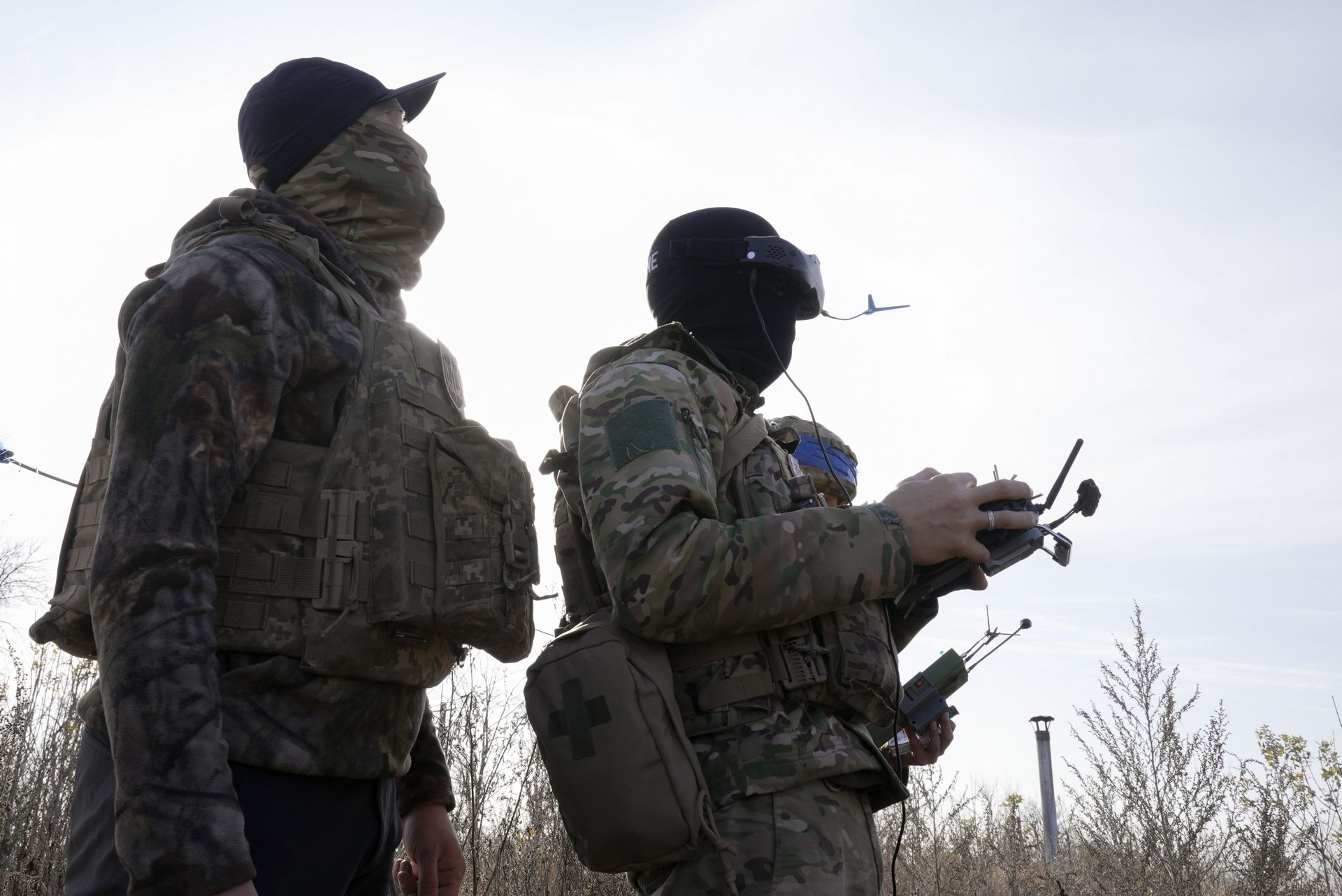
The limitations are making it significantly harder for Ukrainian forces to intercept Russian jet-powered drones , Zelensky said, adding that some Russian strikes had already succeeded because Ukrainian interceptor systems could not reach the necessary speed to catch the targets in time.
A Ukrainian commander at corps level fighting in Donetsk Oblast told the Kyiv Independent on condition of anonymity that the 160 kilometer per hour limit was still in place, making middle-strike drones easier for Russia to intercept or evade
Zelensky stressed that the disruptions are not "random errors" but systematic restrictions. Ukraine is currently trying to establish the circumstances behind the restrictions with the United States, the president added.
Starlink's parent company, SpaceX , has not commented on the disruptions at the time of publication.
Ukraine widely uses both commercial Starlink terminals and their militarized version, Starshield. This year's mid-range strike campaign has allowed Ukraine to strangle Russian logistics , hampering Russia's ability to fight on the front lines.
This is not the first time Ukraine has faced restrictions on the satellite communication system. In mid-October, SpaceX implemented a speed cap on Ukraine's Starshield service without warning.
Zelensky repeatedly said the restrictions remained in place, on Oct. 17-23, making it harder to intercept Russian jet-powered drones. Ukrainian officials also disputed U.S. President Donald Trump's claims that access had been restored.
At the end of October, Zelensky confirmed that Starlink and its military version, Starshield, had returned to normal operating speeds. Ukraine's Defense Ministry reported stable connectivity at speeds exceeding 400 kilometers per hour.
SpaceX founder Elon Musk previously alleged that Kyiv used commercial Starlink terminals for "offensive drone strikes to kill people," adding that the "loophole" was closed. However, he rejected responsibility for Starshield restrictions, saying the militarized terminals are controlled by the U.S. government.
"Were Starlink to be turned off, the Ukrainian front line would collapse immediately. This is not a threat, it is simply a statement of fact," Musk said on Oct. 24.
Ukrainian officials had rejected Musk's claims that Kyiv had violated Starlink's service terms. Presidential adviser Serhii "Flash" Beskrestnov said that commercial Starlink has a speed restriction of 70-90 kilometers per hour and does not work on Russian territory.
The Wall Street Journal reported on Oct. 23 that Trump had asked the SpaceX CEO to lift the restrictions, while the U.S. president publicly claimed he had not spoken to Musk the issue but might do so if the problems persisted.
The latest restrictions come amid renewed peace negotiations between Ukraine, Russia, and the U.S. in Abu Dhabi.
Additional reporting by Francis Farrell.
The full story
This article is one source in a clustered incident — the cluster page carries the summary, timeline and every other outlet covering it.
