 Back Cybermagazine
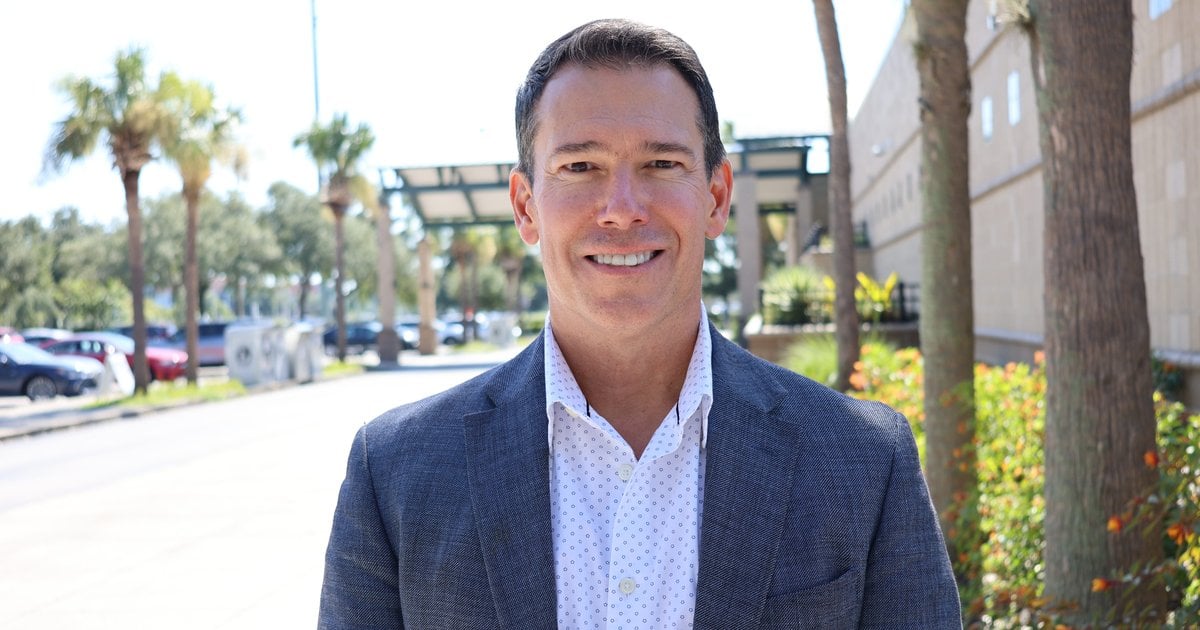
The Cyber Interview: Brad Bowers, SHI International
The AI frenzy and the following cyber fever dream has perhaps taken the spotlight off another fast approaching threat that can sweep the rug off from beneath a lot of infrastructure and turn them futile overnight.
The dreaded Q Day – when standard encryptions will crumble under the weight of quantum computers that can easily break them – may still be a few years off. But the blast radius of that future development will extend into our past and the present we are living through.
For this catastrophe, we would have legacy cryptography to blame. The same one that Brad Bowers , Lead Field CISO at SHI International estimates is “being used by 96% of all the organisations on the planet”.
Much of the internet uses cryptography to secure data from the prying eyes of hackers.
This includes everything from regular internet traffic, emails, API calls, cloud traffic, certificates that prove that websites are genuine and even the texts you send over WhatsApp that says “end to end encrypted”.
Cryptography today uses very challenging math problems as the lock to protect all of this.
There will come a time when these maths problems will become an easy solve for Quantum computers with sufficiently stable Q-bits, at which point they become cryptographically relevant quantum computers (CRQC).
Missing the Q Day and being in the critical infrastructure space is a recipe for disaster Brad Bowers, Lead Chief Information Security Officer, Field - Global at SHI International
Missing the Q Day and being in the critical infrastructure space is a recipe for disaster
Recognising this “unfortunate truth” that organisations have to reckon with begins with dumping the assumption that the “internet is fault tolerant”.
“The reality is that the vast majority of internet traffic – especially traffic that traverses countries – follows the same path,” Brad says, “We know that and the threat actors know that.
“We also know that threat actors – both organised crime and nation states – are planning to be able to use quantum computers to not only go after intellectual property (IP), but to even go after data that may have been lost at an earlier time.”
Brad points to harvest now, decrypt later (HNDL) attacks that pose a significant threat to long life data – these include IP, Research and Development (R&D), legal documentation, Mergers and Acquisitions (M&A) strategies, not to mention personally identifiable information (PII).
“A data breach that happened five years ago has relevant data that may be useful to them because it stores intellectual property or personalised health information and threat actors will go after that,” Brad says.
“So missing the Q Day and being in the critical infrastructure space is a recipe for disaster.”
‘Drunk on AI’ as Q day creeps in
Q Day remains a concept without a firm date attached to it, but the industry has some estimations. The UK’s National Centre for Cybersecurity (NCSC) assumes a central window of 2033 to 2035.
With 2028 being targeted as the completion of the discovery phase, 2031 where priority and critical infrastructure needs to migrate and 2035 for comprehensive migration across all services.
As for the US, though the National Institute of Standards and Technology (NIST) does not have a prescriptive date for Q Day, the agency will officially deprecate legacy algorithms like RSA-2048 and ECC-256 by 2030 and completely disallow Quantum-vulnerable algorithms by 2035.
Google has taken an aggressive stance setting its internal migration dates as 2029
As we approach 2029 and 2030, we’ll start to see a little bit of a knee-jerk reaction where organisations will try to play catch up
Google has taken a more aggressive stance setting its internal migration dates as 2029.
“These dates are when they’re guessing things should be done because that’s when they suspect that threat actors and organised crime organisations will have the ability to leverage quantum computers to do nefarious things,” Brad notes.
“So the intent is all government, critical infrastructure, financial, healthcare related systems – systems that are the backbone to our infrastructure and day-to-day lives – is done by 2030, giving other organisations of various sizes more time, that extra five years to really help clean up and to get up to speed and build in the resiliency into their computing systems.
“The value and expectation here is that we’re prioritising elements where we know the risk is greatest, obviously for government systems, for health and financial related systems, and things like critical infrastructure like power, gas, water, those types of environments being done first and then going on to everything else.”
But these estimations run up against a very real problem – the industry’s dalliance with AI. “The reality of this is we are all drunk on AI right now,” Brad points out.
“All the companies are thinking and innovating in AI, but quantum is that silent thing that’s creeping up behind all of us.”
The need to be crypto-agile today
“The idea behind quantum agility is since we don’t know all of the different cryptos that are going to be susceptible to quantum-based attacks, we need the ability to swap things out quickly,” Brad notes.
Although this sounds “relatively easy”, he explains that the process may actually be “quite complicated for organisations”, as they would need to understand all the hardware and software that is using crypto within their environment.
“We live in such a connected world where data is moving from on-prem to cloud to SaaS providers and back to on-prem,” Brad says, “Being able to trace all that out and understand where crypto is being used can be challenging.”
Once these risks are mapped out comes the problem of being “able to swap those algorithms out relatively efficiently and quickly”. The crux of the issue is the way software is generally built.
“Everything that is developed on the hardware side is designed to use and maximise the amount of memory that has been assigned to that application,” Brad explains, “Where now, because these crypto algorithms can be of different sizes and complexity, it adds a challenge for developers to make it such that the applications they build can have that ability to swap things out cleanly and efficiently.”
Crypto agility, according to Brad, means understanding where crypto is being used, and building a roadmap of how “crypto can be removed from them and replaced as our standards and expectations change over time”.
How the ‘we’ll wait and see’ could become ‘too late to catch up’
Brad supports a lot of high tech organisations in defence, aerospace, communication, media and entertainment, all of whom, he thinks, “are taking the quantum risk seriously”. “They are understanding that there is a challenge,” Brad says.
“But like everybody, they’re trying to find that balance, to figure out how to do this in the age of AI, how to provide the right amount of education and awareness to executive leadership so they can get the funding required to move things along, to budget for things that may need to be changed.”
He is quick to point out that there are some other organisations which are less regulated, that may be “a little bit behind”.
“They seem to be taking more of a wait and see type of approach,” Brad says.
The reality of this is we are all drunk on AI right now Brad Bowers, Lead Chief Information Security Officer, Field - Global at SHI International
The reality of this is we are all drunk on AI right now
He thinks that the caution taken by this group could be explained by the fact that they are keeping a close eye on what new technologies will emerge and how their third party suppliers and hardware manufacturers are addressing the problem to then go on to make changes.
“I think the critical infrastructure organisations are in a good place,” the CISO notes.
“As we approach 2029 and 2030, we’ll start to see a little bit of a knee-jerk reaction where organisations will try to play catch up. I fear that they may be a little bit too late, because the complexity, depending on the environment, is unique.”
He elaborates how no two businesses are going to have the same route when it comes to mitigating quantum risks.
“Each organisation must take a look at what they have, build their own roadmap, their own prioritisation list and start to enact those changes quickly.
“I think some organisations are dragging their feet because of their lack of understanding of the risks that they are not putting the planning in. That makes me nervous because it may mean we may miss that 2030 or 2035 deadline.”
The boon and curse of AI in cryptography
Frontier AI firm Anthropic recently released some research, which Brad notes, “unnerved a lot of people”.
This is in reference to researchers developing an attack against the HAWK algorithm – which was one of the finalists that was leveraged by NIST for digital signatures.
Through this attack, they severely decreased the time it would take to break the signature, which would ultimately allow a threat actor to be able to “substantially degrade the complexity of the crypto algorithm and how it is used”.
“This was unnerving, not only because it was done in 60 hours of research, but also because the algorithm has been watched and monitored for the last two years,” Brad says.
This, Brad notes, is a good thing. “By being able to identify some of these risks, not only with our existing algorithms, but finding how these new ones can be altered or that when leveraged in a certain way can be circumvented is absolutely critical.”
Brad is looking forward to such research being pointed at the other algorithms too, so that they “go through the same amount of rigour and review to validate that they can stand up against quantum-based attacks”.
A consequence of this is for organisations to be nimble and agile in how they implement their security systems, so as to easily catch-up as the technology evolves.
“The one thing that we can say clearly from AI being used on the cybersecurity front is that time is not on our side,” Brad says, pointing to the shrinking defenders’ window – the time between vulnerability discovery and exploitation.
“That means all of us as cyber practitioners must be taking our due diligence and leveraging AI to help identify and thwart some of those attacks before they happen.
“And this is where we'll see the value of AI because it’ll find all those novel and unique attacks that maybe the security team hasn’t thought of.”
The one thing that we can say clearly from AI being used on the cybersecurity front is that time is not on our side Brad Bowers, Lead Chief Information Security Officer, Field - Global at SHI International
The one thing that we can say clearly from AI being used on the cybersecurity front is that time is not on our side
Companies can use frontier and local AIs to “take an inward look” at all the risks to their environment and how they protect their systems.
It will also help them develop their own “heat map” for their environment, to identify where the organisation is susceptible to a quantum-based attack or when a threat actor leverages crypto as part of their attack kill chain.
At the end of the day, it comes down to organisations realising that “cryptography and quantum computers are both real, and it is something that needs to be addressed” and hopefully come Q day, most organisations are ready to face that brave new world.
Key partners of SHI International
SHI International works with leading global technology manufacturers and software providers to deliver enterprise IT solutions, infrastructure, cybersecurity and cloud services.
Microsoft : Provides enterprise software, cloud infrastructure through Azure and productivity solutions through Microsoft 365.
Dell Technologies : Supplies enterprise hardware, data centre infrastructure, storage and end-user computing solutions.
Cisco : Delivers networking, communications, security and infrastructure solutions for businesses.
Hewlett Packard Enterprise : Provides servers, hybrid cloud infrastructure, networking and enterprise technology solutions.
Lenovo : Supplies business computing devices, workstations, servers and enterprise IT infrastructure.
Adobe : Provides creative software, digital document management and customer experience solutions.
Hewlett Packard Enterprise
Hewlett Packard Enterprise
Brad Bowers Lead Chief Information Security Officer, Field - Global
Lead Chief Information Security Officer, Field - Global
Hewlett Packard Enterprise
Hewlett Packard Enterprise
Calif, Google & Palo Alto Networks: Top Stories This Week Cyber Security
US Bank Outages: Why Critical Infrastructure Keeps Failing Cyber Security
NCSC: UK Critical Infrastructure at Risk from AI Malware Cyber Security
Iran-Linked Cyberattack on US Water Systems Explained Hacking & Malware
The full story
This article is one source in a clustered incident — the cluster page carries the summary, timeline and every other outlet covering it.
