 Back Smallwarsjournal
Thirty Years After Gangneung: North Korean Special Operations Forces Enter a New Era
September 2026 marks 30 years since South Korea experienced one of the most serious North Korean infiltration incidents of the post-Korean War period, rivalled only by the 1968 Blue House raid .
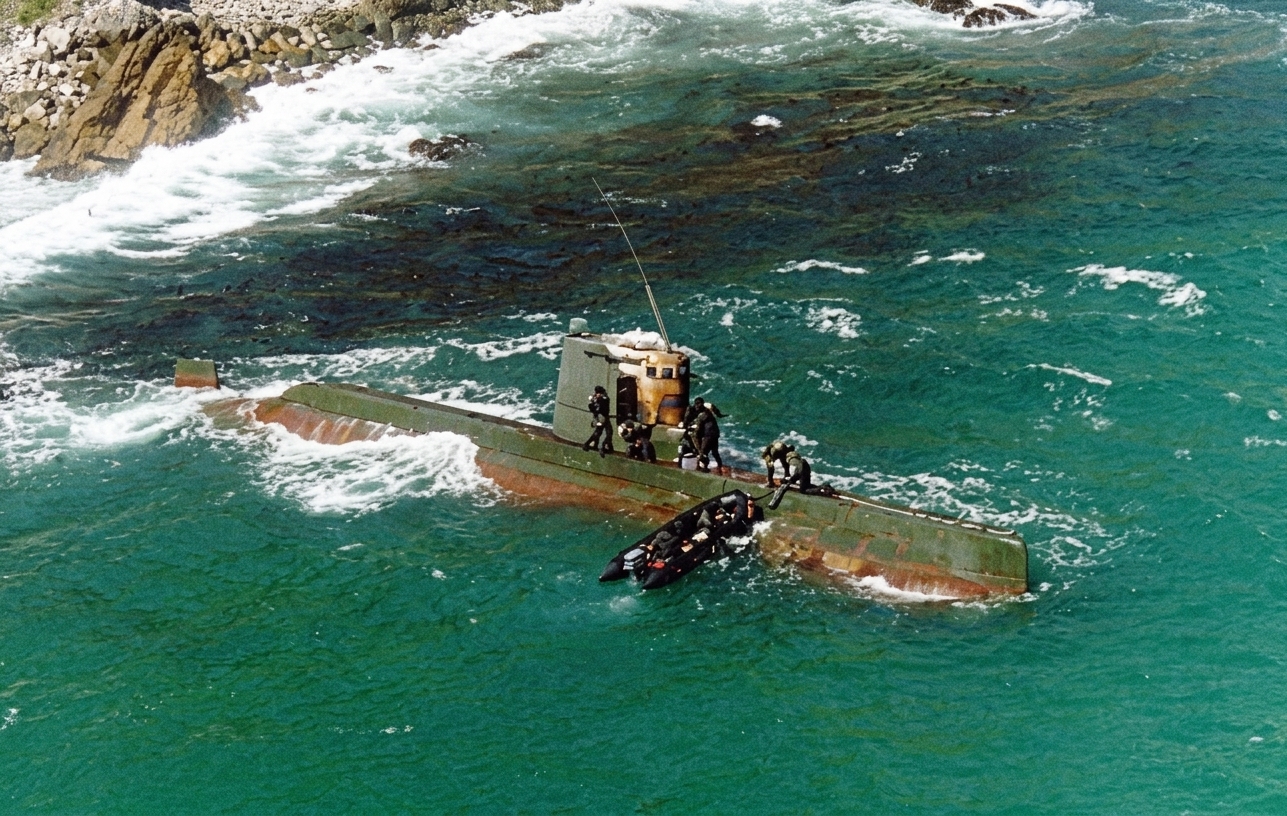
On September 18, 1996, a North Korean Sang-O-class submarine ran aground near Gangneung, a major port on the eastern coast of South Korea. The submarine had already inserted a three-man reconnaissance team, with the eventual mission of assassinating South Korean President Kim Young-sam.
But after running aground, the crew and other personnel were forced to desert the submarine and disperse towards a mountainous area nearby. Their flight triggered an intense two-month manhunt. By November 5, 24 North Koreans had been killed, with one infiltrator captured alive , and another believed to have escaped. Thirteen South Korean soldiers, as well as three civilians, had also lost their lives in the chaos.
The incident revealed several weaknesses. The submarine had reached the South Korean coastline without being detected. Once ashore, small infiltration units survived for several weeks in rugged terrain, moved substantial distances, and used South Korean-style uniforms to complicate identification.
Yet three decades later, to focus simply on the prevention of another Gangneung incident would be to prepare against a secondary threat. The more pressing risk is a Gangneung-type infiltration carried out by battle-tested North Korean troops bringing their direct experience from the Russia-Ukraine frontline.
From Infiltrator to Sensor
North Korea has long trained its special operations units for penetration into South Korean territory. Those special operations forces (SOF) units could attack major facilities, conduct reconnaissance, disrupt mobilization, or even open a second front. Consequently, the US-ROK alliance has strengthened its monitoring, counter-infiltration, and combined special operations capabilities in recent decades .
US Special Operations Command Korea (SOCKOR) offers the institutional mechanism for such cooperation. United States Forces Korea describes SOCKOR as the sole theater US special operations command that is institutionally organized to conduct combined operations during peacetime, crisis, and wartime between American and host-nation SOF. The alliance has continuously modernized its broader readiness. Freedom Shield 26 reflected the lessons learned from recent conflicts and trained troops in a combined, joint, and all-domain environment.
Meanwhile, North Korea’s troop deployment to the European battlefield enabled its forces to directly experience a frontline saturated with unmanned systems, electronic warfare, near-constant surveillance, and rapidly aligned firepower. According to an analysis of North Korea’s participation in the war, the Korean People’s Army obtained valuable experience, especially related to drone-artillery integration, camouflage, swift redeployment, and counter-unmanned aircraft systems (cUAS).
Certainly, this firsthand experience would be unlikely to alter the overall military balance on the Korean Peninsula overnight. South Korea retains a considerable edge in technological superiority, air power, reconnaissance capacity, and conventional forces, reinforced by the United States.
Nevertheless, SOF is an exception to this caveat. North Korean SOF units, such as the “Storm Corps,” deployed to the Kursk region, the front on which the fighting is among the war’s most intense. Due to the inherent nature of SOF as a resource-efficient force multiplier, the educational effect of this battlefield experience could be disproportionate. A relatively small number of combat veterans serving as instructors could apply lessons learned, revise training programs, and propagate practical knowledge to larger units. Above all, the force type most primed to benefit from this training would be North Korean commando units, with their adaptations most devastating.
Modernized reconnaissance units could infiltrate the South carrying a number of small-sized quadcopters. Instead of approaching closer to airbases to observe them directly, they could identify aircraft dispersal areas, Patriot or KM-SAM positions, fuel depots, ammunition storage facilities, and security patrol patterns from a few kilometers away by launching drones.
South Korea has certainly made efforts to strengthen its c-UAS capabilities over the past ten years, particularly following the North Korean drone infiltration incident in 2022. Nevertheless, these efforts remain insufficient relative to the growing threat, especially considering the large number of drones Pyongyang reportedly plans to produce.
In other words, North Korean SOF could gradually transform into a forward sensor inside the alliance’s rear area. This could be significantly more dangerous than merely replicating the 1996 model.
A Reconnaissance-Strike System Behind the Front
Consider what an infiltration operation would look like in a future Korean Peninsula conflict. North Korea’s ballistic and cruise missiles strike South Korean airbases and command facilities during the opening hours. One-way attack drones would complicate the defense network and force the defenders to expend interceptor missiles. Cyber operations disrupt communication and transportation nodes.
Not long after, small-scale infiltrator teams initiate their activities in and around damaged facilities. Their goal might not necessarily be to seize an airfield or conduct a dramatic special operation. One team could locate surviving aircraft. Another team could identify which part of the runway has been restored. A third team could observe the arrival of fuel trucks or ammunition vehicles.
The Russo-Ukrainian war has demonstrated that low-cost UAVs can shorten the sensor-shooter cycle and improve the effectiveness of artillery. North Korean forces have had the invaluable opportunity to observe these interactions during live combat.
In that scenario, a small-scale special operations unit hiding near a South Korean airbase could inflict damage far beyond the firepower it physically carries. Its most dangerous weapons could perhaps be the coordinates that it transmits.
The US-ROK alliance must therefore rethink the definition of “rear-area defense.” Safeguarding airbases cannot stop at preventing an infiltrator from breaching the base perimeter. Security forces should prevent adversaries from observing base facilities, operating UAVs in the surrounding area, identifying defense mechanisms, and transmitting target information from nearby mountains, urban areas, or civilian infrastructure.
Preparing for Gangneung 2.0
The evolving threat posed by North Korean SOF necessitates four concrete changes.
First, US-ROK counter-infiltration exercises should give opposing-force teams independent UAV operational capabilities. It is no longer sufficient to for infiltrators equipped with small arms. An exercise unit should implement drone reconnaissance, transmit target information, and track the smaller element being redeployed before counterforce action or the arrival of security forces. As this year’s Combined Resolve exercise demonstrated, even a small group of SOF operators using drones could inflict severe harm on a much larger opponent.
Second, counter-SOF defense and cUAS should be integrated at major facilities. Unidentified quadcopters near an airbase may be attack drones, but could also signal the presence of a reconnaissance team attempting to locate the air defense system, aircraft shelters, or repair activities.
Third, future exercises must test whether airbases remain continuously operational while missile attacks, drone surveillance, and ground infiltration are occurring concurrently. Once adversaries can observe the movement of runway repair units, fuel distribution points, and mobile air defense batteries, these assets would become especially vulnerable. With recent war games indicating that drone swarms can easily paralyze airbases, South Korean defense planners must devote serious thought to contingency procedures.
Lastly, South Korea’s regional defense units, police, intelligence organizations, and conventional units should be incorporated into the solution. The Gangneung incident demonstrated that searching for infiltrators can consume considerable manpower . If future infiltrators are dispersed into small cells and equipped with drones and modern communication technology, isolating them may be more difficult still.
All in all, the enduring lesson of September 1996 is that North Korea has long regarded South Korea’s rear area as fair game. Three decades later, the new danger is not a repeat of 1996 but its evolution: North Korean special operations forces, hardened and trained by the Russo-Ukrainian war, could operate as forward sensors for a reconnaissance-strike system inside the alliance’s rear area, shielded from retaliation by a nuclear arsenal that raises the cost of striking back.
The US-ROK alliance should prepare accordingly—and quickly.
Commenting is available to active SWJ members and staff.
The full story
This article is one source in a clustered incident — the cluster page carries the summary, timeline and every other outlet covering it.
