 Back Gbhackers
US Trucking Companies Targeted by Fake Carrier Verification Sites Stealing Passwords and Financial Data
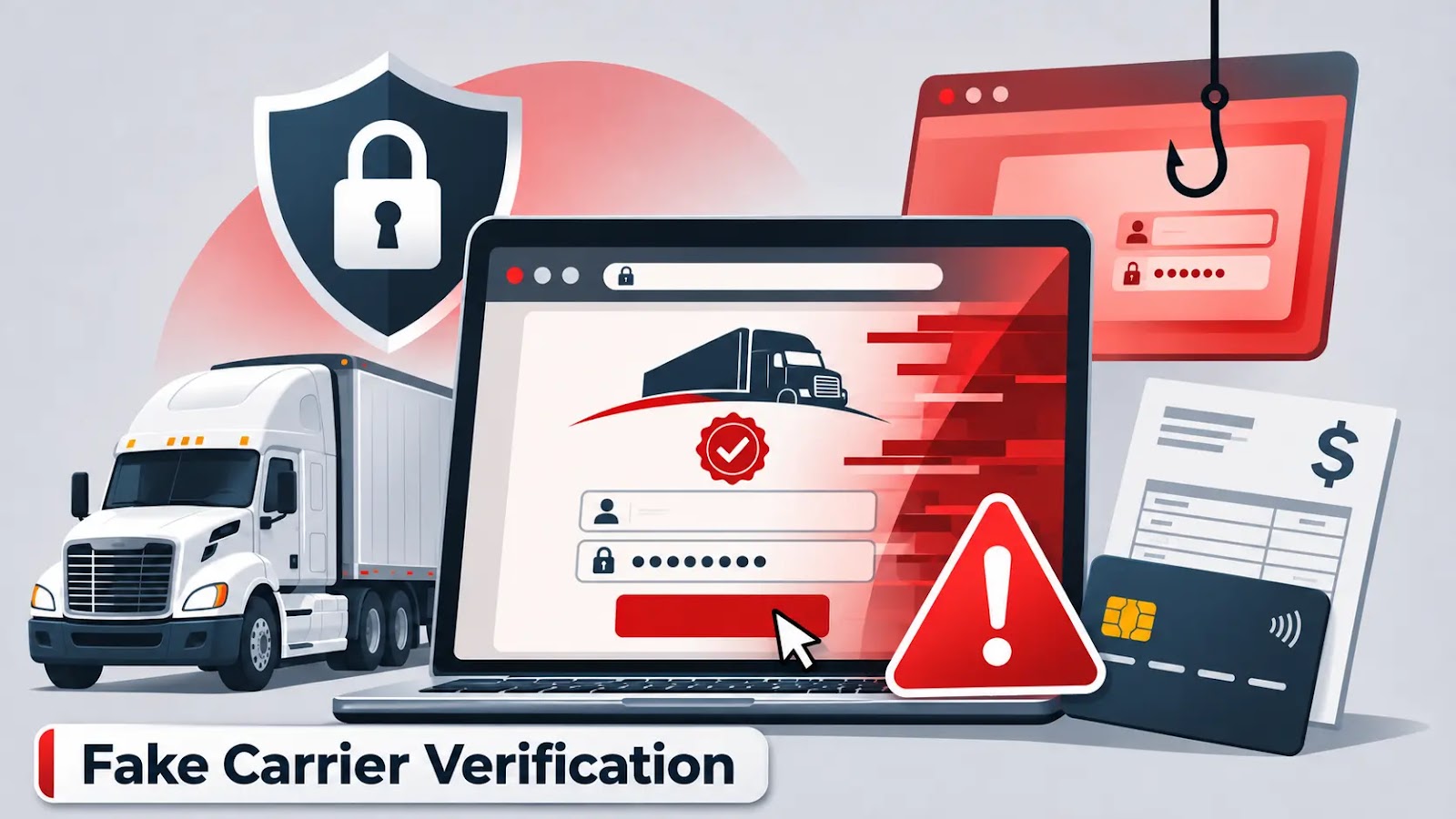
A phishing campaign targeting US trucking companies uses counterfeit federal carrier verification sites to collect identity records, fleet fuel account passwords, and one-time authentication codes.
Researchers linked approximately 1,430 domains to HelloFriends in 2026. That figure measures associated infrastructure, not the number of companies compromised.
The report did not quantify successful account takeovers or financial losses. The risk extends beyond stolen passwords: the same interaction can expose personal identifiers and give attackers a chance to access accounts used to pay for fuel.
One email researchers examined included the recipient’s actual US Department of Transportation (USDOT) number and carried a signature claiming to represent FMCSA.
The message passed SPF, DKIM, and DMARC because the sender controlled the sending domain. Those checks can confirm that an email is authorized by the domain it claims to use; they do not establish that the domain belongs to the federal agency it impersonates.
Counterfeit Safety and Fitness Electronic Records (SAFER) pages displayed genuine carrier information beside a false “NOT AUTHORIZED” warning.
Lookalike Motus registration pages presented USDOT reactivation as an urgent requirement. The sites requested Social Security numbers, Employer Identification Numbers, dates of birth, and details, and presented a purported $300 administrative fee.
The fake verification process also directed users to pages impersonating fleet fuel providers, including Relay, Comdata, WEX, EFS, and Fleet One.
ANY.RUN researchers said the campaign , tracked as HelloFriends, impersonates the Federal Motor Carrier Safety Administration (FMCSA) and uses genuine carrier records to make fabricated compliance notices appear legitimate.
Researchers observed counterfeit Relay and Comdata pages requesting passwords and one-time codes.
Fake Carrier Verification Sites
A code submitted alongside a password can enable account takeover if used before it expires, putting fuel spending at risk.
Victims are asked to provide personal and business information, including their Social Security number (SSN), Employer Identification Number (EIN), date of birth, and details.
ANY.RUN traced the phishing pages to .js applications hosted on Vercel. The sites collected submissions server-side and forwarded them to Telegram, so investigators would not necessarily see Telegram traffic access from the victim’s browser.
Although operators rotated domains, recurring page assets and data transfer patterns helped researchers associate otherwise separate sites with the campaign.
The page automatically copies a malicious PowerShell command to the clipboard and instructs the victim to open the Windows Run dialog, paste the command, and execute it.
The same investigation documented two distinct threats to logistics firms. NodeRemote used fake broker onboarding and freight paperwork to deliver a persistent backdoor.
A separate campaign impersonated DAT and TIMOCOM load boards and installed unauthorized remote access software.
Unlike HelloFriends, those operations sought control of workstations, where attackers could reach dispatch workflows and broker accounts.
FMCSA’s fraud alerts warn that impostors have used both SAFER and Motus branding, including requests to verify payment and fuel systems tied to carrier numbers.
The agency says it does not request payment, Social Security numbers , or banking details through unsolicited messages.
Carriers should check their company snapshot through the official SAFER service or open Motus directly instead of following an email link.
Companies that entered fuel account credentials or an authentication code should the provider through a known number, reset affected passwords, and review recent transactions for unauthorized activity.
Security teams should preserve the original message and check whether other employees received it.
Indicators of Compromise
Note: IP addresses and domains are intentionally defanged (e.g., [.] ) to prevent accidental resolution or hyperlinking. Re-fang only within controlled threat intelligence platforms such as MISP, VirusTotal, or your SIEM.
Stops Cyber threats before impact with 21 min faster MTTR. Integrate ANYRUN’s Sandbox in your SOC .
Artificial Intelligence
Cyber security Course
Cyber Security Resources
Cybersecurity
Information Gathering
Information Security Risks
Hackers Abuse FortiGate and SonicWall VPN Access to Infiltrate Enterprise Networks
Critical Apache HTTP Server Vulnerability Exploited in the Wild to Gain Remote Code Execution
Google Warns Russian Hackers Are Using Stolen Cloud Data to Impersonate Employees and Breach More Organizations
Hackers Use Microsoft SharePoint and GitHub to Control Backdoors Targeting Government Networks
New TheMailer AI Phishing Kit Uses ChatGPT and Claude to Bypass Email Spam Filters
Microsoft’s AI Agent Framework Package Compromised on PyPI to Steal Cloud Credentials
The full story
This article is one source in a clustered incident — the cluster page carries the summary, timeline and every other outlet covering it.
