 Back Latintimes
Why Brazil's Top Election Judge Quietly Left the Room in the U.S. Interference Probe, and ...
Moraes invoked "motivo de foro íntimo" — a personal-grounds formula under Brazil's Civil Procedure Code that carries no obligation to explain publicly — to leave the probe on November 23.
Justice Flávio Dino launched the inquiry on October 27, two days after the presidential runoff, targeting suspected foreign funding of Senator Flávio Bolsonaro's failed presidential campaign.
The investigation examines alleged activities involving Meta and X, suspected funding negotiations involving Rockbridge Network, and election-related content featuring data from the prediction market Polymarket; no charges have been filed against any party.
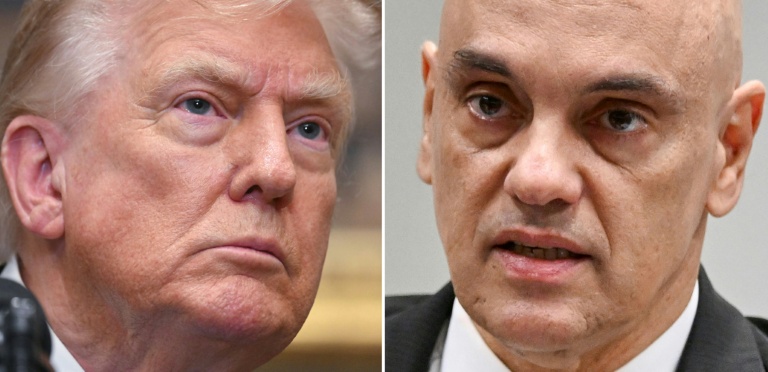
Justice Alexandre de Moraes of Brazil's Supreme Federal Court has removed himself from one of the most politically charged cases on the country's docket — an inquiry into alleged foreign financing and possible digital-platform interference in Brazil's 2026 presidential election — without offering any public explanation for his departure.
A Recusal With No Explanation
The withdrawal was formalized in a brief order signed by Moraes on November 23, invoking Article 145, §1 of Brazil's Code of Civil Procedure — a provision that allows any judge to declare a conflict of interest "por motivo de foro íntimo, sem necessidade de declarar suas razões," meaning by personal grounds, with no obligation to explain those reasons publicly.
The exit is not a ruling on the merits of the case, nor does it reflect any finding by the court. No charges have been filed, no suspect has been formally named, and the investigation remains in its early evidence-gathering phase under the supervision of Justice Dino.
What the Probe Is Actually Investigating
Dino signed the order opening the inquiry on October 27, two days after the runoff vote in which Flávio Bolsonaro — Liberal Party senator from Rio de Janeiro and son of convicted former president Jair Bolsonaro — lost his presidential bid to incumbent Luiz Inácio Lula da Silva . Federal Police are charged with examining the origins of potential foreign funding, tracing whether U.S.-based platforms or resources were deployed to assist or undermine candidates, and mapping the role of any intermediaries who may have helped conceal such assistance.
Dino's ruling specifically pointed to paid promotional activity by accounts based abroad, some of which carried content favoring Bolsonaro built on data drawn from Polymarket, a U.S.-based prediction market platform blocked by Brazilian authorities in April 2026. The order also scrutinised Meta, which owns WhatsApp, and Instagram, and X, raising concerns possible algorithmic manipulation and unequal treatment of candidates by digital platforms.
The Rockbridge Network and Its JD Vance Connection
Among the most consequential subjects of the probe is Rockbridge Network, a conservative political-funding organization co-founded by U.S. Vice President JD Vance . Brazilian newspaper Folha de S.Paulo reported in September 2026 that Rockbridge had begun building a presence in Brazil, including through a subsidiary registered in Wyoming — Rockbridge Brazil LLC — in May of that year. An internal document from April 2026, labeled with the "Rockbridge Network Brasil" logo, described the group's planned activities as a "political venture capital fund."
Justice Dino's order names two Brazilian businessmen — Tallis Gomes and Pedro Sang — as alleged intermediaries who took part in negotiations aimed at securing financial backing from the network for Bolsonaro's campaign. Rockbridge has denied any involvement in Brazilian electoral activity, and Flávio Bolsonaro's campaign has denied receiving foreign funds. No charges have been filed against any of the named parties.
Dino's Constitutional Framework
Dino anchored the investigation in explicit constitutional language, writing in his order that "não se admite a interferência, direta ou indireta, de Estado estrangeiro" — no direct or indirect interference by a foreign state — in matters of Brazilian sovereignty. He also cited the constitutional bar on Brazilian political parties receiving financing from foreign entities or governments.
That framework extends the probe's potential reach well beyond direct cash transfers. Under Brazilian electoral law and the constitution, investigators can pursue any evidence that foreign actors — whether governments, corporations, or advocacy organizations — channeled resources, services, or other benefits of economic value into the Brazilian contest.
Separately, presidential candidate Renan Santos, running under the Missão party, filed a complaint with the Superior Electoral Court alleging foreign funding in the race. Dino's order also cites an intelligence report from Abin, Brazil's federal intelligence agency, flagging the risk of outside interference in the electoral process.
The September Incident That Complicates the Exit
The circumstances of Moraes's departure carry particular weight given his own prior conduct in this matter. In September, before Dino formally opened the inquiry, Moraes said that a Federal Police report concerning alleged messages between him and former banker Daniel Vorcaro may have been produced with the involvement of external agents, "probably foreign", seeking to interfere in Brazil's 2026 elections.
The episode followed the disclosure of a Federal Police report containing material from Daniel Vorcaro's phone, including alleged messages involving a saved under Moraes's name. Moraes questioned the report's handling and suggested that external agents may have participated in its preparation. He also raised concern over what he described as the "strangely celebrated" timing abroad of the removal of Federal Police director-general Andrei Rodrigues.
The result is a striking inversion: the STF justice who had publicly raised concerns possible foreign interference in Brazil's electoral process is now the one who has quietly left the room as the formal investigation into that interference gets underway.
The Wider U.S.-Brazil Fault Line
Moraes's recusal cannot be read in isolation from a bruising year of bilateral friction. The Trump administration sanctioned Moraes in July 2025 under the Global Magnitsky Human Rights Accountability Act, with Treasury Secretary Scott Bessent citing an "oppressive campaign of censorship, arbitrary detentions, and politicized prosecutions." The sanctions were lifted on December 12, 2025, after relations between Washington and Brasília improved. Eduardo Bolsonaro — the former president's other son — made a Washington visit in September 2026 specifically to press for their reinstatement.
In mid-October 2026, a State Department letter publicly defended the Magnitsky measures against Moraes and justified the U.S. government's decision to classify the criminal organizations PCC and Comando Vermelho as terrorist entities. The U.S. House Judiciary Committee had earlier released an interim staff report in April 2026 accusing Moraes of running a "censorship and lawfare campaign" that it argued could impair candidates' ability to communicate freely before the election. The U.S. State Department, through posts amplified by the American Embassy in Brazil, went further still — publicly calling Moraes "toxic."
Against that backdrop, Moraes's decision to withdraw from a case involving alleged foreign interference and renewed scrutiny of U.S.-Brazil relations carries significance beyond a routine procedural withdrawal.
Justice Dino retains overall supervision of the probe. No successor has been formally designated to fill Moraes's role, and no timeline has been announced for the Federal Police's procedural steps. With the inquiry still in its early evidentiary stage and no charges filed, the investigation could take months before it produces any definitive conclusions — or none at all.
What is unambiguous: the investigation into alleged foreign financing and possible digital-platform interference in Brazil's 2026 presidential election will now advance without the justice who had publicly raised concerns possible foreign interference in Brazil's electoral process.
