 www.nist.gov
AI in Cybersecurity: Benefits, Challenges, and CISA AI Data Security Guidance
Article Content

- •CISA, NSA, FBI, and international partners released a joint guide on securing data used to train and operate AI systems.
- •Recommended measures include robust data protection, proactive risk management, and strengthened monitoring and threat detection.
- •Key AI-security challenges named include adversarial attacks, data poisoning, model bias, and over-reliance on automation.
- •The Ritzherald article is general educational content and reports no specific vulnerabilities, incidents, or IOCs.
- •The reporting describes best practices and risk awareness rather than an active exploitation campaign.
Ritzherald publishes an overview of AI in cybersecurity, describing machine learning applications in phishing detection, account protection, vulnerability management, and security operations. The article states that AI helps teams process large data volumes and detect unusual behavior, while also giving attackers new methods.
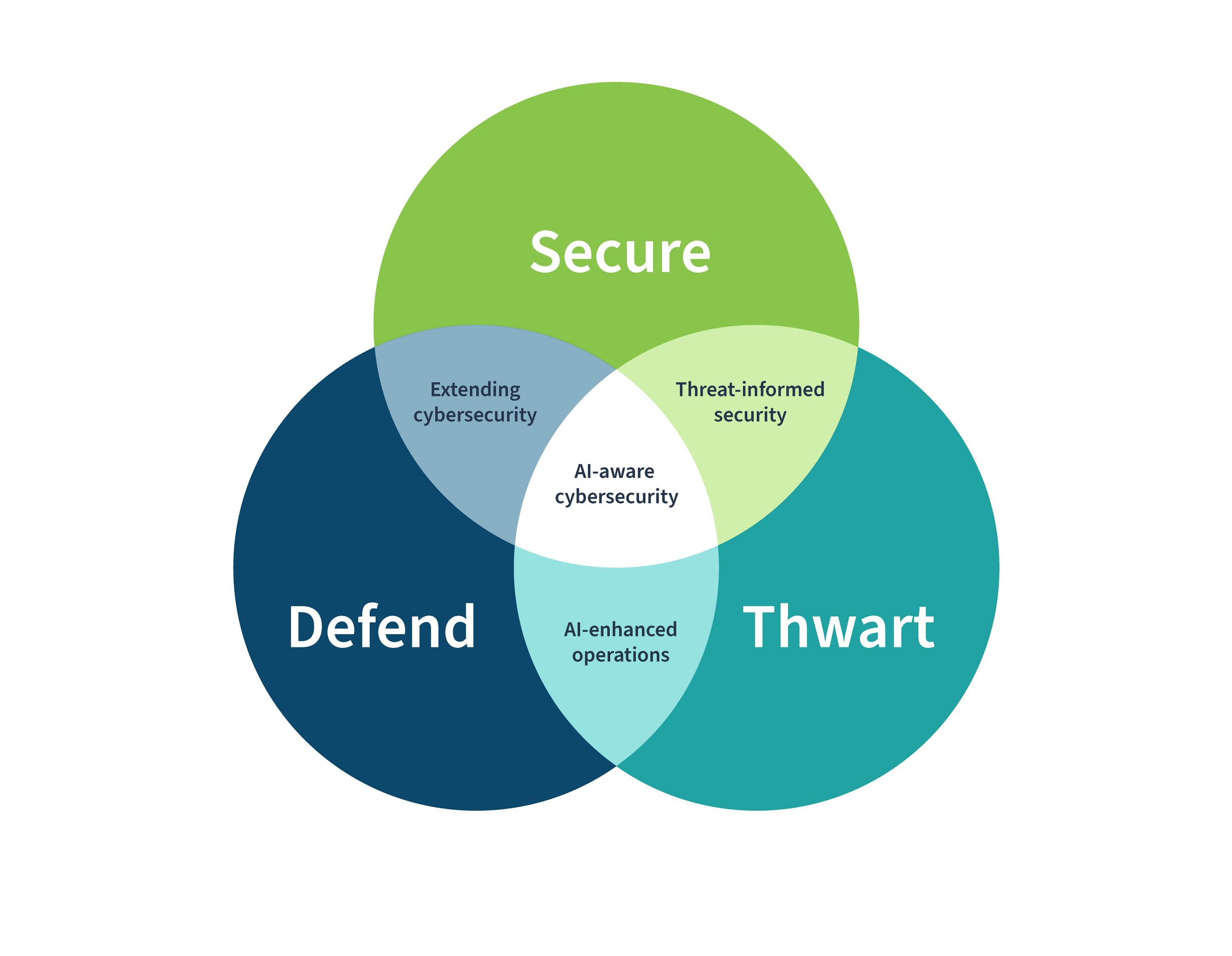
It identifies key challenges as adversarial attacks, data poisoning, model bias, and over-reliance on automation. The article cites NIST's framing of AI in security as three parts: securing AI systems, using AI for defense, and countering AI-enabled attacks.
CISA, the NSA, the FBI, and international partners released a joint Cybersecurity Information Sheet on AI data security, according to the CISA page. The guidance addresses data security risks across the AI lifecycle, from development and testing to deployment and operation.
It is directed at Defense Industrial Base entities, National Security Systems owners, federal agencies, and critical infrastructure operators. The guidance recommends robust data protection, proactive risk management, and strengthened monitoring and threat detection.
The Ritzherald article is general educational content with no specific CVEs, incidents, or threat actors named. The CISA item is a policy and best-practice publication rather than a report of an active threat.
Ask AI about this cluster
Answers cite the sources they use
Timeline
More articles in this cluster (3)
Common questions
Does this guidance apply to my organization?
Is there an active threat requiring immediate action?
What should defenders do first?
Continue Reading
 AI supply chain risks: Black Kite finds 1,732 MCP security issues; Oxford/Plexal propose shared taxonomy Teiss reports that organisations adopting AI often lack visibility into the underlying infrastructure of purchased applications, which may depend on model providers, open-source software, third-party datasets, cloud services and integrations. Teiss cites research published 10 November by third-party risk firm Black…
 Broadcom patches critical VMware vCenter auth bypass flaws Broadcom disclosed VMware Security Advisory VMSA-2026-0009 on November 19, 2026, covering vulnerabilities in VMware vCenter, Tools, and SDDC Manager. CVE-2026-123890, a CVSS 9.8 authentication bypass in the VMware Directory Service, is listed in CISA's KEV catalog, which the verified record gives as 2026-11-20.…