 Smh.Au
 China Seizes Sensitive F-35 Parts Diverted to Hong Kong
Article Content

- •F-35 parts were diverted to Hong Kong, raising security concerns.
- •Chinese government has not returned the seized parts.
- •Pentagon and Australian officials are investigating the incident.
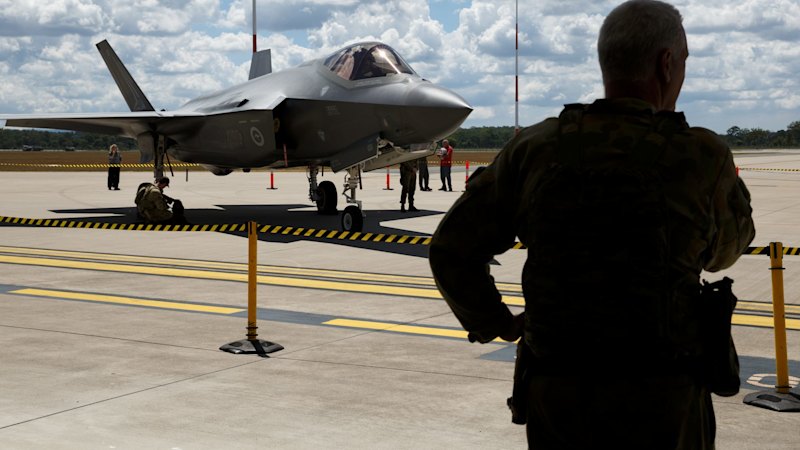
In May 2026, F-35 stealth aircraft parts, including a cockpit canopy and weapons-bay door, were diverted to Hong Kong while being shipped from Australia to the US for inspection. The Chinese government has since taken possession of these parts, raising concerns about potential access to sensitive technology. The Pentagon is investigating the incident, which occurred during a politically sensitive time with Chinese President Xi Jinping visiting the US. Australian Defence Minister Richard Marles confirmed the investigation but downplayed the significance, stating that no sensitive components were lost. The parts were coated with radar-absorbing material, critical for stealth capabilities. The incident has prompted congressional inquiries in the US regarding how the parts were diverted. The Pentagon is actively working to retrieve the components and prevent future occurrences.
Ask AI about this cluster
Answers cite the sources they use
Timeline
More articles in this cluster (3)
Following this threat?
Track Lockheed Martin in your own feed — you're alerted when they show up in new reporting, leak sites or exploitation.
Free account · no card needed
Continue Reading
 Critical Zero-Day Vulnerability in F5 BIG-IP APM Exploited for Remote Code Execution F5 Networks has reported a critical vulnerability in its BIG-IP Access Policy Manager (APM), tracked as CVE-2026-94127, which is being actively exploited in the wild. The flaw allows unauthenticated attackers to execute remote code on systems configured with both an APM access policy and an OAuth profile. This…
  Massive Network of AI Proxy Servers Used for Malicious Activities Uncovered Security researchers from Team Cymru have identified over 10,000 proxy servers in China facilitating malicious AI activities. These servers, termed 'transfer stations,' are primarily used to bypass geographic restrictions and conduct model distillation attacks against frontier AI models. The infrastructure allows…