 Infosecmonkey
Dark Web Myths vs. Reality: Onion Services, Tor and Legal Considerations
Article Content

- •The dark web is a small subset of the deep web, which itself makes up most of the internet.
- •Onion services are reachable only through Tor and do not exit to the regular internet through an exit relay.
- •Infosecmonkey reports onion services were 1.2 percent of Tor traffic in a 2022 Tor Project training deck.
- •The articles present general education, not a threat report, and cite no CVEs or specific campaigns.
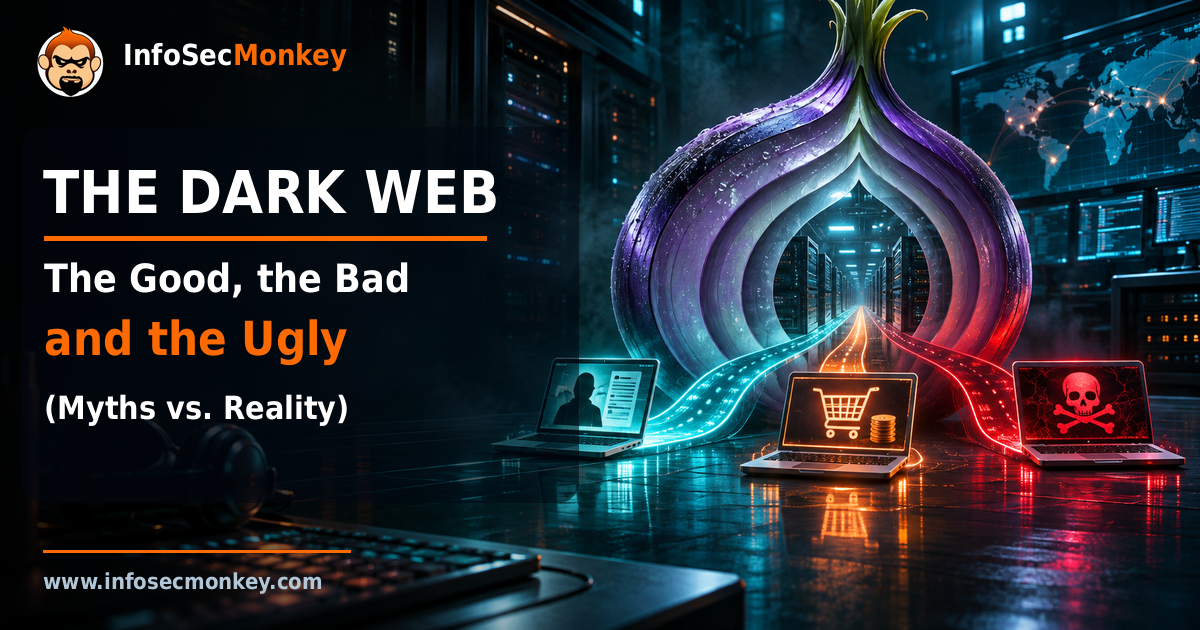
Two articles explain the dark web and address common misconceptions. Infosecmonkey (2026-11-26) separates dark web myths from reality and presents a practitioner playbook covering research, exposure monitoring and blocking Tor on a FortiGate, with a disclaimer that it is not legal advice. Darkweb101 (2026-11-24) describes the internet as three layers: surface web (about 4-5%), deep web (about 90-95%) and dark web (a small subset). It explains that Tor routes traffic through three volunteer-operated relays and that onion services use .onion addresses so that both user and server remain anonymous. Infosecmonkey states that onion services never leave the Tor network, that v3 onion addresses are 56 characters, and that onion services were 1.2 percent of Tor traffic in a 2022 Tor Project training deck. The articles are educational and describe no specific attack, breach or vulnerability. No CVEs are associated with this cluster.
Ask AI about this cluster
Answers cite the sources they use
Timeline
More articles in this cluster (4)
Following this threat?
Track CVE-2026-129448 in your own feed — you're alerted when they show up in new reporting, leak sites or exploitation.
Free account · no card needed
Common questions
Is the dark web most of the internet?
Is opening Tor Browser illegal?
How can an organisation control Tor on its network?
Continue Reading
 Operation TorNado: 354 Arrests in Global Dark Web Drug Crackdown Operation TorNado, a coordinated international law enforcement effort, resulted in 354 arrests across 14 countries, targeting drug trafficking on the dark web. Conducted from May 2025 to October 2026, the operation led to the seizure of over 5.7 metric tons of illicit drugs, including fentanyl and methamphetamine, and…