 www.vulncheck.com
DeepAudit Vulnerabilities Allow SSRF and File Read Attacks
Article Content

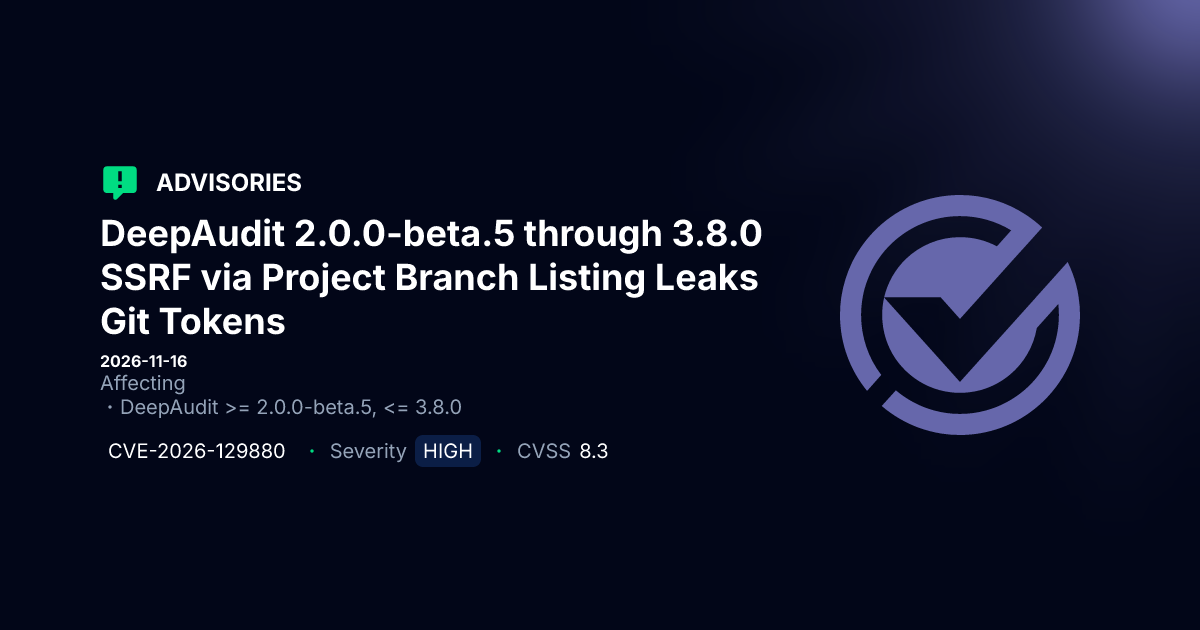
- •DeepAudit versions 2.0.0-beta.1 to 3.8.0 are vulnerable to SSRF and file read attacks.
- •The SSRF vulnerability can leak Git tokens, posing a risk of unauthorized data access.
- •No active exploitation has been reported, but organizations should apply patches as soon as they are available.
DeepAudit versions 2.0.0-beta.1 through 3.8.0 are affected by two vulnerabilities: a Server-Side Request Forgery (SSRF) via project branch listing that leaks Git tokens, and a file read vulnerability through the PDF report subtitle. The SSRF vulnerability (CWE-918) allows attackers to exploit the system by manipulating requests, potentially leading to unauthorized access to sensitive data. The affected versions include all releases from 2.0.0-beta.1 to 3.8.0. No has been reported at this time, but organizations using these versions are advised to monitor their systems closely. Patches are expected to be released soon to address these issues. Security professionals should prioritize updating to the latest version to mitigate risks associated with these vulnerabilities.
Ask AI about this cluster
Answers cite the sources they use
Timeline
More articles in this cluster (2)
Common questions
What versions of DeepAudit are affected?
Is there any active exploitation of these vulnerabilities?
When will patches be available?
Continue Reading
 Critical Code Injection Vulnerability in Staggs Plugin for WordPress A critical code injection vulnerability, CVE-2026-78287, has been identified in the Staggs plugin for WordPress, affecting versions up to 3.3.0. This flaw allows unauthenticated attackers to execute arbitrary code remotely, posing severe risks to affected sites. The vulnerability stems from improper control over code…