 devpolicy.org
Economic Sanctions and Corruption Fuel Conflict Risks in Iran
Article Content

- •Trade sanctions in Iran linked to increased conflict fatalities due to corruption.
- •65% of arrested protesters were from the middle class, indicating social unrest.
- •Research calls for targeted sanctions and monitoring to reduce conflict risks.
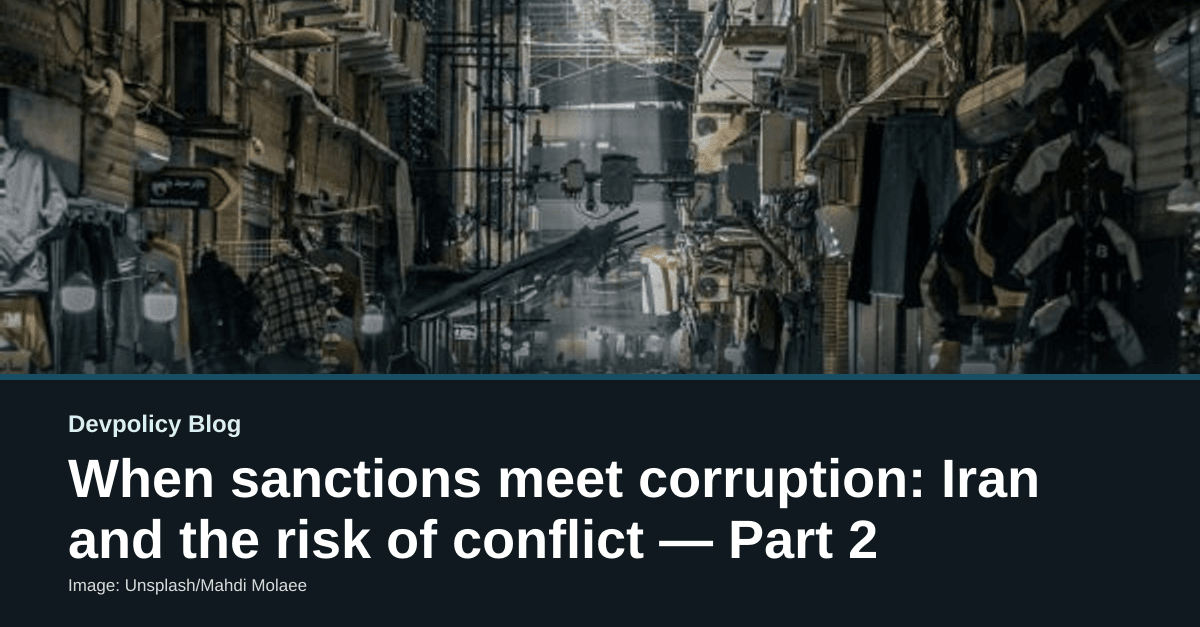
Recent articles by Professor Mohammad Reza Farzanegan analyze how economic sanctions exacerbate corruption and conflict in Iran. The research indicates that trade sanctions correlate with increased conflict-related fatalities in countries with high corruption. A study of over 11,000 arrests during protests in Iran shows that 65% of those arrested were from the middle class, highlighting economic inequality and social grievances. The articles suggest that sanctions create opportunities for rent-seeking by politically connected individuals, while ordinary citizens face increased economic hardship. The findings emphasize the need for targeted sanctions and monitoring of corruption to mitigate social unrest. The articles were published on the Devpolicy Blog on November 10 and 12, 2026.
Ask AI about this cluster
Answers cite the sources they use
Timeline
More articles in this cluster (3)
Common questions
What are the main findings of the research?
How does corruption influence the impact of sanctions?
What recommendations do the articles make regarding sanctions?
Continue Reading
 Critical RCE Vulnerability in Confection WordPress Plugin (CVE-2026-115252) A critical vulnerability, CVE-2026-115252, has been identified in the Confection WordPress Cable plugin, affecting versions 0.4.0 to 0.4.7. This flaw allows unauthenticated attackers to execute arbitrary PHP code on the server by writing unmodified settings into a PHP file without proper checks. The vulnerability has…
 Critical Code Injection Vulnerability in Staggs Plugin for WordPress A critical code injection vulnerability, CVE-2026-78287, has been identified in the Staggs plugin for WordPress, affecting versions up to 3.3.0. This flaw allows unauthenticated attackers to execute arbitrary code remotely, posing severe risks to affected sites. The vulnerability stems from improper control over code…