 Disruptionbanking
Financial regulators and banks face quantum threat to cryptography, with most regulators at early maturity
Article Content

- •Quantum computers capable of breaking current public-key cryptography do not yet exist, but banks may need years to replace vulnerable cryptography.
- •The quantum risk covers authentication and digital signatures, not only encrypted confidential data.
- •Regulators' self-assessment in the GFIN Project Otto Toolkit found most of 25 regulators at early quantum maturity.
- •The UK FCA, Bank of England and PRA published joint effective practices for quantum-related cyber risk on November 19, 2026.
- •Attackers collecting encrypted data today for later decryption is identified as a risk.
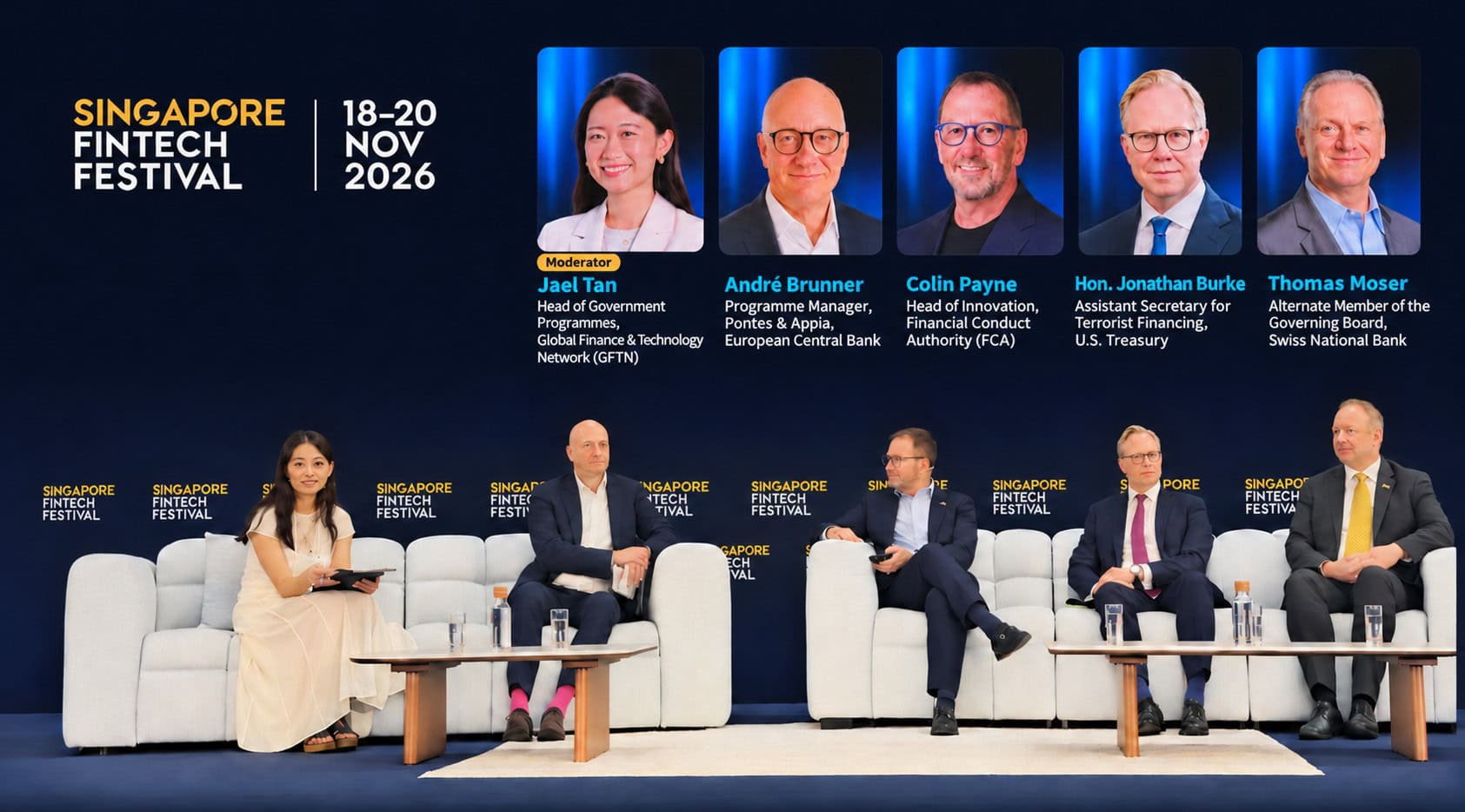
At the Singapore FinTech Festival 2026, the FCA's Colin Payne told banks that financial infrastructure should withstand disruption rather than aim to never fail, during a panel on financial resilience moderated by GFTN's Jael Tan. Thomas Moser of the Swiss National Bank warned that the quantum threat extends beyond confidential data to public-key cryptography used for authentication and digital signatures, which underpin payment infrastructure, digital assets and authorisation of AI-agent transactions. Article 1 reports that banks may have years before a sufficiently powerful quantum computer could compromise today's cryptography, but replacing that cryptography could take as long, and that no quantum computer currently known can break the relevant systems at the required scale. The UK's FCA, Bank of England and PRA published a joint paper on November 19 outlining effective practices for managing quantum-related cyber risk, and Article 1 notes the risk of attackers collecting encrypted data today to decrypt later. Article 2 reports that the GFIN Project Otto Toolkit, led by the FCA with the Alberta Securities Commission, British Columbia Securities Commission and IFSCA, asked 25 member regulators to self-assess quantum maturity against 42 measures on a four-level scale. The self-assessment found most respondents at lower or middle maturity, with higher scores on security than innovation, and hands-on firm engagement such as sandboxes the weakest area. The report states it is self-assessed, not statistically representative and not a ranking. Article 2 also reports that a payments industry report says no one yet owns the quantum problem. No CVEs, exploitation or specific attacks are reported.
Ask AI about this cluster
Answers cite the sources they use
Timeline
More articles in this cluster (2)
Following this threat?
Track Alberta Securities Commission in your own feed — you're alerted when they show up in new reporting, leak sites or exploitation.
Free account · no card needed
Common questions
Is quantum cryptographic attack currently possible against banks?
Which systems are at risk beyond encrypted data?
What should institutions do first?
Continue Reading
 Lazarus Group Targets 30 South Korean Servers Using PHP Vulnerabilities North Korea-linked Lazarus Group has targeted 30 servers in South Korea as part of a larger cyber operation involving 581 servers across 10 countries. The attacks exploit two critical remote code execution vulnerabilities in PHP (CVE-2026-109618 and CVE-2026-109619), allowing unauthorized server command execution. The…