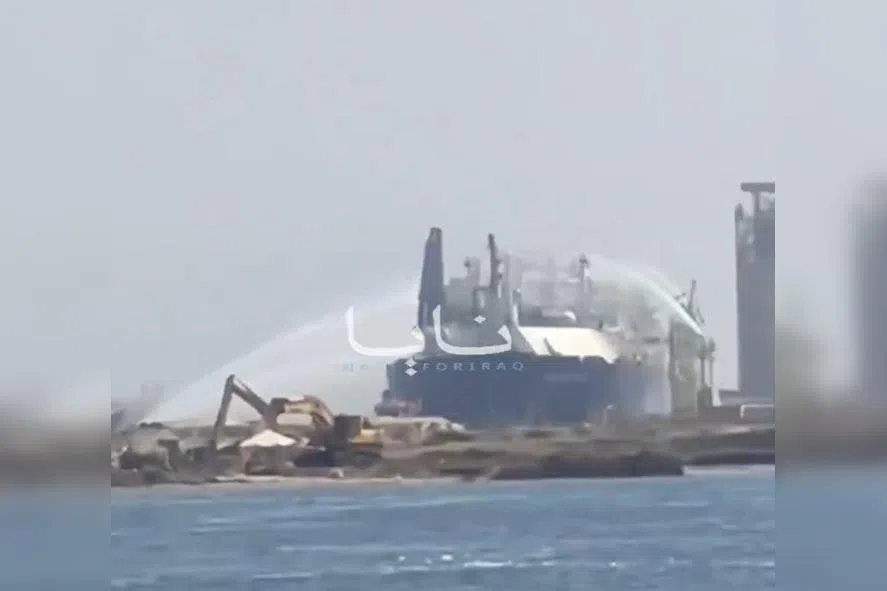
 Straitstimes
 Drone Attack on US-Owned Tanker Escalates Middle East Conflict
Article Content

- •A drone attack on July 29 caused a fire on the Energos Winter tanker at Damietta port.
- •The incident marks a significant escalation in the Iran-US conflict, with no casualties reported.
- •US President Trump has threatened retaliation against Iran following the attack.
A drone struck the US-owned gas storage tanker Energos Winter at Egypt's Damietta port on July 29, causing a fire that spread to another vessel. The Egyptian cabinet confirmed the attack, marking a significant escalation in the ongoing Iran-US conflict. No casualties were reported, but the incident has raised concerns about regional security and the effectiveness of Egypt's air defense systems. The attack is suspected to be linked to Iranian proxies, with investigations ongoing. US President Donald Trump has vowed retaliation against Iran following missile strikes on US forces in Jordan. Oil prices surged in response to the escalating tensions, highlighting the potential impact on global energy supplies. Egypt is mediating diplomatic efforts to prevent further escalation while maintaining its national security.
Ask AI about this cluster
Answers cite the sources they use
Timeline
More articles in this cluster (8)
Following this threat?
Track Ambrey in your own feed — you're alerted when they show up in new reporting, leak sites or exploitation.
Free account · no card needed
Continue Reading
 Critical WSO2 API Manager Vulnerability Under Active Exploitation A critical vulnerability (CVE-2026-5430) in WSO2 API Manager is being actively exploited, allowing unauthenticated attackers to forge admin tokens via JWT authentication bypass. This flaw, which has a CVSS score of 10.0, affects multiple WSO2 products including API Manager, Universal Gateway, Traffic Manager, and API…
  Critical Linux Kernel Vulnerability CVE-2025-39682 Under Active Exploitation A critical vulnerability (CVE-2025-39682) in the Linux kernel allows remote code execution through mishandling of zero-length TLS records. This flaw affects kTLS-enabled hosts running vulnerable kernel versions, exposing them to attackers without authentication. CISA added this vulnerability to its Known Exploited…