 www.sdxcentral.com
Fugaku Supercomputer Breach Disrupts Operations Amid Data Security Concerns
Article Content

- •Unauthorized access to the Fugaku supercomputer was confirmed on November 13.
- •Operations at the Riken Center for Computational Science have been suspended.
- •Investigations are ongoing to assess the potential data exfiltration and security vulnerabilities.
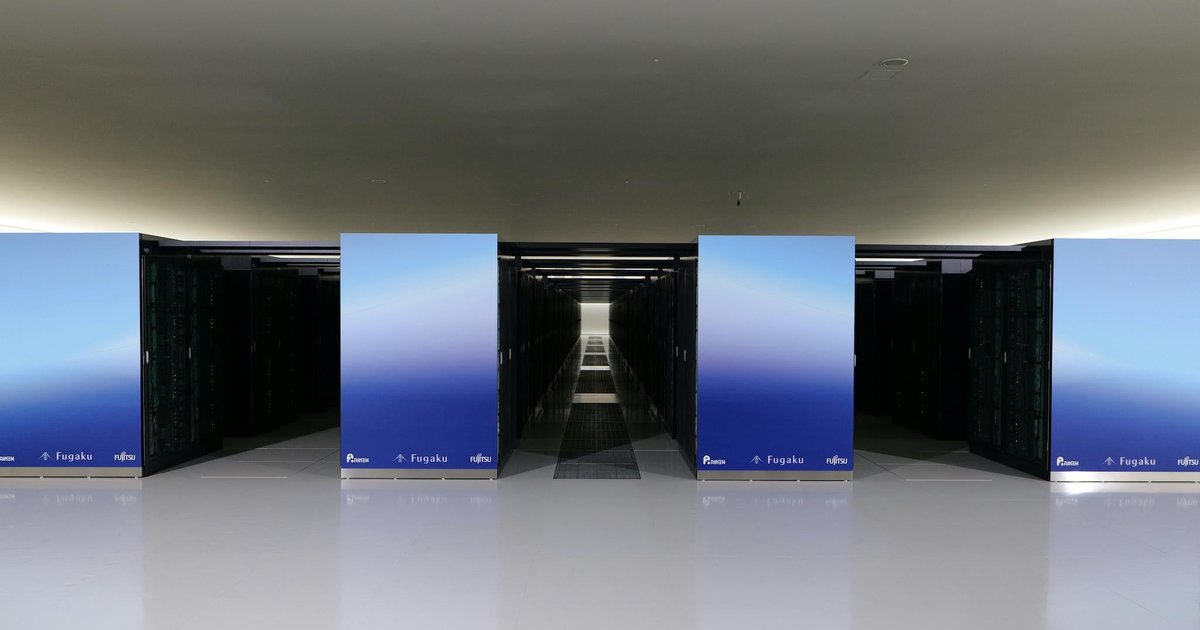
The Fugaku supercomputer, developed by Riken and Fujitsu, suffered a security breach involving unauthorized access, prompting the suspension of operations at the Riken Center for Computational Science in Kobe. The breach was discovered on November 13, initially classified as a standard information security case but later deemed more severe upon confirmation that a compromised system was used to access the supercomputer. Japan's Ministry of Education, Culture, Sports, Science and Technology is investigating the incident, focusing on potential data exfiltration. While the full extent of the breach remains undisclosed, reports suggest that user information stored within the system may have been exposed. Fugaku, which was the fastest supercomputer in the world until 2022, is currently ranked ninth on the Top500 list. The incident raises significant concerns regarding the security of high-performance computing environments. Riken and Fujitsu are also working on the successor, FugakuNEXT, which will incorporate quantum computing capabilities with IBM. Authorities are continuing to analyze the breach to determine how the unauthorized access occurred.
Ask AI about this cluster
Answers cite the sources they use
Timeline
More articles in this cluster (2)
Following this threat?
Track Fujitsu in your own feed — you're alerted when they show up in new reporting, leak sites or exploitation.
Free account · no card needed
Common questions
What information may have been exposed?
What actions are being taken in response to the breach?
How did the unauthorized access occur?
Continue Reading
 Critical Code Injection Vulnerability in Staggs Plugin for WordPress A critical code injection vulnerability, CVE-2026-78287, has been identified in the Staggs plugin for WordPress, affecting versions up to 3.3.0. This flaw allows unauthenticated attackers to execute arbitrary code remotely, posing severe risks to affected sites. The vulnerability stems from improper control over code…
 Lazarus Group Targets 30 South Korean Servers Using PHP Vulnerabilities North Korea-linked Lazarus Group has targeted 30 servers in South Korea as part of a larger cyber operation involving 581 servers across 10 countries. The attacks exploit two critical remote code execution vulnerabilities in PHP (CVE-2026-109618 and CVE-2026-109619), allowing unauthorized server command execution. The…