 Dw
Germany's Legal Debate on Deepfake Porn Sparks Nationwide Protests
Article Content

- •Collien Fernandes accused her ex-husband of creating and distributing deepfake pornography.
- •Protests erupted in Germany, with thousands demanding better protections against digital sexual violence.
- •Current German laws do not adequately address the issue of deepfake pornography.
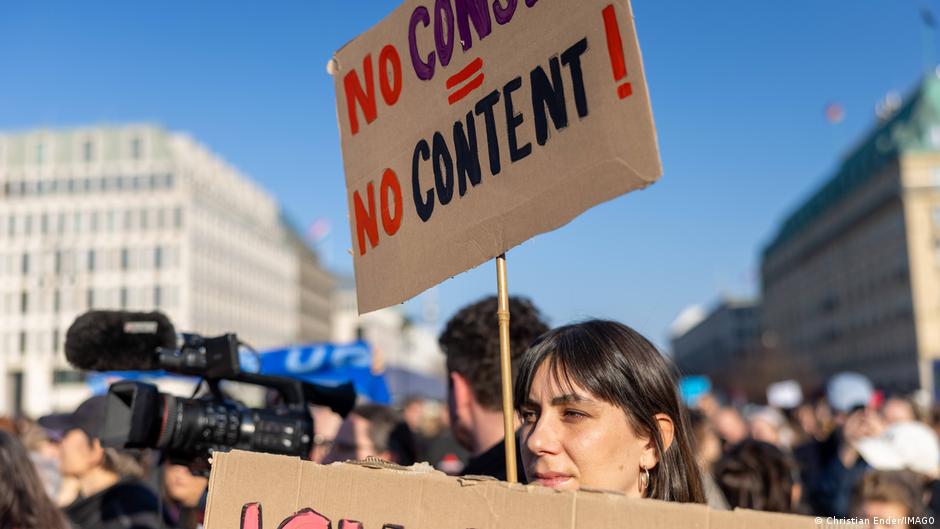
The case of actress Collien Fernandes, who accused her ex-husband Christian Ulmen of distributing AI-generated pornographic images of her, has ignited a nationwide debate in Germany about digital sexual violence and the inadequacy of current laws. Fernandes filed a complaint in Spain, citing stronger protections for women, as German laws do not specifically address deepfake pornography. This incident has led to protests, with thousands gathering in Berlin to demand better legal protections against sexualized violence online. Over 250 prominent women have called for legislative changes, including the criminalization of deepfake pornography and the introduction of a 'yes means yes' consent standard. The German Justice Minister has announced plans for a draft bill to address these issues, highlighting the urgent need for legal reform. The case underscores the growing concern over digital violence, with studies indicating that many individuals, particularly young women, have experienced such abuse.
Ask AI about this cluster
Answers cite the sources they use
Timeline
More articles in this cluster (17)
Continue Reading
 CVE-2026-123890: Auth bypass in VMware vCenter exploited by Armory Castle before patch CVE-2026-123890, a flaw in VMware vCenter Server rated CVSS 9.8, allows an unauthenticated remote attacker to obtain an administrator session on the platform. According to the Google Threat Intelligence Group, the flaw was exploited by the espionage group Armory Castle (formerly UNC5221), which has suspected China…