 Hsecurities.In
Ground-Segment Cyber Weaknesses Expose Satellite Services to Disruption
Article Content

- •Ground stations, IT providers, VPN appliances and remote-maintenance links are the main reported entry points into satellite services.
- •The 2022 AcidRain attack reportedly disabled tens of thousands of KA-SAT modems after initial access via a misconfigured VPN appliance.
- •Reported 2025 attacks on Iranian shipping gained admin access through an IT provider to disable satellite communications on dozens of vessels.
- •Neither article cites specific CVEs or IOCs, so the reporting offers awareness rather than direct patch guidance.
- •Recorded Future expects dependence on satellite services and the 2025 launch surge to widen the impact of such attacks.
Recorded Future's Insikt Group warns that ground-based infrastructure supporting satellites is an increasingly consequential attack surface, as 4,517 satellites were launched in 2025 (87% commercially owned) within a space economy reported at $686 billion. The analysis cites the February 2022 AcidRain wiper malware attack, which reportedly disabled tens of thousands of modems on Viasat's KA-SAT network after attackers entered through a misconfigured VPN appliance, affecting Ukrainian military communications and disrupting around 5,800 German wind turbines' remote monitoring. Recorded Future also describes 2025 attacks on Iranian commercial shipping, where the group Lab-Dookhtegan reportedly gained administrator-level access through Fanava Group, an Iranian IT provider, and disabled satellite communications and ship-tracking software on dozens of vessels. A separate incident last August reportedly left an oil tanker without communications for 30 hours, with investigators focusing on satellite terminals and remote-maintenance links as possible entry points. Neither article cites specific CVEs or detection indicators. Both articles frame the risk as growing with the expansion of orbital services, including proposed orbital AI data centers, and emphasise securing the full ground segment, supply chain and terrestrial networks.
Ask AI about this cluster
Answers cite the sources they use
Timeline
More articles in this cluster (3)
Following this threat?
Track AcidRain and Fanava Group in your own feed — you're alerted when they show up in new reporting, leak sites or exploitation.
Free account · no card needed
Common questions
Am I affected if I operate ground stations or use satellite connectivity?
How urgent is this?
What should defenders do first?
Continue Reading
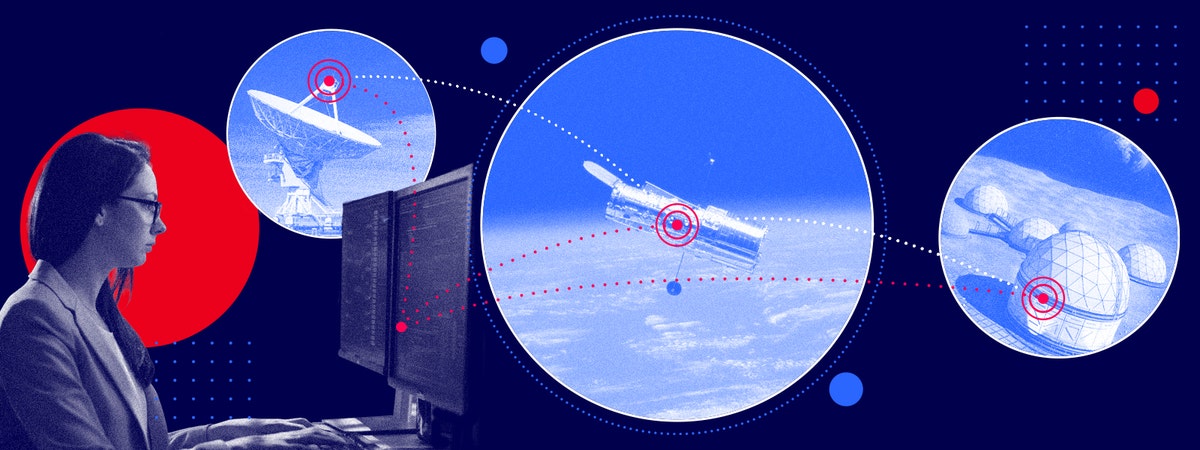 Space Race 2.0 Raises Cyber Risk to Commercial Satellite Operations Recorded Future reports that 329 orbital launch attempts occurred in 2025 and a record 4,517 satellites were placed in orbit, 87% of them commercially owned, within a space economy it values at $686 billion. The article argues that as geopolitical competition grows, cybersecurity will shape the outcome of a second…
 CVE-2026-123890: Auth bypass in VMware vCenter exploited by Armory Castle before patch CVE-2026-123890, a flaw in VMware vCenter Server rated CVSS 9.8, allows an unauthenticated remote attacker to obtain an administrator session on the platform. According to the Google Threat Intelligence Group, the flaw was exploited by the espionage group Armory Castle (formerly UNC5221), which has suspected China…