 esawebb.org
Hubble and Webb Telescopes Capture Cat's Head Nebula
Article Content

- •Hubble and Webb captured the Cat's Head Nebula in the Carina Nebula.
- •The nebula's shape is influenced by radiation and winds from massive stars.
- •No vulnerabilities or threats were reported in the observations.
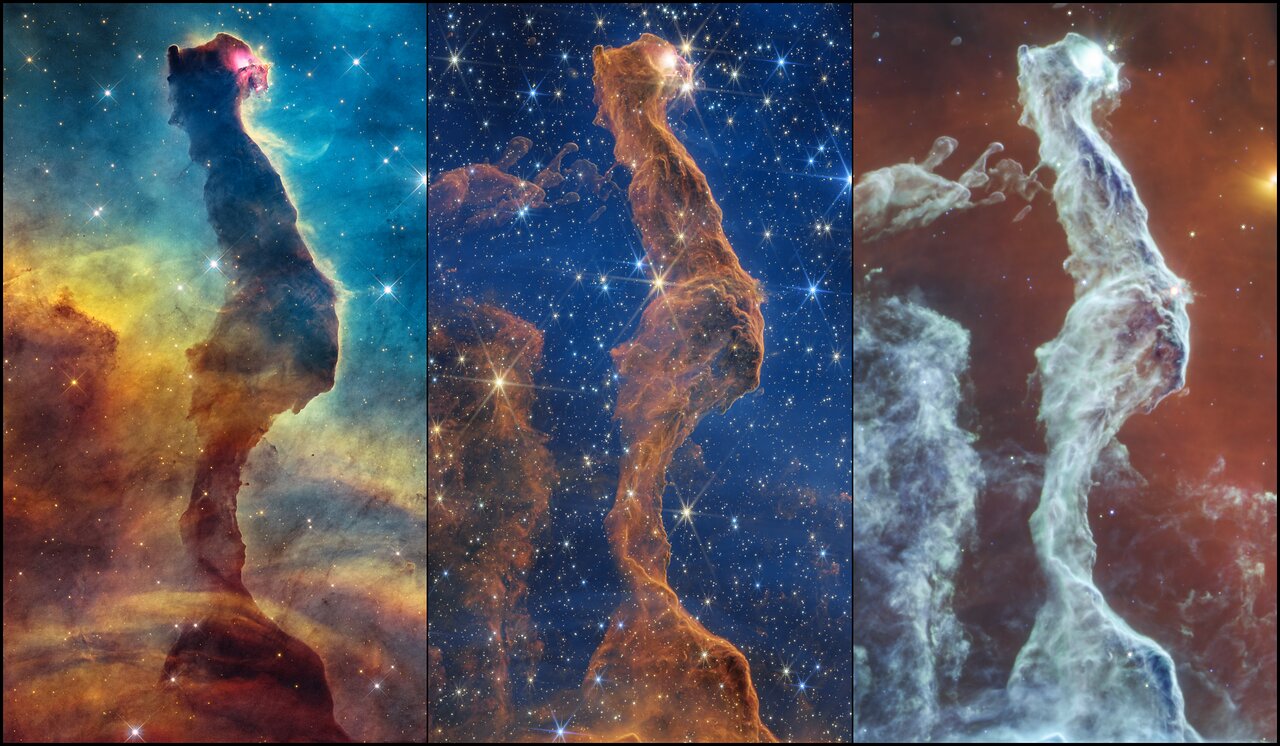
NASA's Hubble and James Webb Space Telescopes have observed the Cat's Head Nebula, a star-forming region in the Carina Nebula, located 7,500 light-years from Earth. The nebula's shape, resembling a cat, is likely formed by ultraviolet radiation and stellar winds from nearby massive stars. Hubble's visible-light images show a dark dust pillar, while Webb's infrared imagery reveals hidden stars and gas structures. The glowing red eye of the cat may indicate a young star embedded in the dust. This observation highlights the dynamic processes of star formation and the interaction between stars and their environment. The findings were published on October 29, 2026, with no immediate threats or vulnerabilities reported.
Ask AI about this cluster
Answers cite the sources they use
Timeline
More articles in this cluster (2)
Common questions
What is the Cat's Head Nebula?
What telescopes were used for this observation?
What does the glowing red eye in the nebula indicate?
Continue Reading
 Critical RCE Vulnerability in Confection WordPress Plugin (CVE-2026-115252) A critical vulnerability, CVE-2026-115252, has been identified in the Confection WordPress Cable plugin, affecting versions 0.4.0 to 0.4.7. This flaw allows unauthenticated attackers to execute arbitrary PHP code on the server by writing unmodified settings into a PHP file without proper checks. The vulnerability has…
 Critical Code Injection Vulnerability in Staggs Plugin for WordPress A critical code injection vulnerability, CVE-2026-78287, has been identified in the Staggs plugin for WordPress, affecting versions up to 3.3.0. This flaw allows unauthenticated attackers to execute arbitrary code remotely, posing severe risks to affected sites. The vulnerability stems from improper control over code…