 Calcalistech
Israel Warns of Iran's AI Cyberattack Ambitions
Article Content

- •Iran is developing AI-driven cyberattack capabilities, posing a global threat.
- •AI can enable attackers to exploit vulnerabilities faster than defenders can respond.
- •The new cyber warfare paradigm focuses on sustained pressure rather than single attacks.
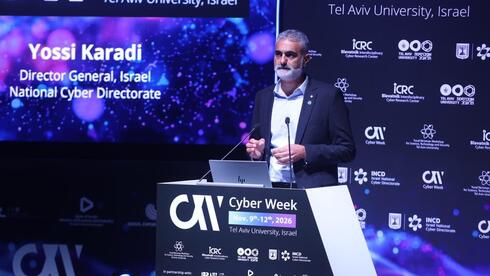
On November 10, 2026, Yossi Karadi, head of Israel's National Cyber Directorate, warned that Iran is actively pursuing AI-powered cyberattack capabilities that could threaten not only Israel but also other nations. He highlighted the speed advantage that AI could provide attackers, enabling them to exploit vulnerabilities faster than defenders can respond. Karadi emphasized that while AI can enhance defensive measures, it also allows adversaries to automate reconnaissance and attacks. This shift could lead to a new form of cyber warfare characterized by sustained pressure rather than single devastating attacks. The warning reflects growing concerns among cybersecurity officials about the implications of AI in cyber operations, particularly regarding national security and critical infrastructure. Karadi's remarks were made during Cyber Week at Tel Aviv University, where he presented a framework for understanding this evolving threat landscape.
Ask AI about this cluster
Answers cite the sources they use
Timeline
More articles in this cluster (2)
Following this threat?
Track Microsoft in your own feed — you're alerted when they show up in new reporting, leak sites or exploitation.
Free account · no card needed
Common questions
What specific capabilities is Iran developing?
How does AI change the dynamics of cyber warfare?
What measures can be taken to counter this threat?
Continue Reading
 Critical RCE Vulnerability in Confection WordPress Plugin (CVE-2026-115252) A critical vulnerability, CVE-2026-115252, has been identified in the Confection WordPress Cable plugin, affecting versions 0.4.0 to 0.4.7. This flaw allows unauthenticated attackers to execute arbitrary PHP code on the server by writing unmodified settings into a PHP file without proper checks. The vulnerability has…
 Critical RCE and LPE Vulnerabilities in Quest Foglight for Databases On November 3, 2026, the Zero Day Initiative disclosed multiple critical vulnerabilities in Quest Foglight for Databases, including six remote code execution (RCE) flaws and two local privilege escalation (LPE) vulnerabilities. The most severe RCE vulnerabilities, CVE-2026-92189 and CVE-2026-92190, allow…