 Jpost
Israel's AI Sovereignty at Risk Amid Infrastructure Dependency
Article Content

- •Israel risks losing control over critical services to foreign AI companies.
- •The government plans to establish a domestic AI infrastructure with 300,000 GPUs.
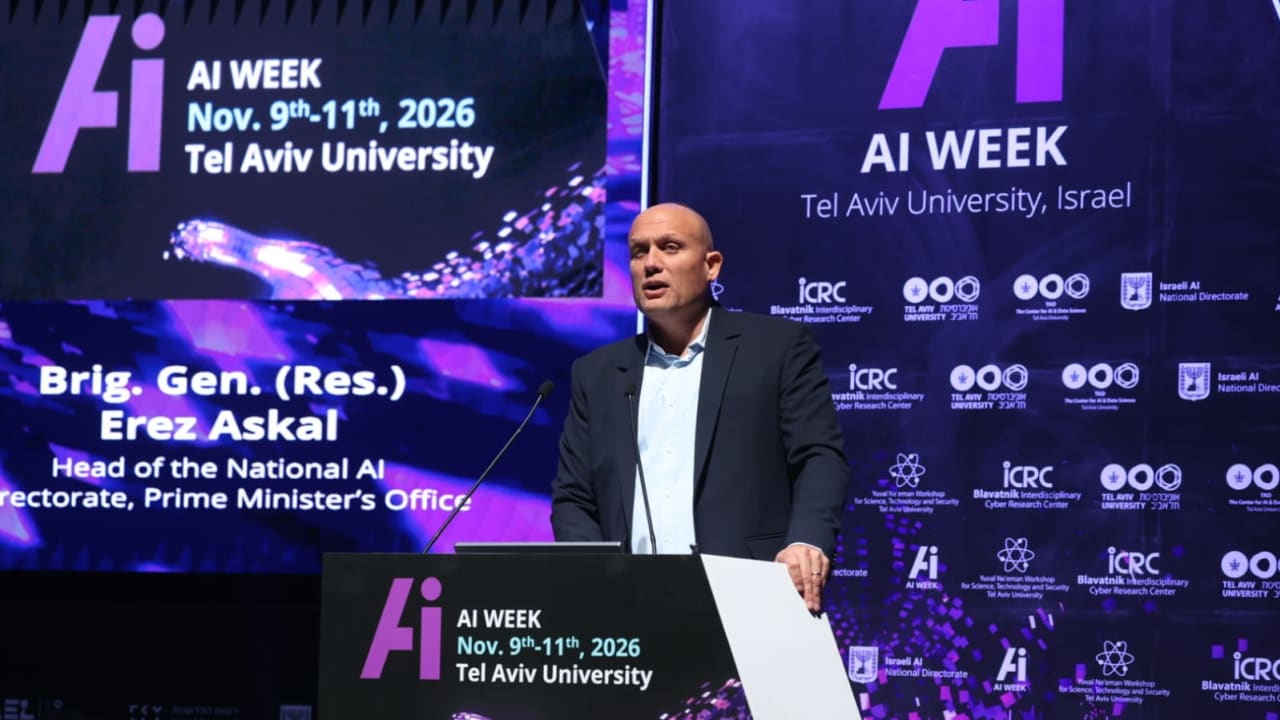
- •Erez Askal emphasizes the importance of maintaining sovereignty over AI technologies.
Erez Askal, Israel's AI chief, warned that without a robust AI strategy, the country risks losing control over critical services such as electricity, water, and healthcare to foreign companies within five to seven years. At an AI conference at Tel Aviv University, he emphasized the need for Israel to develop its own AI infrastructure, including a plan for 300,000 GPUs and a domestic foundation model. The reliance on foreign AI technologies could expose Israel to vulnerabilities due to misaligned commercial interests and potential disruptions. The government aims to reduce dependence on external cloud services, which complicate the protection of sensitive information. Askal noted that while Israel is strong in cybersecurity, it must catch up in broader AI capabilities. The strategy includes partnerships with international firms while maintaining control over essential technologies. The initiative requires significant investment and infrastructure development to support the growing demand for AI services.
Ask AI about this cluster
Answers cite the sources they use
Timeline
More articles in this cluster (4)
Following this threat?
Track Education in your own feed — you're alerted when they show up in new reporting, leak sites or exploitation.
Free account · no card needed
Common questions
What critical services are at risk?
What is the AI infrastructure plan?
How does this impact cybersecurity?
Continue Reading
 Critical RCE Vulnerability in Confection WordPress Plugin (CVE-2026-115252) A critical vulnerability, CVE-2026-115252, has been identified in the Confection WordPress Cable plugin, affecting versions 0.4.0 to 0.4.7. This flaw allows unauthenticated attackers to execute arbitrary PHP code on the server by writing unmodified settings into a PHP file without proper checks. The vulnerability has…
 Critical RCE and LPE Vulnerabilities in Quest Foglight for Databases On November 3, 2026, the Zero Day Initiative disclosed multiple critical vulnerabilities in Quest Foglight for Databases, including six remote code execution (RCE) flaws and two local privilege escalation (LPE) vulnerabilities. The most severe RCE vulnerabilities, CVE-2026-92189 and CVE-2026-92190, allow…