 Wisevoter
Microsoft Patches Two Windows and Azure Privilege-Escalation Flaws (CVE-2026-109484, CVE-2026-119853)
Article Content

- •CVE-2026-109484 (CVSS 10.0) is fixed server-side in Azure App Service for Linux, requiring no customer action per Microsoft.
- •CVE-2026-119853 (CVSS 7.8) in the Windows Remote Access API allows SYSTEM-level code execution from an existing foothold and was fixed on November 10, 2026.
- •Core Security's research demonstrates the Windows flaw via DLL loading under the SYSTEM account on Windows 11 Pro 25H2.
- •Microsoft rates exploitation of the Windows flaw as 'More Likely' but reported no observed attacks; no public exploit for the Azure flaw is reported.
- •Windows 10, Windows 11 and Windows Server administrators should install the November 2026 updates that carry the fix.
Microsoft fixed CVE-2026-109484, a CVSS 10.0 privilege-escalation flaw in Azure App Service for Linux caused by special element injection (CWE-75), and per its advisory customers need take no action because the fix was applied on Microsoft's platform. Affected builds are from 110.0.0.0 up to but not including 110.0.7.78, with fixes in builds 110.0.7.78 and 111.0.7.3. Microsoft has not disclosed which component processed the unsanitised input or what privileges an attacker could reach. Separately, Microsoft fixed CVE-2026-119853 in its November 10, 2026 Patch Tuesday updates, a Windows Remote Access API flaw rated Important with a CVSS base score of 7.8 that lets an attacker who can already run code execute code with SYSTEM privileges. Core Security published research on Windows 11 Pro 25H2 build 26200.9711 showing a privileged service host loading a researcher-controlled DLL under the SYSTEM account, and published that write-up on November 23, 2026. Microsoft rated exploitation of CVE-2026-119853 'More Likely' but had not observed attacks at the time of its advisory. Reporting indicates no public exploit code exists for CVE-2026-109484, and it is not in CISA's KEV catalog. The articles do not state how many systems remain unpatched.
Ask AI about this cluster
Answers cite the sources they use
Timeline
More articles in this cluster (5)
Following this threat?
Track Microsoft and CVE-2026-109484 in your own feed — you're alerted when they show up in new reporting, leak sites or exploitation.
Free account · no card needed
Common questions
Am I affected by CVE-2026-109484?
Is CVE-2026-119853 being exploited?
What should Windows administrators do first?
Continue Reading
 NGINX Vulnerabilities Expose Millions to Remote Code Execution On November 18, 2026, F5 disclosed five vulnerabilities in NGINX, collectively termed 'nginx2root', which allow unauthenticated remote code execution (RCE) on servers with HTTP/2 enabled. The most severe flaw, CVE-2026-123007, has existed since 2015 and affects all NGINX versions from 1.9.5 to 1.31.8. It enables…
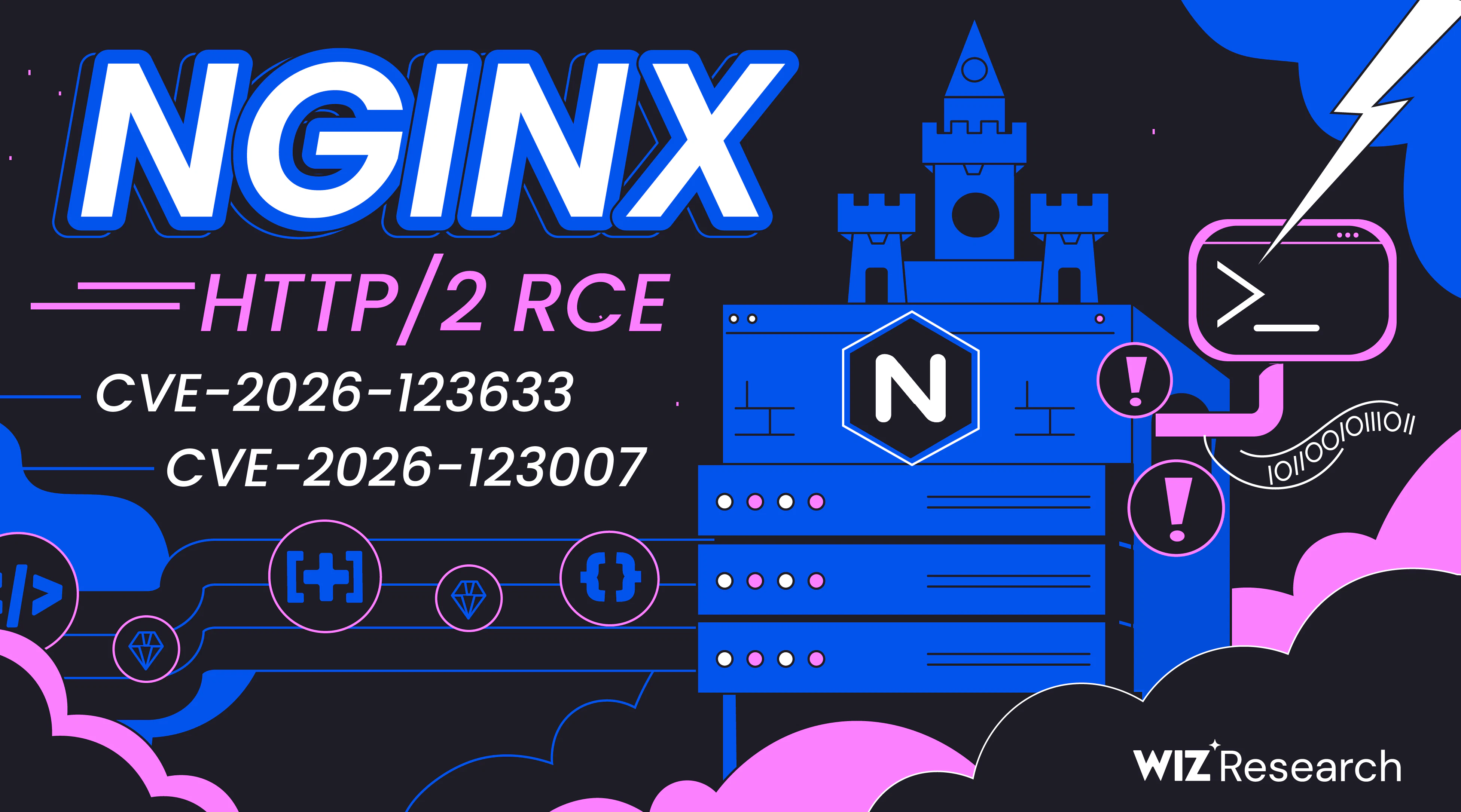 Remote Code Execution Vulnerabilities Discovered in NGINX On November 18, 2026, five vulnerabilities, collectively known as NGINX2Root, were disclosed in NGINX, a widely used open-source web server. The most severe vulnerabilities, CVE-2026-123007 and CVE-2026-123633, allow unauthenticated remote code execution when HTTP/2 is enabled. These flaws could enable attackers to…