 Latimes
NASA's Voyager 1 Approaches Historic One Light-Day Distance from Earth
Article Content

- •Voyager 1 will reach one light-day distance on November 17, 2026.
- •Radio signals will take 24 hours to travel from Voyager 1 to Earth.
- •NASA invites public participation to celebrate this milestone.
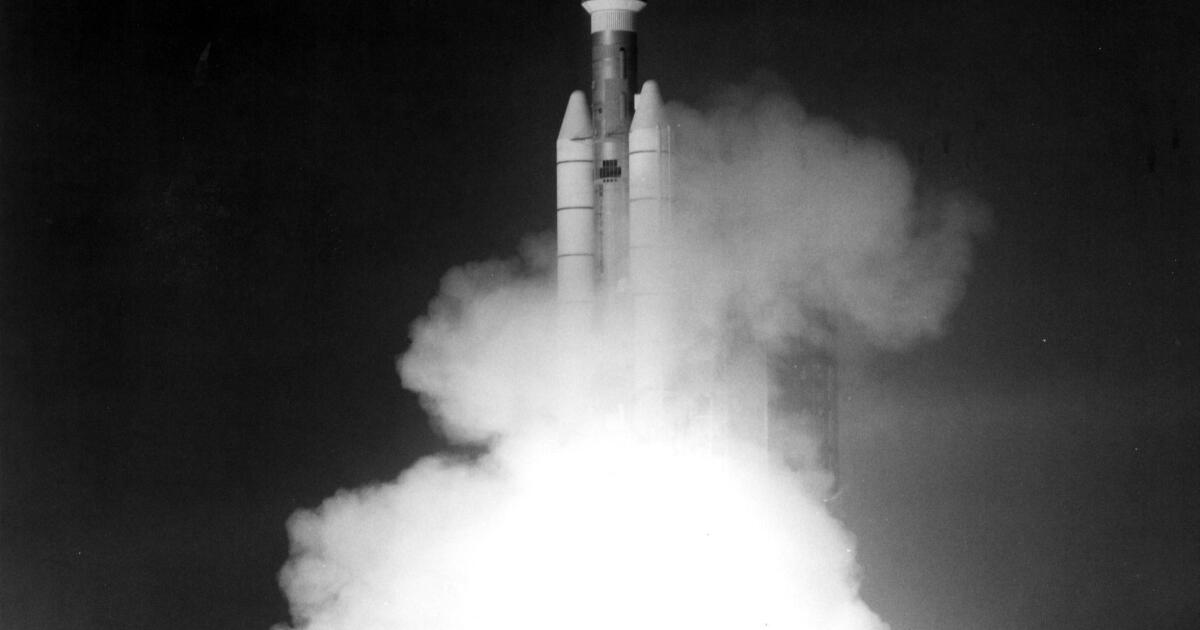
NASA's Voyager 1 is set to become the first human-made object to reach a distance of one light-day from Earth, approximately 16 billion miles away. This milestone will be achieved on November 17, 2026, with radio signals taking 24 hours to travel between the spacecraft and Earth. Voyager 1, launched in 1977, continues to send back scientific data despite its age, with a small team at NASA's Jet Propulsion Laboratory managing its operations. The spacecraft has provided invaluable insights into the solar system and interstellar space, having previously explored Jupiter and Saturn. Project manager Suzanne Dodd emphasized the significance of Voyager 1 as a symbol of human exploration and discovery. NASA is encouraging public participation in celebrating this event by creating a wave of light using Morse code to signal Voyager's call sign, V-G-R.
Ask AI about this cluster
Answers cite the sources they use
Timeline
More articles in this cluster (4)
Common questions
What is the significance of reaching one light-day?
How is NASA celebrating this milestone?
What data is Voyager 1 still sending back?
Continue Reading
 Critical Code Injection Vulnerability in Staggs Plugin for WordPress A critical code injection vulnerability, CVE-2026-78287, has been identified in the Staggs plugin for WordPress, affecting versions up to 3.3.0. This flaw allows unauthenticated attackers to execute arbitrary code remotely, posing severe risks to affected sites. The vulnerability stems from improper control over code…
 Lazarus Group Targets 30 South Korean Servers Using PHP Vulnerabilities North Korea-linked Lazarus Group has targeted 30 servers in South Korea as part of a larger cyber operation involving 581 servers across 10 countries. The attacks exploit two critical remote code execution vulnerabilities in PHP (CVE-2026-109618 and CVE-2026-109619), allowing unauthorized server command execution. The…