 Ua.News
Sleep Deprivation Increases Phishing Click Rates by 13%
Article Content

- •Phishing click rates increased by 13% after daylight saving time transition.
- •Study involved over 11,000 employees testing simulated phishing emails.
- •Sleep deprivation impacts decision-making, with broader implications beyond cybersecurity.
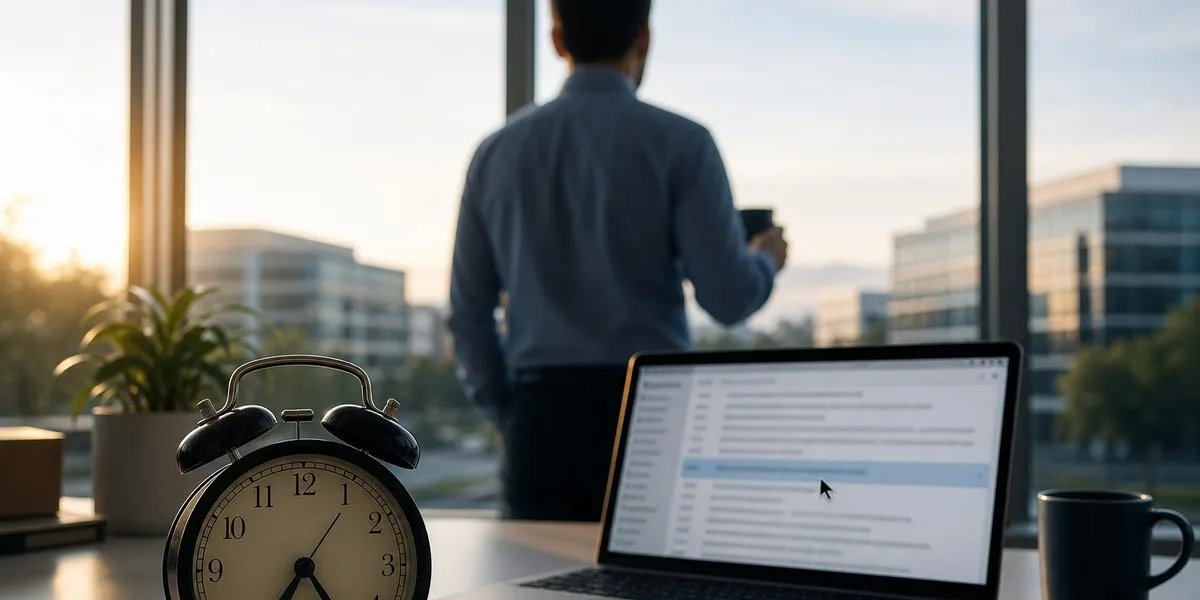
A study by researchers at the University of California, Irvine, found that after the transition to daylight saving time, employees were 13% more likely to click on phishing links in simulated emails. The study involved over 11,000 employees and revealed that the click rate rose from 15.56% to 17.76% on the Monday following the time change. This increase is attributed to a minor loss of sleep, which can impair decision-making. The findings suggest that sleep deprivation can have broader implications beyond cybersecurity, affecting daily decision-making. The results were published in the Proceedings of the National Academy of Sciences. Researchers urge employers to consider the risks associated with sleep disruption during periods like holidays or major events.
Ask AI about this cluster
Answers cite the sources they use
Timeline
More articles in this cluster (6)
Common questions
How does sleep deprivation affect phishing susceptibility?
What was the sample size of the study?
What are the broader implications of this research?
Continue Reading
 Critical RCE Vulnerability in Confection WordPress Plugin (CVE-2026-115252) A critical vulnerability, CVE-2026-115252, has been identified in the Confection WordPress Cable plugin, affecting versions 0.4.0 to 0.4.7. This flaw allows unauthenticated attackers to execute arbitrary PHP code on the server by writing unmodified settings into a PHP file without proper checks. The vulnerability has…