 siliconangle.com
Sovereign AI: Data Control Becoming an Architectural Requirement for Regulated Firms
Article Content

- •Nine of 11 surveyed buyers require AI inference to stay within sovereign or regional boundaries.
- •Seven of 11 respondents reported no testing of disconnected systems or key-revocation scenarios.
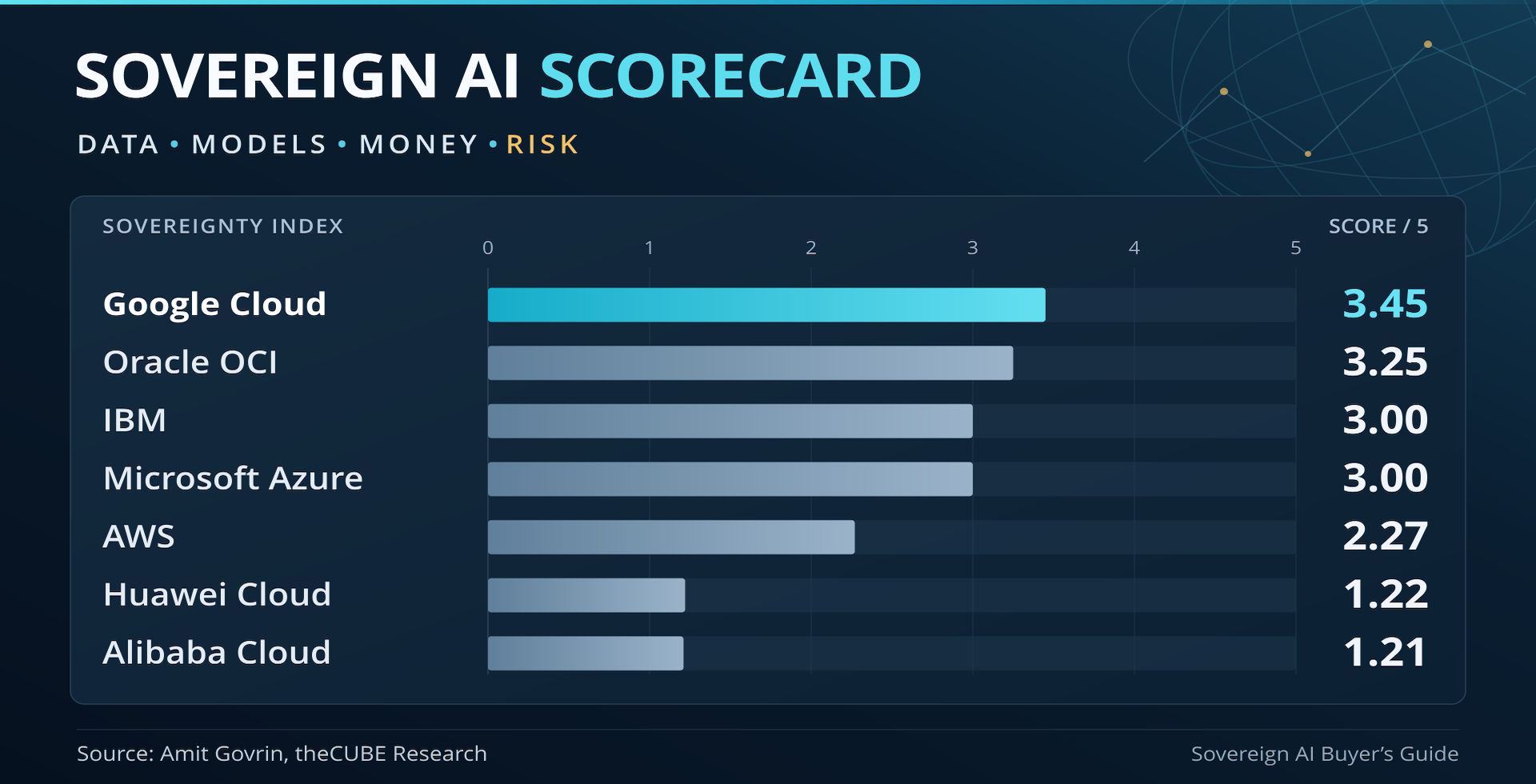
- •Vendors such as Google, Oracle and Microsoft offer control frameworks, but buyers reportedly find dedicated sovereign deployments burdensome.
- •Sources recommend evaluating sovereignty per workload and proving controls through testing.
- •Business owners, not only IT staff, should formally accept the associated sovereignty risks.
Silicon Angle argues that sovereignty is becoming an architectural requirement for globally operating firms, especially in highly regulated industries. A study Silicon Angle commissioned with partner Qualitate involved 11 senior technology decision-makers and found a gap between buyer priorities and operational reality. Seven respondents reported no testing of disconnected systems or key-revocation scenarios. Nine of 11 buyers require AI inference to occur within sovereign or regional boundaries. The research indicates vendors including Google, Oracle and Microsoft provide various control frameworks, but buyers reportedly struggle with the burden of deploying dedicated sovereign environments. Experts quoted in the coverage describe sovereignty as a continuous discipline requiring deliberate risk decisions and compensating controls rather than a purity test. Recommendations include evaluating sovereignty at the workload level, proving control through testing, and having business owners accept associated risks. The coverage is an industry analysis piece and does not describe a security incident, vulnerability, or attack.
Ask AI about this cluster
Answers cite the sources they use
Timeline
More articles in this cluster (2)
Following this threat?
Track Google in your own feed — you're alerted when they show up in new reporting, leak sites or exploitation.
Free account · no card needed