 Kyivindependent
Ukraine Protests IAEA's Plan to Appoint Sanctioned Russian Official
Article Content

- •Ukraine protests IAEA's appointment of a sanctioned Russian official.
- •Alexey Ferapontov is implicated in legitimizing the seizure of the Zaporizhzhia Nuclear Power Plant.
- •Greenpeace International and Ukraine call for the IAEA to maintain its independence.
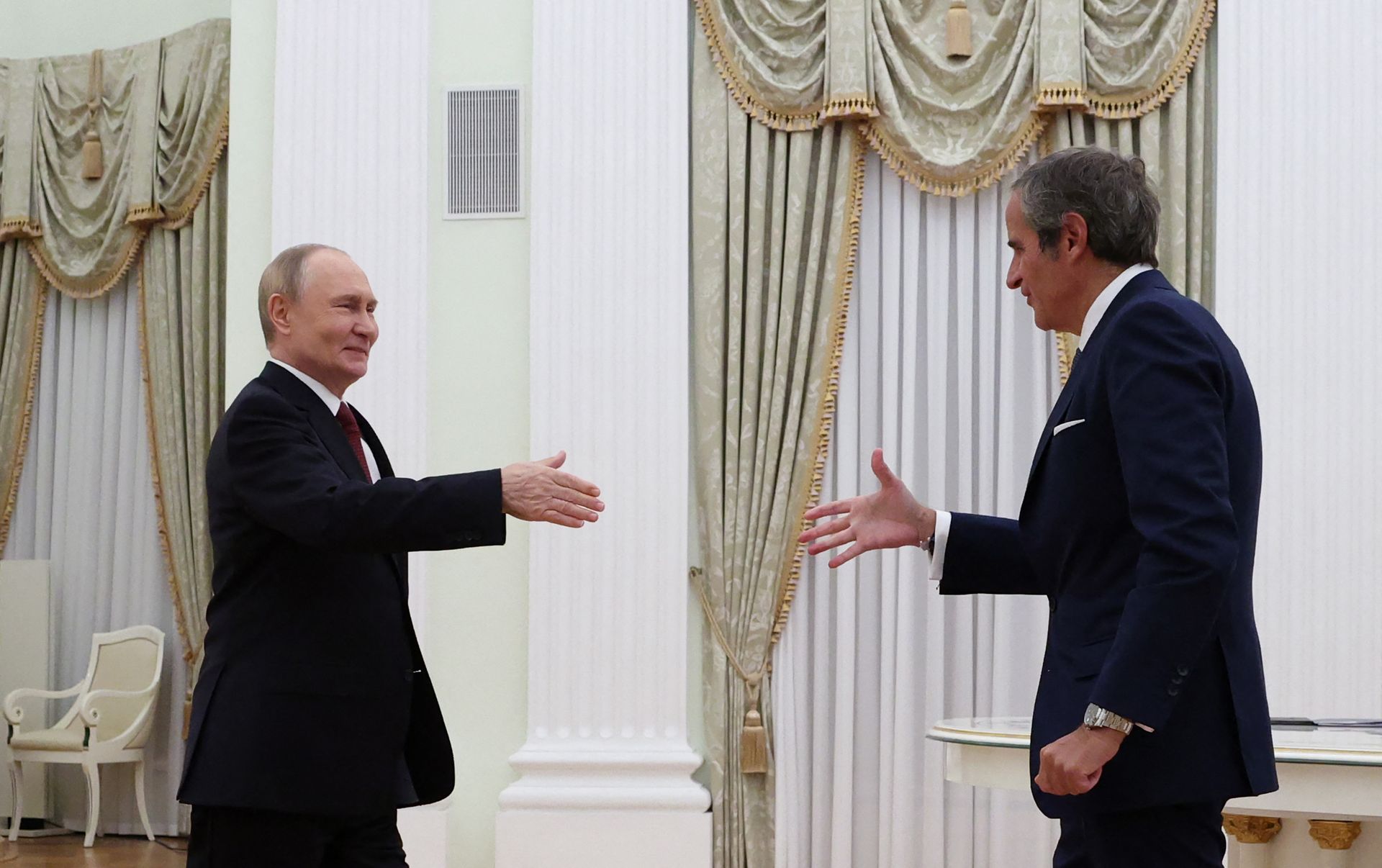
Ukraine's Foreign Ministry has protested against IAEA Director General Rafael Grossi's proposal to appoint Alexey Ferapontov, a sanctioned Russian official, as Deputy Director General. Ferapontov, currently deputy head of Rostekhnadzor, was sanctioned by Ukraine for legitimizing the illegal seizure of the Zaporizhzhia Nuclear Power Plant (ZNPP). The appointment is viewed as a violation of international law and a potential conflict of interest, especially as Grossi seeks the UN Secretary-General position. Greenpeace International has also urged the IAEA to reconsider this appointment, emphasizing the need for the agency's independence and credibility. The ZNPP, Europe's largest nuclear power plant, has been under Russian control since the invasion of Ukraine, facing numerous safety threats. Ukraine's Foreign Ministry insists that such an appointment would undermine the IAEA's authority and impartiality.
Ask AI about this cluster
Answers cite the sources they use
Timeline
More articles in this cluster (4)
Common questions
What are the implications of Ferapontov's appointment?
How has Ukraine responded to the appointment?
What is the current status of the Zaporizhzhia Nuclear Power Plant?
Continue Reading
 Lazarus Group Targets 30 South Korean Servers Using PHP Vulnerabilities North Korea-linked Lazarus Group has targeted 30 servers in South Korea as part of a larger cyber operation involving 581 servers across 10 countries. The attacks exploit two critical remote code execution vulnerabilities in PHP (CVE-2026-109618 and CVE-2026-109619), allowing unauthorized server command execution. The…
 Critical CVE-2026 Flaws in Control Web Panel Lead to Account Takeover Risks Control Web Panel (CWP) versions prior to 1.30.6 are affected by two critical vulnerabilities, CVE-2026-124020 and CVE-2026-124021, both disclosed on 2026-11-13. CVE-2026-124020 allows attackers to exploit a host header injection in the password recovery process, potentially leading to account takeover via a poisoned…